

Key Takeaways
Our Verdict
Alaska and Hawaii are both extraordinary, but they serve very different traveler personalities. Alaska rewards those who embrace raw, unpredictable wilderness - the payoff is immense but so is the planning effort. Hawaii delivers a more reliably comfortable adventure with tropical beauty and cultural richness that's hard to match anywhere in the country.
| Best for | Recommended |
|---|---|
| Thrill-seekers and wildlife enthusiasts who can handle variable conditions | Alaska |
| Travelers wanting year-round outdoor beauty with easier logistics | Hawaii |
| Families or first-time remote travelers seeking manageable adventure | Hawaii |
| Solo or experienced adventurers chasing bucket-list wilderness | Alaska |
The Big Picture: What Sets These Two Apart
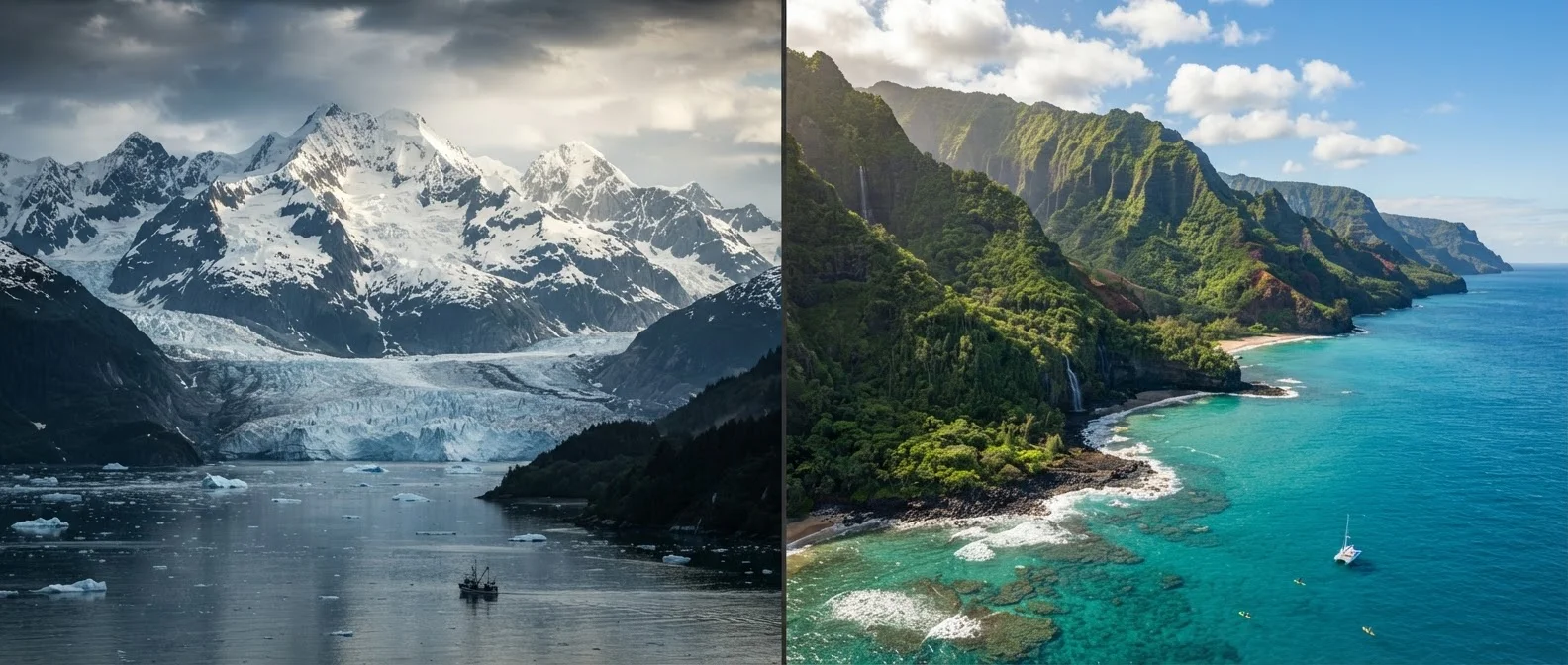
Alaska and Hawaii are both U.S. states, but arriving in either feels like stepping into a different world entirely. Alaska is the largest state by area - larger than the next three states combined - and sits in the subarctic and arctic zones, offering tundra, glaciers, and some of the most untouched wilderness on Earth. Hawaii, a volcanic archipelago in the central Pacific, greets visitors with warm tropical air, lush rainforests, and black-sand beaches. The contrast is almost absurd: one state is defined by ice and scale, the other by fire and flowers.
What they share is remoteness and drama. Neither is a casual road trip from most of the continental U.S. Both reward travelers who plan ahead. And in both places, the natural environment is the main event - not the shopping or nightlife.
If you're already exploring America's stunning public lands, both states have much to offer. See how they stack up against lesser-known gems in our look at America's national parks beyond Yellowstone.
Landscape, Wildlife, and Outdoor Experiences
Alaska's calling cards are staggering in scale: Denali (the highest peak in North America), Glacier Bay National Park, Kenai Fjords, and the Tongass National Forest - the largest in the U.S. Wildlife encounters here can be genuinely wild: grizzly bears fishing for salmon, moose wandering roadside, humpback whales breaching in coastal inlets. Outdoor activities lean toward the intense - glacier hiking, backcountry camping, flightseeing, and sea kayaking in areas accessible only by small plane or boat.
Hawaii's landscapes are equally diverse but on a more human scale. The Big Island alone holds active lava flows at Hawai'i Volcanoes National Park, snowy Mauna Kea summit at nearly 14,000 feet, and the lush Kohala Coast. Each island offers its own distinct terrain - Kauai's Na Pali cliffs, Maui's Haleakalā crater, O'ahu's mix of surf culture and history. Wildlife here includes spinner dolphins, green sea turtles, and an extraordinary array of native bird species found nowhere else on Earth.
| Alaska | Hawaii | |
|---|---|---|
| Climate | Subarctic to arctic; highly seasonal | Tropical; warm year-round |
| Best travel window | Late May to early September | Year-round; drier June-October |
| Signature wildlife | Bears, moose, whales, wolves | Sea turtles, dolphins, native birds |
| Landscape variety | Glaciers, tundra, fjords, taiga | Volcanoes, reefs, rainforests, beaches |
| Logistics complexity | High; limited infrastructure | Moderate; well-developed tourism |
| Ideal traveler | Experienced adventurer | Range of experience levels |
| Cultural experience | Indigenous and frontier heritage | Polynesian, Asian, and multicultural |
For those weighing accommodation styles once you pick a destination, our comparison of camping vs. lodging inside national parks can help you plan the right setup.
When to Go and What to Expect
Timing matters enormously for Alaska. The prime window runs roughly from late May through early September, when days are long (sometimes nearly endless near the summer solstice), wildlife is active, and most roads and facilities are open. Outside this window, travel is possible but demands significantly more preparation, and some areas become inaccessible. Winter in Alaska brings aurora borealis viewing and dog sledding, but also extreme cold and limited daylight.
Hawaii's year-round tropical climate is a genuine advantage. Temperatures on most islands stay between the mid-60s and upper 80s Fahrenheit throughout the year. The main distinction is between the wetter winter season (November through March) and the drier summer months. The north and east sides of each island receive considerably more rainfall than the south and west sides - a detail worth knowing when booking accommodation.
Whether you're going solo or with a group also changes your planning calculus significantly for either destination. Our guide to solo vs. group travel planning walks through how logistics shift depending on your party size.
Practical Considerations: Cost, Access, and Readiness
Neither destination is easy on the wallet. Flights to Alaska from most of the lower 48 are competitive from major hubs, but once there, inter-regional travel - floatplanes, ferries along the Marine Highway, bush flights - adds up quickly. Lodging in remote Alaskan communities can be limited and pricey. Budget-conscious travelers can stretch funds by camping, but wilderness camping in Alaska requires preparation, proper gear, and knowledge of bear safety protocols.
Hawaii's costs center heavily on flights and accommodation. Inter-island travel by air is convenient but adds to the total. However, the infrastructure is far more developed than Alaska's, which means more competition, more accommodation options, and easier logistics overall - particularly for first-time remote travelers or families.
Both states are domestic U.S. destinations, so no passport is required for American citizens. That said, if you're evaluating domestic versus international trips, our article on key differences in international trip planning puts the added layers in useful context.
Travel conditions, entry requirements, safety considerations, and costs can change. Always verify current information with official state tourism offices, the National Park Service, and your transportation and accommodation providers before booking.