

Key Takeaways
Our Verdict
Neither solo nor group travel is objectively better - they suit different personalities, trip goals, and life stages. Solo travel rewards self-reliance and spontaneity; group travel rewards shared experiences and cost-sharing. The planning process for each is genuinely different, and matching your approach to your travel style will make the difference between a smooth trip and a stressful one.
| Best for | Recommended |
|---|---|
| Travelers who value flexibility and self-directed itineraries | Solo Travel |
| Those who want shared costs and built-in companionship | Group Travel |
| First-time international travelers who want structure and safety | Group Travel |
| Experienced travelers comfortable making every decision independently | Solo Travel |
How Each Style Shapes the Planning Mindset
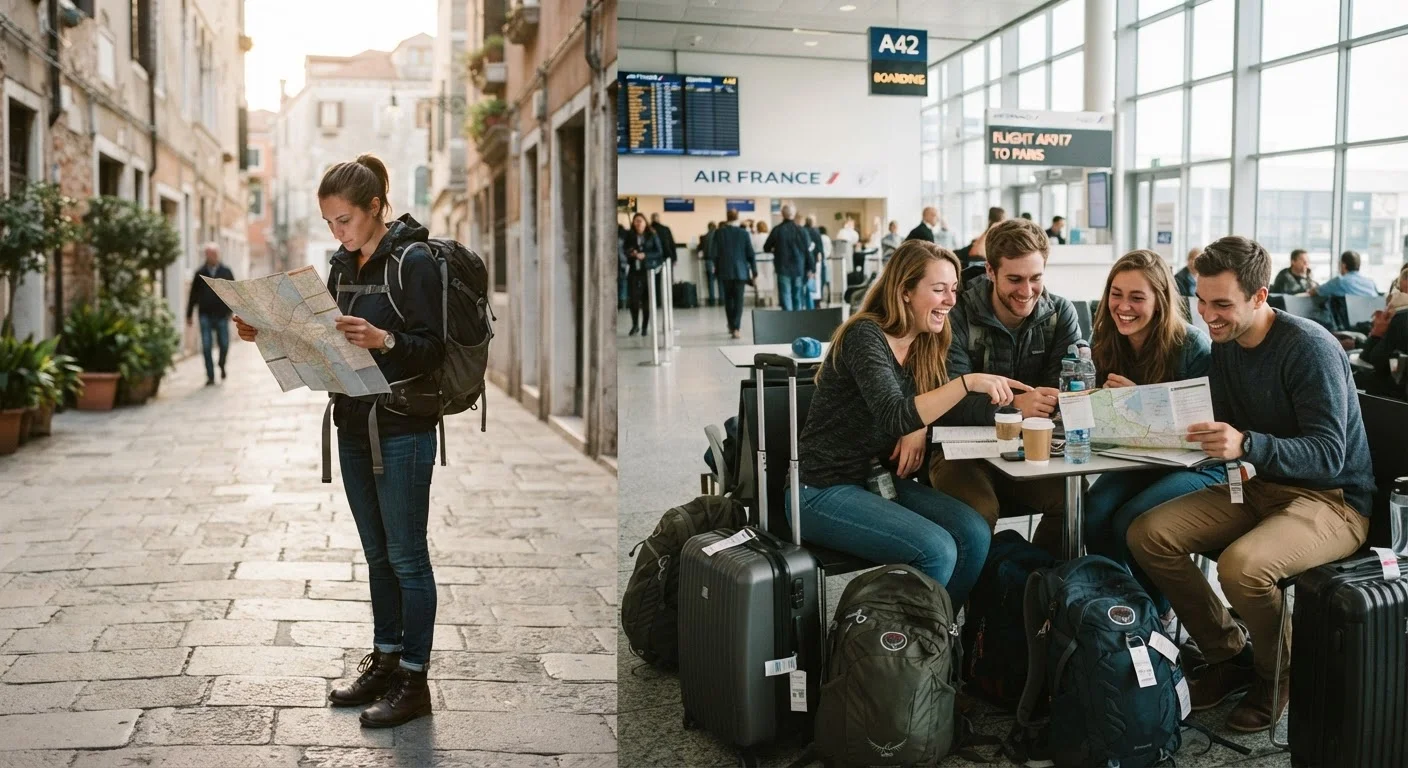
The moment you decide whether you're traveling alone or with others, the entire planning process shifts. Solo travel puts you in full control - every decision about where to sleep, what to eat, and how long to linger somewhere is yours alone. That freedom is genuinely energizing, but it also means there's no one to catch overlooked details or share the mental load.
Group travel, by contrast, turns planning into a collaborative exercise. You're not just building an itinerary - you're negotiating one. Interests, budgets, physical abilities, and travel preferences rarely align perfectly, so the planning phase requires more conversation and compromise before a single booking is made. If you're heading abroad with companions, our guide to organizing group travel without the drama lays out strategies to keep that process civil and productive.
Understanding this fundamental difference early prevents a lot of friction later.
Logistics: Speed vs. Coordination
Solo travelers move fast. Changing a hotel, skipping a planned activity, or rerouting entirely takes minutes. There are no text threads to manage, no schedules to reconcile. This agility is especially valuable when conditions on the ground shift - weather changes, a destination disappoints, or an unexpected opportunity appears.
Group logistics are a different animal. Booking accommodations for multiple people requires confirming room configurations, bed preferences, and proximity needs. Transportation - whether flights, rental vehicles, or train reservations - must account for everyone's arrival times and physical limitations. The larger the group, the earlier these bookings typically need to happen to secure options that actually work for everyone.
| Solo Travel | Group Travel | |
|---|---|---|
| Decision-making speed | Instant - one person decides | Slower - consensus required |
| Itinerary flexibility | Very high - pivot anytime | Lower - changes affect everyone |
| Accommodation cost | Often higher (single supplement) | Lower per person when split |
| Planning effort | Moderate - all on you | High - coordination across people |
| Budget alignment | Set your own limits freely | Requires upfront group agreement |
| Safety and support | Self-reliant; plan proactively | Built-in support from companions |
| Booking lead time | Shorter windows often workable | Longer lead time usually needed |
For trips crossing international borders, coordination complexity multiplies further. Different passport holders may face different visa requirements, and entry rules can vary significantly. Always verify current requirements through official government sources before finalizing plans. Our overview of international trip planning differences Americans should know is a useful starting point for either style of travel.
Budgeting: Splitting Costs vs. Carrying Them Solo
Money is where the solo vs. group divide becomes most concrete. Solo travelers frequently encounter the single-occupancy surcharge - hotels and cruise lines often charge more per person when a room or cabin is occupied by one rather than two. Ground transportation like rental cars is also more expensive when the cost isn't divided. That said, solo travelers also have complete control over spending: there's no pressure to dine at expensive restaurants or join paid excursions if the budget doesn't support it.
Groups benefit from genuine cost-sharing on accommodation, car rentals, vacation rentals, and sometimes bulk activity bookings. However, mismatched budgets within a group are one of the most common sources of tension. Establishing a shared budget expectation - including a rough per-person daily spend - before anyone books anything is one of the most useful things a group can do. The consumer spending hub has practical context on budgeting strategies that apply whether you're traveling alone or with five friends.
Itinerary Building: Loose Notes vs. Shared Documents
For solo travelers, an itinerary can be as minimal as a few saved addresses and a hotel confirmation. The structure exists to serve you, and you can scrap it without consequence. Many solo travelers intentionally keep plans loose - especially on shorter trips - to preserve the freedom that made solo travel appealing in the first place.
Groups need a shared, accessible document that everyone can reference and contribute to. Cloud-based planning tools work well for this: everyone can see confirmed bookings, suggested activities, and key addresses without hunting through email chains. Assigning a single point-of-contact for major bookings (flights, accommodation) avoids duplicate reservations and conflicting cancellation policies.
If you're planning your very first independent trip and feeling overwhelmed by where to start, our ground-up planning guide for first big trips walks through the process stage by stage. And if group dynamics are a concern, it's worth reading up on how organized tours compare to independent travel - sometimes a guided tour handles the coordination so your group doesn't have to.
Designate a Planning Lead Early
In group travel, ambiguity about who's responsible for what is the fastest route to duplicated effort or missed bookings. Assign one person to own major logistics - flights, primary accommodation - and make it explicit from the start. That doesn't mean one person does everything; it means one person has final accountability for each key booking. Splitting responsibilities by category (one person owns transport, another owns accommodation) also works well for larger groups.
What Stays the Same Regardless of Who's Coming
Despite real differences in process, several planning fundamentals apply equally to solo and group trips. Travel insurance is worth evaluating for any trip with significant upfront costs - cancellation, medical, and interruption coverage matter whether you're one person or ten. Safety research for your destination, awareness of local laws and customs, and packing for the actual weather forecast are non-negotiables either way.
Both solo and group travelers benefit from keeping digital and physical copies of key documents - passports, confirmations, emergency contacts - stored separately from their primary devices. And both should leave a rough itinerary with someone at home who can act as a point of contact in an emergency.
Whatever your travel style, the goal of the planning process is the same: reduce avoidable friction so you can focus on the actual experience when you get there.