

Key Takeaways
Our Verdict
All three budgeting methods are grounded in sound financial principles and can meaningfully improve money management when applied consistently. The envelope method works best for tactile, spending-focused learners; pay-yourself-first suits those who struggle to save; and line-item budgeting rewards detail-oriented planners. Matching the method to your personality and lifestyle increases the odds that it will actually stick.
| Best for | Recommended |
|---|---|
| Those who overspend in specific categories and need firm limits | Envelope Method |
| Anyone who consistently finds nothing left to save at month's end | Pay-Yourself-First |
| Detail-oriented individuals who want full visibility over every dollar | Line-Item Budgeting |
| Beginners building their first budget from scratch | Pay-Yourself-First |
Why the Right Budgeting Method Matters
A budget only works if you actually use it. That sounds obvious, but it explains why so many people try budgeting, fall off track within weeks, and conclude they simply aren't "budget people." Often the problem isn't discipline - it's a mismatch between the method and how a person naturally thinks about money.
The three frameworks covered here - envelope budgeting, pay-yourself-first, and line-item budgeting - each reflect a distinct philosophy about where financial control comes from. If you're brand new to budgeting, our beginner's guide to building a personal budget covers the foundational concepts worth understanding before you choose a method. For those already familiar with the basics, what follows is a practical side-by-side look at how each approach actually works.
The Envelope Method: Spending by Category
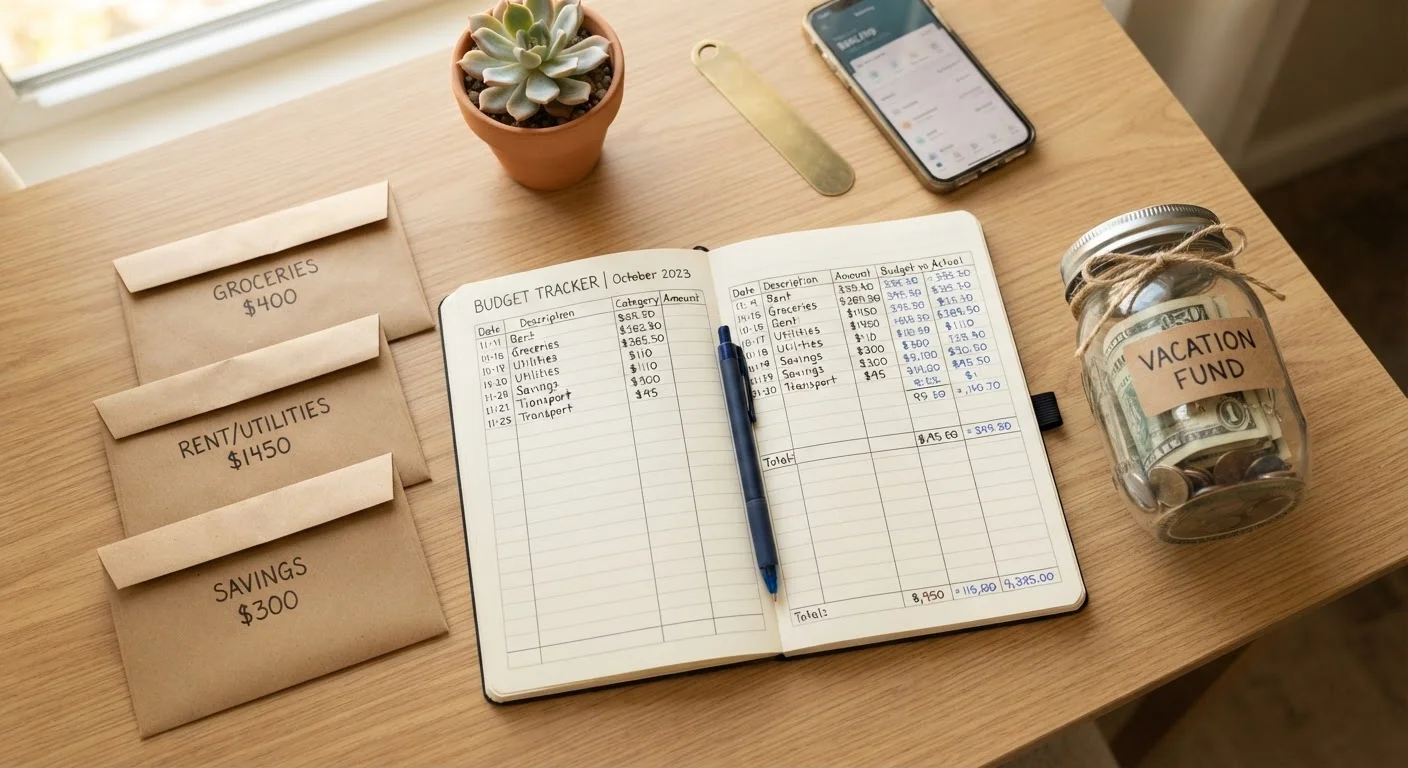
The envelope method divides your take-home pay into discrete spending categories - groceries, gas, dining out, entertainment - and allocates a fixed cash amount to each. Traditionally, this meant physically stuffing labeled envelopes with cash at the start of each pay period. When an envelope is empty, spending in that category stops until the next period.
Digital versions of the method replicate the same logic using sub-accounts or budgeting apps that track virtual "envelopes." The behavioral mechanism is the same: a visible, hard limit per category that makes overspending immediately apparent rather than invisible until the credit card statement arrives.
Strengths: The method builds strong category awareness and creates a direct, tangible link between spending decisions and remaining funds. It works particularly well for variable expenses that tend to creep - groceries, clothing, and leisure spending.
Limitations: Managing many envelopes can feel burdensome, and the cash-only version is increasingly impractical in a digital economy. It also requires that you already have a rough sense of what to budget per category, which itself demands some prior spending data.
| Envelope Method | Pay-Yourself-First | Line-Item Budgeting | |
|---|---|---|---|
| Core principle | Spend within fixed category limits | Save first, spend the rest | Plan and track every expense line |
| Effort level | Moderate | Low (once automated) | High |
| Best for | Overspenders by category | Chronic under-savers | Detail-oriented planners |
| Savings focus | Category-dependent | Primary focus | Included as a line item |
| Flexibility | Low to moderate | High for spending | Low - changes require replanning |
| Tracking required | Per category | Minimal | Comprehensive and ongoing |
| Works well with cash? | Yes - built for it | No preference | Works with any payment type |
Pay-Yourself-First: Saving Before You Spend
Pay-yourself-first (sometimes called reverse budgeting) flips the conventional sequence. Instead of spending through the month and saving whatever remains, you transfer a set amount to savings or investments the moment income arrives - then live on what's left.
Automation is central to the approach. Automatic transfers to a savings account or retirement contribution on payday remove the decision from the equation entirely, reducing the temptation to defer saving "just this once." The result is that saving becomes the first line item rather than an afterthought.
Strengths: Highly effective for people who consistently find their savings intentions crowded out by spending. It's also low-maintenance - once the automation is set up, day-to-day budget tracking is minimal. This makes it one of the most sustainable methods for busy households.
Limitations: Pay-yourself-first provides little guidance on how the remaining money gets spent. Without some tracking of discretionary expenses, it's possible to overspend on non-essentials and create cash-flow problems mid-month. For a deeper look at how savings fit into a broader budget, see our article on emergency funds, sinking funds, and savings goals.
Start With One Month of Spending Data
Before committing to any budgeting method, review three to four recent bank and credit card statements to understand your actual spending patterns. Real data makes it far easier to set realistic category limits or savings targets - and prevents the frustration of building a budget that doesn't reflect how you actually live.
Line-Item Budgeting: Maximum Visibility and Control
Line-item budgeting assigns a planned dollar amount to every individual expense category - rent, utilities, insurance, subscriptions, dining, fuel, and so on - and tracks actual spending against each line throughout the month. It's the most granular of the three methods and the closest to how governments and businesses manage budgets.
This approach requires the most upfront effort: you need a comprehensive list of all expected expenses, accurate historical spending data to set realistic targets, and a consistent habit of recording transactions. Spreadsheets and dedicated budgeting software are common tools, though pen-and-paper versions work too. Our overview of spreadsheet versus handwritten budgeting can help you decide which format fits your style.
Strengths: Unmatched transparency. You can see exactly where money goes, spot problematic patterns quickly, and make precise adjustments. It's especially useful during income transitions or debt paydown periods when precision matters most.
Limitations: The time investment is significant, and the method can feel overwhelming for anyone not naturally drawn to detailed record-keeping. Burnout is a real risk if the tracking habit isn't established gradually. Understanding how to classify your expenses correctly is also essential - distinguishing needs from wants from savings is a useful primer before building out your line items.
For those interested in other structured frameworks alongside this approach, zero-based budgeting and the 50/30/20 rule represent two additional methodologies worth comparing.
This article is for general informational and educational purposes only and does not constitute personalized financial, tax, or investment advice. Consult a qualified financial professional for guidance specific to your situation.