

Key Takeaways
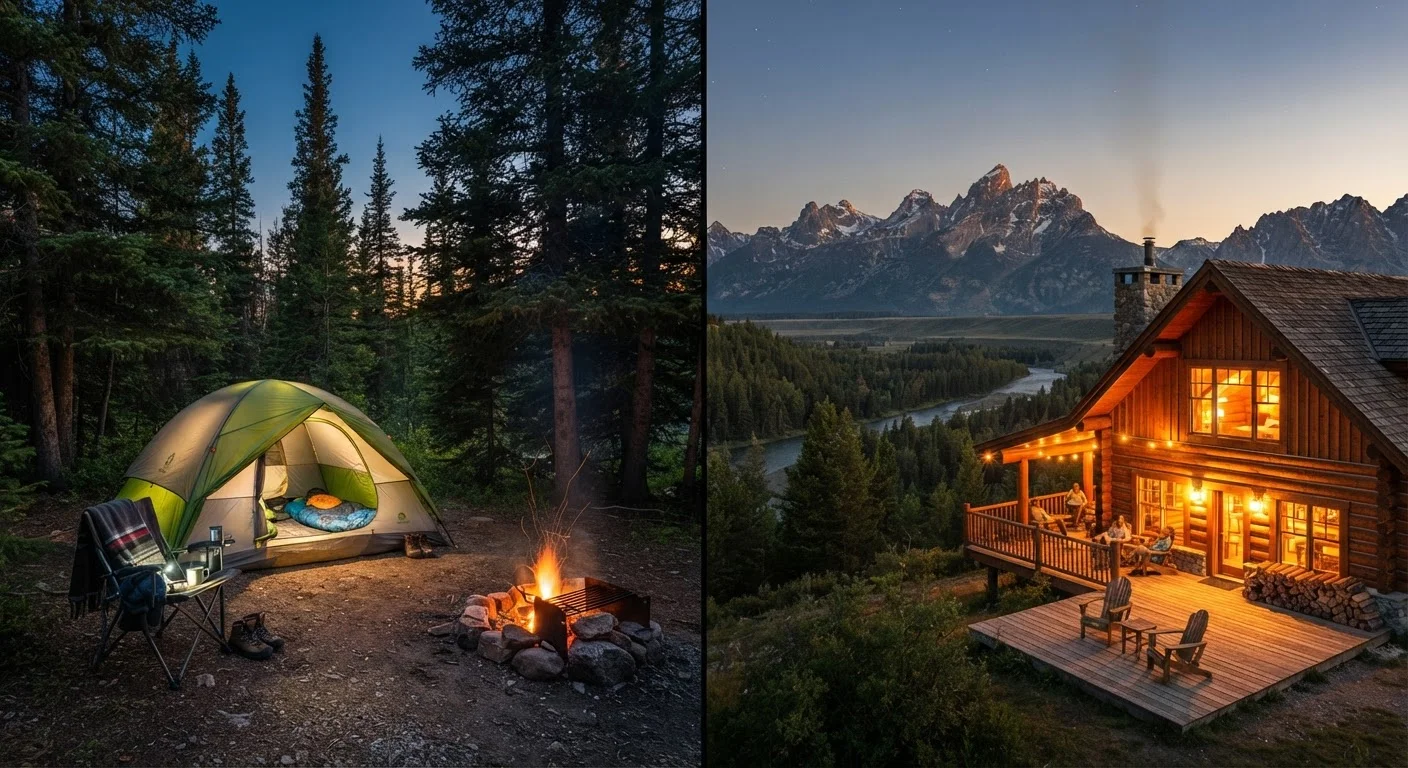
Option A
Camping Inside a National Park
The immersive, back-to-basics wilderness experience.
Best for: Travelers who want close contact with nature, flexibility on itinerary, and a lower nightly cost.
Option B
Staying in a National Park Lodge
The comfortable, historic way to sleep inside the park.
Best for: Travelers who want the scenery without roughing it - especially families with young children or those with mobility considerations.
If you want total immersion in nature on a tighter budget
Camping Inside a National Park
Campsites cost a fraction of lodge rates, and sleeping under the stars deepens the wilderness experience in a way no building can replicate.
If you're traveling with older adults or young children who need reliable amenities
Staying in a National Park Lodge
Lodges provide beds, climate control, and on-site dining - reducing the logistical and physical demands of a park visit considerably.
If spontaneity and flexible scheduling are priorities
Camping Inside a National Park
Many campgrounds allow walk-up sites (though not all), and even reservable sites tend to have more last-minute availability than coveted lodge rooms.
If you're visiting a park known for extreme weather or remote terrain
Staying in a National Park Lodge
Lodges offer a safe, reliable shelter option when conditions can shift fast - think high-altitude parks or Alaska's unpredictable climate.
If you want a mix of history, scenery, and storytelling
Staying in a National Park Lodge
Many park lodges - like Old Faithful Inn at Yellowstone or Crater Lake Lodge - are historic landmarks with architecture and character that are part of the experience itself.
What It Actually Means to Stay Inside a National Park
Both camping and lodge stays share one major advantage over outside accommodations: you're already in the park when the sun rises. That means no driving through entrance gates at peak hours, no scrambling for parking, and a genuine chance to catch the golden light that most day visitors miss entirely.
National park campgrounds range from primitive tent-only sites with pit toilets to full-hookup spots for RVs with showers and camp stores. Lodges, meanwhile, span a wide spectrum - from basic motel-style rooms at places like Zion Lodge to the grand, century-old timber halls of Old Faithful Inn in Yellowstone. Understanding that range is the first step in making the right call for your trip.
Keep in mind that availability at both types of accommodations is increasingly competitive. Recreation.gov handles reservations for most federal campgrounds, and lodge bookings through the park concessioners often open six months or more in advance. Plan accordingly - and read our guide on timing your national park visit before you commit to dates.
Comfort, Cost, and Convenience: A Head-to-Head Look
The most obvious difference is comfort. Camping means sleeping on the ground (or a sleeping pad), cooking over a camp stove, and dealing with whatever weather rolls through. Lodge stays mean a real bed, indoor plumbing, and usually a restaurant or cafeteria nearby. For some travelers, the roughing-it part is the whole point. For others, it's a dealbreaker.
| Criterion | Camping | National Park Lodge |
|---|---|---|
| Typical nightly cost | $15-$35 per site | $150-$400+ per room |
| Booking lead time | Days to months ahead | Often 6+ months ahead |
| Sleeping arrangement | Tent or RV, outdoors | Private room, real bed |
| Bathroom access | Shared or pit toilets | Private or shared indoor |
| Weather exposure | High - you feel it all | Low - sheltered indoors |
| Nature immersion | Very high | Moderate (views, not sounds) |
| Food preparation | Camp stove / fire ring | On-site restaurant or café |
| Historic character | Minimal | Often significant |
| Gear required | Tent, sleeping bag, more | Just your luggage |
Cost is a significant factor too. Campsite fees at national parks typically run between $15 and $35 per night, while lodge rooms can range from around $150 to well over $400 per night depending on the park and room type. For a family of four over a week, that's a meaningful difference - though for a couple on a special trip, a lodge stay may represent good value given the location.
Logistics favor camping if you're flexible: most campgrounds have more total sites than lodges have rooms, and some offer a portion of sites on a first-come, first-served basis. Lodge rooms, especially during peak season, require booking months ahead without exception.
The Experiential Difference Nobody Talks About
There's something that changes when you sleep in a tent inside a national park. You hear the wind, the birds, the quiet. You wake up with the light. The boundary between you and the landscape essentially disappears. This immersive quality is what draws campers back year after year, and it's genuinely difficult to replicate from inside a building.
Lodge stays offer their own rewards, though. Historic park lodges carry layers of American history - many were built by the Civilian Conservation Corps in the 1930s and are listed on the National Register of Historic Places. Sitting on the porch of Crater Lake Lodge watching the caldera at dusk, or sipping coffee in the lobby of the Ahwahnee in Yosemite Valley, is its own kind of magic.
Check Accessibility Before You Book
Not all campgrounds or lodge rooms are equally accessible to travelers with disabilities or limited mobility. The National Park Service publishes accessibility guides for individual parks at nps.gov, listing which sites and facilities meet ADA standards. Always verify directly with the park or concessioner before finalizing reservations, as conditions and available accommodations vary widely across parks.
If your group includes a mix of camping-enthusiastic adults and comfort-preferring family members, some parks let you split the difference - booking a lodge for a night or two and a campsite for the rest. It's also worth exploring lesser-visited parks where the crowds (and booking competition) are far more manageable. Our look at national parks beyond Yellowstone and the Grand Canyon is a great place to start.
How to Decide What's Right for Your Trip
Start with your group. Camping with toddlers or elderly relatives who have mobility limitations is a very different proposition than camping with fit, gear-ready adults. Lodge stays lower the physical bar considerably and may be the factor that makes a park visit possible for some family members at all.
Then consider the park itself. Some parks, like Great Smoky Mountains, offer numerous campgrounds spread across the landscape. Others have very limited lodge options and campgrounds that fill up instantly. Research the specific park's accommodations before assuming either option is available. The difference between state and national parks is also worth understanding if you're weighing alternative park systems with different booking structures.
Finally, think about what you want the trip to feel like. If you want adventure, flexibility, and that deep-in-nature feeling, camping delivers. If you want comfort, history, and the ability to truly relax after a long day of hiking, a lodge is worth every extra dollar. Neither is the wrong answer - it just depends on what kind of traveler you are right now.