

| Passport validity requirement | Often 6 months beyond return date (U.S. Department of State) |
| U.S. outlet voltage | 110-120 volts (Type A/B plug) |
| Common international voltage | 220-240 volts (varies by region) |
| U.S. health insurance abroad | Typically not covered; verify your plan (Centers for Medicare & Medicaid Services) |
| Visa requirements | Vary by destination; some require advance application (U.S. Department of State) |
| Emergency travel registration | Smart Traveler Enrollment Program (STEP) (U.S. Department of State) |
Why International Travel Demands a Different Planning Mindset
Booking a flight from Chicago to Denver involves a few taps on your phone. Booking a flight from Chicago to Tokyo involves passport validity checks, possible visa applications, currency conversion, power adapter research, and a review of local customs laws - before you even pack. That gap is exactly what trips up first-time international travelers.
The good news: once you know what categories to think through, international planning becomes a repeatable process. This reference covers the layers that domestic travel simply doesn't require, so you can check each one off confidently. For a broader look at what to expect when you land, see Your First International Trip as an American.
| Passport validity requirement | Often 6 months beyond return date (U.S. Department of State) |
| U.S. outlet voltage | 110-120 volts (Type A/B plug) |
| Common international voltage | 220-240 volts (varies by region) |
| U.S. health insurance abroad | Typically not covered; verify your plan (Centers for Medicare & Medicaid Services) |
| Visa requirements | Vary by destination; some require advance application (U.S. Department of State) |
| Emergency travel registration | Smart Traveler Enrollment Program (STEP) (U.S. Department of State) |
Passports, Visas, and Entry Requirements
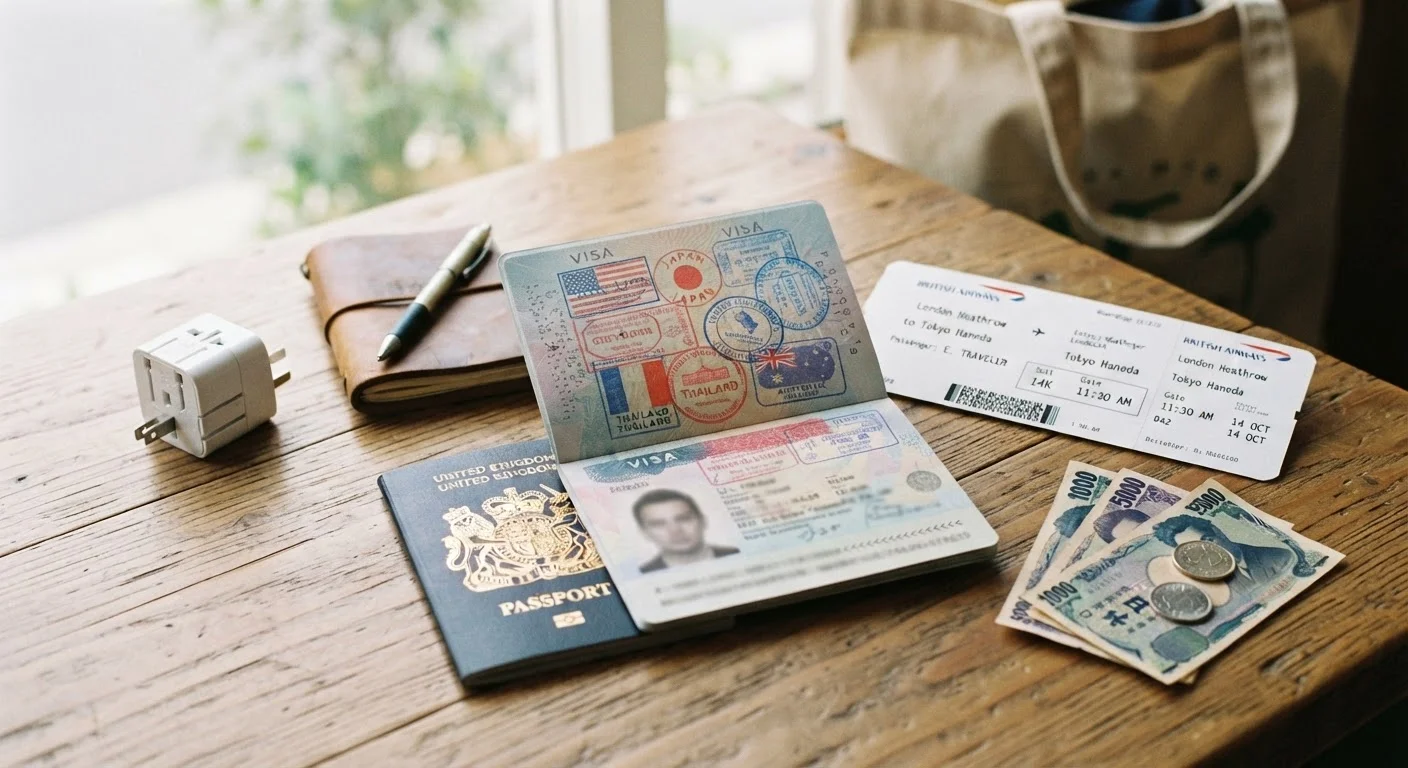
Your passport is your most critical document abroad - and many countries require it to be valid for at least six months beyond your planned return date. Check your expiration date early; U.S. passport renewal times can stretch to several weeks depending on processing volume.
Visa requirements depend entirely on your destination and citizenship. Americans enjoy visa-free or visa-on-arrival access to many countries, but others require advance applications - sometimes weeks in advance, with fees and documentation. The U.S. Department of State's travel website is the authoritative starting point for country-specific entry requirements. Never rely solely on a travel blog or forum for this information.
Some countries also require proof of onward travel (a return or connecting flight), proof of accommodation, or a minimum amount of funds. Border agents can and do ask for these. Confirm what your destination requires well before departure, and always verify directly with the destination country's official immigration authority or your nearest embassy.
Entry rules can change with little notice. Always verify current requirements with official government sources - both your own and the destination country's - before you travel.
Money, Power, and Connectivity Abroad
Currency: The U.S. dollar is not universally accepted. Most countries have their own currency, and exchange rates fluctuate. Notify your bank before departure to prevent fraud flags on your cards. Understand whether your debit or credit cards charge foreign transaction fees - these can add up across a multi-week trip. Local ATMs at your destination often offer competitive exchange rates, though fees vary by institution.
Power adapters: The U.S. uses Type A and B outlets at 110-120 volts. Much of Europe operates at 220-240 volts with different plug shapes. Using the wrong adapter - or no adapter - can damage electronics or create safety hazards. Check the voltage rating on your devices (usually printed near the charging port) and research your destination's outlet type before packing.
Connectivity: Your domestic phone plan almost certainly does not cover international calls and data at domestic rates. Options include adding a temporary international plan through your carrier, purchasing a local SIM card on arrival, or using an eSIM. Each approach has tradeoffs in cost, convenience, and compatibility. See International Roaming, Local SIMs, and eSIMs for a breakdown of how to compare them.
Health, Safety, and Insurance Considerations
Standard U.S. health insurance - including Medicare - typically does not provide coverage outside the country. Before any international trip, confirm exactly what your plan covers abroad. Many travelers purchase separate travel insurance that includes medical evacuation, which can be significant in remote destinations.
Some countries require or strongly recommend specific vaccinations. The CDC and your own healthcare provider are the right places to check well in advance - some vaccine courses require multiple doses over several weeks. Travel Insurance for International Trips covers what policies typically include and what fine print to watch for.
Safety perceptions of destinations are often shaped more by media coverage than by on-the-ground reality. Dangerous Destination Myths That Lead American Travelers Astray offers a clearer framework for assessing actual conditions. Register your trip with the State Department's Smart Traveler Enrollment Program (STEP) so the nearest U.S. embassy can reach you in an emergency.
Use Before You Board: A Pre-Departure Checklist to make sure nothing slips through the cracks in the final days before your flight.
This article is for general informational purposes only. Health, insurance, and entry requirement details can change - always verify current guidance with official government sources and a qualified healthcare provider before traveling internationally.