

Key Takeaways
Home Field Advantage
Home field advantage refers to the measurable benefit a sports team receives when competing in its own stadium or arena, in front of its own fans. This benefit shows up in win rates, scoring patterns, and officiating tendencies. Researchers across multiple sports have documented the effect for decades, though its exact causes are still debated.
Studies in sports psychology distinguish between crowd-driven effects on player arousal, referee decision-making, and visiting-team stress responses as separate but overlapping contributors to home field advantage.
The Science Behind the Roar
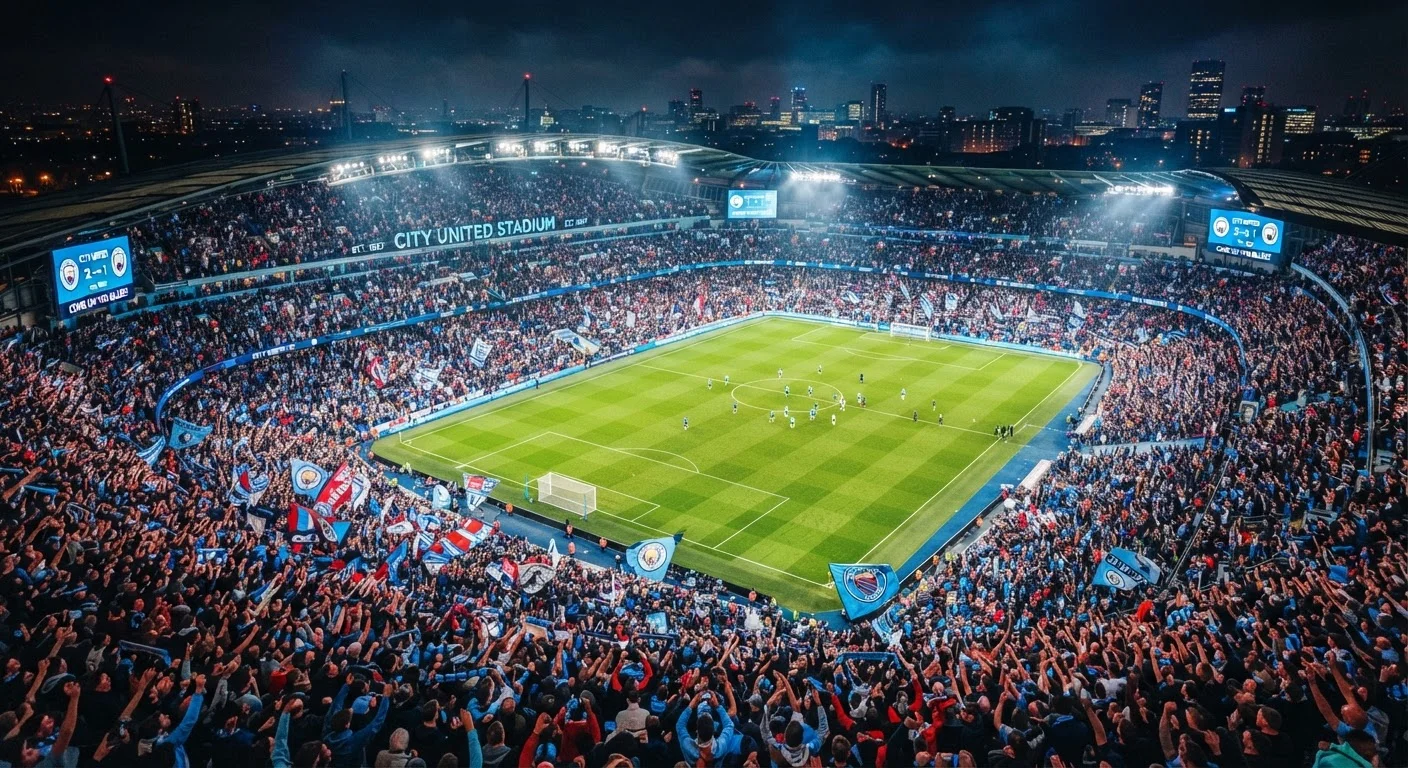
Walk into a sold-out stadium ten minutes before kickoff and you feel it before you hear it - a low, humming pressure that builds as the crowd finds its rhythm. That sensation isn't just atmosphere. A growing body of sports psychology and behavioral research suggests that crowd noise and synchronized fan behavior create measurable, real-world effects on the athletes competing below.
The most compelling evidence came, oddly enough, from its absence. During the 2020 pandemic season, major leagues including the NFL, NBA, and MLB played significant portions of their schedules in empty or sharply restricted stadiums. Across multiple analyses, home field advantage - historically one of the most durable statistics in team sports - shrank dramatically. Home teams that typically win 55-60% of games saw those margins compress toward coin-flip territory. The crowd, it turned out, wasn't just a backdrop.
~57%
Home team win rate in the NFL
Historical NFL data over multiple decades consistently shows home teams winning roughly 57% of regular-season games, a margin widely attributed in part to crowd effects.
142 dB
Peak crowd noise at Arrowhead Stadium
Guinness World Records certified Kansas City's Arrowhead Stadium as the world's loudest outdoor sports venue based on crowd measurements during Chiefs games.
Shrank significantly
Home field advantage during empty-stadium play
Multiple sports analytics studies examining 2020 pandemic-era games found home field advantage dropped sharply or disappeared when fans were absent from stadiums.
How Chants Get Inside Players' Heads
Synchronized crowd chanting works through two distinct channels: it lifts home players and burdens visiting ones. Sports psychologists describe the first effect as social facilitation - the well-documented tendency for people to perform better on familiar tasks when an engaged audience is watching. A quarterback who has heard his stadium erupt on third-down stops since college isn't just hearing noise; he's receiving a biochemical signal that the environment is safe, familiar, and charged with positive expectation.
The visiting team experiences something closer to the opposite. Crowd noise elevates cortisol (the body's primary stress hormone) in unfamiliar environments, which can compress reaction times and disrupt communication - costly in any sport where split-second reads matter. Football linemen calling out protection schemes, baseball catchers relaying signs, basketball point guards directing sets: all of these break down faster when 70,000 strangers are screaming at maximum volume.
Fan superstitions and rituals often cluster around these high-pressure moments for good reason - the crowd senses that its energy is most consequential when the game is on the line.
Referees Aren't Immune Either
Perhaps the most surprising finding in the literature is that trained officials - people whose entire professional identity rests on impartiality - are also influenced by crowd pressure. A widely cited study examining thousands of soccer matches found that referees awarded significantly more added time when the home team was trailing, a pattern consistent with unconscious crowd-pleasing. Similar patterns have been documented in basketball foul-calling and baseball strike zones.
This doesn't suggest corruption or deliberate bias. Referees are human beings operating under enormous cognitive load, making rapid judgments in ambiguous situations. In those gray-area calls - the borderline charge versus block, the bang-bang play at first base - crowd noise appears to function as an additional, invisible input that nudges decisions toward the home team.
The effect is strongest in intimate, enclosed arenas. NBA and NHL venues, where 20,000 fans are packed tightly around a relatively small playing surface, tend to produce louder relative crowd pressure than open-air football stadiums. Being in the stadium versus watching from home means experiencing that pressure as a participant rather than an observer.
Ritual, Identity, and Why It Matters Beyond the Score
Fan chants and crowd rituals aren't only about winning. They're among the most powerful tools communities use to build shared identity. The Tomahawk Chop at Braves games, the synchronized "De-fense" clap, the student sections that memorize elaborate call-and-response chants - these moments transform 50,000 strangers into a single organism with a shared purpose and a shared emotional stake.
Psychologists who study group behavior note that synchronized physical action - clapping, chanting, swaying - generates a measurable sense of social bonding among participants. It's the same mechanism behind military marching drills and religious ceremonies. When you chant alongside strangers, you briefly dissolve the boundaries between self and group, which is a powerful and genuinely pleasurable experience.
That's why sports fandom shapes local identity in American cities so durably. The rituals outlast individual seasons, individual rosters, even individual stadiums. And for fans who want to bring that ritual energy home, building a consistent game day tradition can replicate at least some of that collective feeling, even from a living room. For those heading to the arena, game day gear like face paint and jerseys are the visible layer of that same shared identity - signals to every other fan that you're in this together.