

Key Takeaways
Why Fans Believe in Magic
You've been there. Your team is up by three in the fourth quarter, and you haven't moved an inch - because the last time you shifted in your seat, they gave up a touchdown. Logically, you know it's nonsense. Emotionally? You're not risking it.
Sports fan superstitions are one of the most universal and endearing features of fandom. They show up in every sport, across every culture, and at every level - from Little League bleachers to Super Bowl watch parties. But where do they actually come from, and what do they tell us about the people who practice them?
Psychologists point to a concept called illusory correlation - the tendency to perceive a relationship between two unrelated events. When your team wins the game you watched wearing your old college hoodie, your brain files that away. Repeat it a few times and the ritual is born. Behavioural scientist B.F. Skinner documented similar patterns in the 1940s, showing that random reinforcement schedules are among the most powerful drivers of repeated behaviour.
But superstitions aren't just cognitive glitches - they're also coping tools. Sports are defined by uncertainty, and uncertainty produces anxiety. Rituals give fans a sense of agency, however symbolic, in outcomes they can't control. That's not irrational - it's deeply human. As rooting for a team becomes part of your identity, the emotional stakes climb, and so does the urge to do something.
Below are some of the most recognized fan superstitions in American sports - and a closer look at what each one reveals.
The Lucky Jersey (or the Cursed One)
Every serious fan owns a jersey they're afraid to wash during a winning streak - or one they've banished to the closet after a devastating loss. The logic is simple: the shirt was present at a win, therefore it carries power. Or it was present at a collapse, and it's now tainted.
This is classic associative thinking, the same mechanism that makes us knock on wood or avoid walking under ladders. The jersey itself is neutral, but the memories it holds are not. For fans who treat team gear as a form of identity - see the full tradition explored in the game day gear field guide - the lucky jersey becomes almost totemic.
The jersey itself is neutral, but the memories it carries are anything but.
Never Saying "We're Going to Win" Out Loud
Jinxing. It's real - or at least, fans treat it as though it is. Uttering confidence too soon is believed to invite disaster, and superstitious fans will shush anyone bold enough to declare victory before the final whistle.
This ritual taps into something called magical thinking - the belief that thoughts or words can influence external events. It persists even among educated, otherwise rational people because it serves a protective function: if you never say it, you can never jinx it, and you're never the one who spoke the curse into existence.
Uttering confidence too soon is believed to invite disaster - so fans keep quiet and knock on wood.
Sitting in the Exact Same Spot
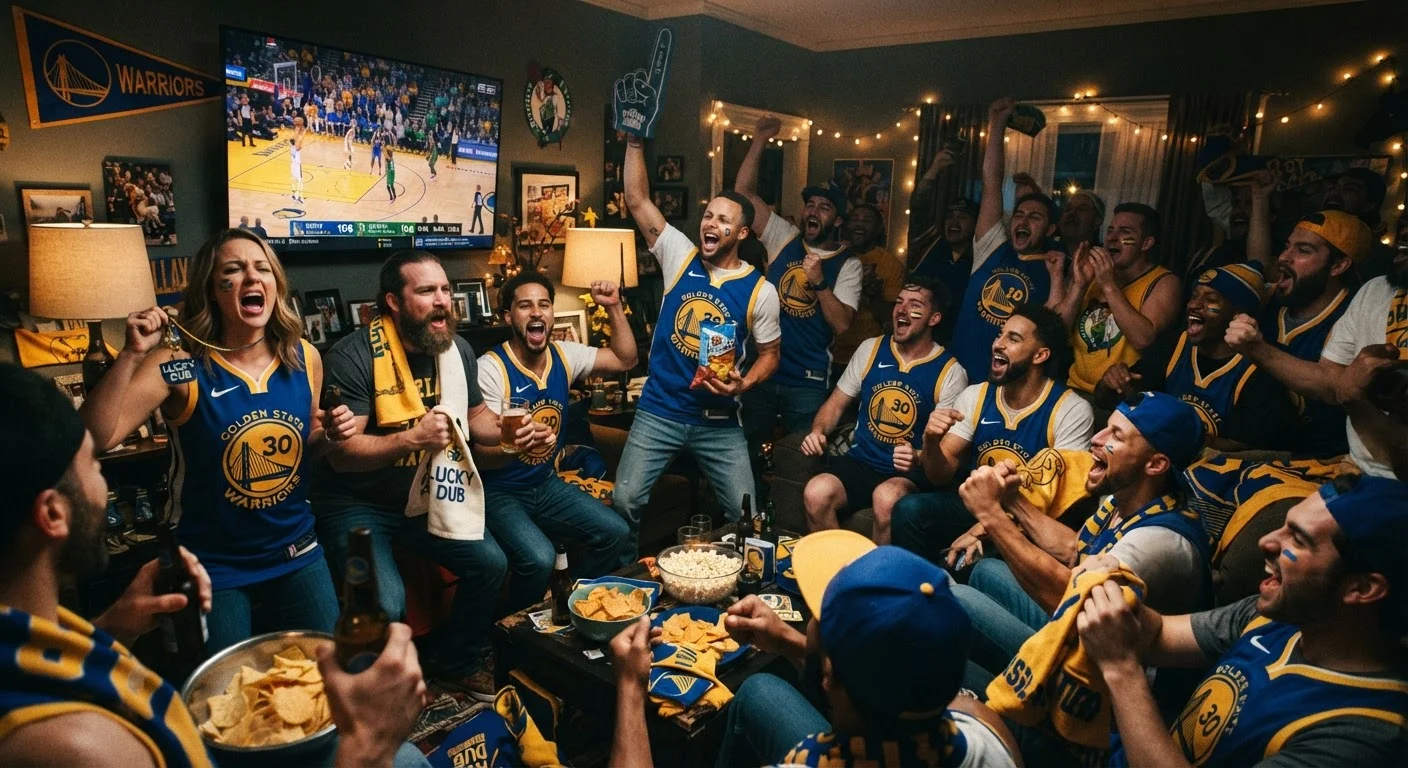
Whether it's the same couch cushion, the same barstool, or the same stadium seat, spatial loyalty is one of the most common fan rituals. The seat was occupied during a win, and now it must be occupied again - exactly the same way.
This is reinforcement in action. The perceived connection between location and outcome gets stronger each time the team wins with the fan in that spot. And when they lose? Well, you probably shifted wrong. First-time live attendees are often surprised to learn that veteran fans have very strong feelings about their sections.
Spatial loyalty is among the most common fan rituals - that seat won a championship once, and it will again.
The Pre-Game Meal (And It Must Be Exactly That Meal)
Wings from that specific place. The same brand of chips. Chili made from the same recipe used during the conference finals two years ago. Pre-game food rituals are nearly universal among dedicated fans, and they blur the line between superstition and tailgate tradition.
Food is deeply tied to memory and emotion, which makes it fertile ground for ritual. Eating the same meal recreates the sensory context of a past victory, and that familiarity can genuinely reduce stress - a documented effect of routine in behavioral science research.
Recreating the sensory context of a past win - right down to the snacks - can genuinely calm pre-game nerves.
Turning Off the Game When Things Go Badly
Here's the paradox: some fans believe they help their team by not watching. If the team struggles every time you're tuned in, perhaps your attention is the problem. The logical move - leave the room, switch off the TV, or refuse to watch the final drive.
This is sometimes called the fan effect fallacy, and it's almost charming in how seriously people take it. But it also reveals something real: intense fandom raises emotional stakes to the point where disengagement becomes a self-protective strategy. Watching feels too costly, so not watching becomes a ritual of its own.
When watching feels too costly, not watching becomes its own kind of ritual - and a self-protective one at that.
Crowd Chants and Synchronized Rituals
Some superstitions go collective. Thousands of fans stomping their feet in unison, clapping on the same beat, or performing a synchronized chant isn't just atmosphere - many fans genuinely believe it shifts momentum. And interestingly, they might not be entirely wrong.
Research into crowd noise and home-field advantage suggests that crowd energy can affect referee decisions and player performance in measurable ways. As explored in detail in the piece on crowd rituals and game outcomes, synchronized fan behaviour is one area where the line between superstition and actual influence gets surprisingly blurry.
Synchronized crowd rituals may cross from superstition into genuine influence - research suggests they can affect play.
The Bigger Picture: Ritual as Community
What makes sports superstitions genuinely fascinating isn't just the individual quirks - it's how quickly they become collective. A single fan refusing to change seats becomes a section of believers. A local sports bar that watched a playoff run in one corner of the room now packs that corner every postseason.
Start Your Own Game Day Ritual
You don't need a decade of fandom history to build meaningful traditions. Pick a consistent pre-game routine - same snacks, same starting time, same gathering place - and repeat it across a season. Over time, the routine itself becomes part of what makes following a team feel special. Shared rituals are especially powerful when they bring friends or family into the fold.
Rituals also connect generations. A father who always grilled the same brats before kickoff passes that habit to his kids, who carry it into their own adult lives. These small ceremonies become the texture of fandom - inseparable from memory, identity, and belonging. For a deeper look at how those bonds form from childhood, the guide to building lasting game day traditions is worth exploring.
The bottom line: you don't have to believe your lucky shirt actually controls outcomes to appreciate what it represents. Sports superstitions are how fans participate - how they make the game feel, even slightly, like theirs.