

Key Takeaways
Why Game Day Rituals Matter
There's something quietly powerful about the moment everyone settles into their spot, the same snack hits the table, and the familiar pre-game music swells through the room. Sports traditions aren't just habits - they're the architecture of belonging. Research in sports psychology consistently points to shared rituals as a driver of group cohesion and emotional investment, both for athletes and fans.
At home, you're not competing with a roaring stadium, but you don't need to. As explored in our breakdown of stadium vs. couch fandom, the home experience has its own irreplaceable texture - comfort, control, and intimacy. The goal isn't to replicate the arena; it's to make your living room feel like the only place to be when the puck drops or the kickoff happens.
Traditions also carry a generational charge. Team loyalty often starts at home, passed through exactly these kinds of repeated rituals - the same chili recipe, the same lucky chair, the same pre-game pep talk. Building something intentional now means you're potentially creating memories that outlast the season.
Start Small, Then Let It Grow
The most durable game day traditions weren't designed all at once - they accumulated. Begin with just one or two intentional elements and let the rest develop organically over a season. Forced complexity rarely sticks, but a single beloved ritual has real staying power.
How to Build a Game Day Tradition That Lasts
The steps below are designed to be low-pressure and adaptable - whether your crew is two people or twelve, whether you're a lifelong fan or just getting into the sport. The key is making deliberate choices and sticking to them.
What you will need
Choose Your Anchor Ritual
Every lasting tradition starts with one non-negotiable element - a single action or moment that signals "game day has begun." This could be a specific opening song, a group toast before tip-off, or the same appetizer served every time. Keep it simple enough that it's easy to replicate even when life gets chaotic.
Think about what genuinely excites your group. Food works well as an anchor because it's multisensory and memorable - the smell of the same wings recipe year after year becomes its own kind of time travel. So does a playlist. Pick something with emotional resonance for your crew, not just something that seems appropriately "sporty."
Assign Seats (and Respect Them)
It sounds trivial, but seating matters enormously in group settings. Having a default configuration - who sits where, who controls the remote, who has the best angle on the screen - eliminates low-level friction and gives everyone a sense of place. This is especially meaningful for younger fans who often thrive on predictability.
You don't need a formal rule. Just let it happen naturally for a few games, then acknowledge it: "That's your spot now." That moment of recognition is often when a habit graduates into a tradition.
Build a Signature Menu
Food is one of the most powerful memory anchors available. Choose two or three dishes that are practical to make consistently - ideally ones tied to your team's city, your family's background, or a shared inside joke. Rotate freely for regular-season games, but keep the signature items locked in for big matchups and playoffs.
Consider assigning specific dishes to specific people in your group. When everyone contributes, the meal becomes collaborative - and the tradition feels genuinely shared rather than hosted.
Set Up Your Space with Intention
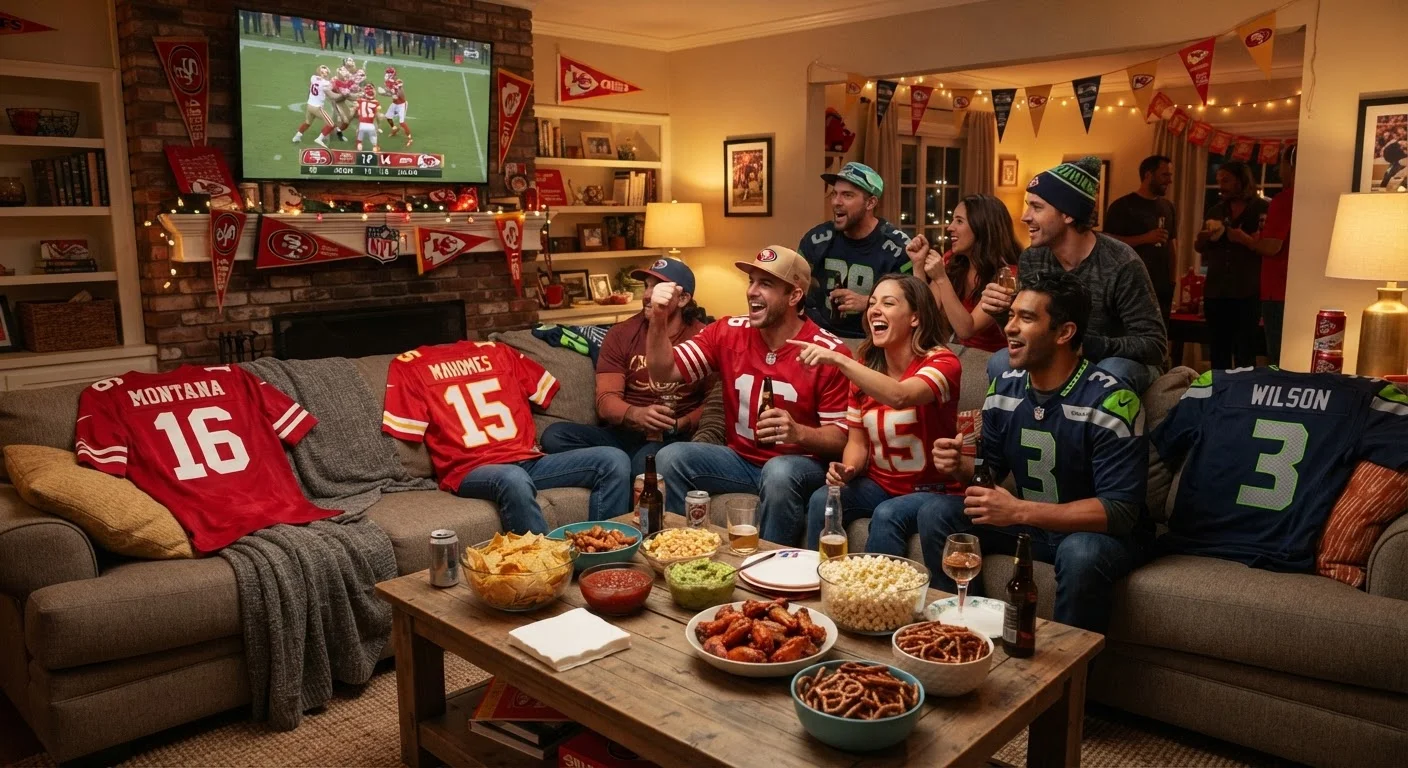
You don't need a dedicated sports room to create atmosphere. A few deliberate touches - team colors in your pillows or throws, a flag on the wall, a mounted whiteboard for live score-tracking - signal to everyone who walks in that this space has been prepared with care. Atmosphere primes people emotionally before a single play happens.
Tailgating culture shows how powerfully environment shapes the fan experience - the same energy is achievable indoors with the right setup.
Create a Post-Game Ritual
Traditions need a closing beat as much as an opening one. A post-game ritual - a brief recap conversation, a shared celebration or commiseration snack, even a group text thread - ties the experience together and creates closure. It also becomes something to look forward to regardless of the final score, which is what separates a ritual from just watching TV.
Keep it short and natural. The goal is punctuation, not a full second event.
Keeping the Tradition Alive Season After Season
A tradition only earns that title after it survives a few repetitions. In the early weeks, treat it as an experiment - gather light feedback from your group and make small adjustments without overhauling the whole structure. The goal is to lock in the elements that generate the most energy and let the rest evolve naturally.
Lean into the superstition side of fandom - it's more rational than it sounds. Fan superstitions reveal a lot about how we process hope and anxiety, and incorporating a playful ritual (wearing a lucky jersey, a specific pre-kickoff toast) adds color without requiring extra effort. Gear can reinforce the feeling too - check out our field guide to game day gear for ideas on how fan culture expresses itself through what we wear and display.
Finally, don't overlook the social contract. When people feel ownership over a tradition, they protect it. A group text the morning of the game, a rotating role for who picks the halftime activity, or a shared playlist that grows each season - these small touches signal that the tradition belongs to everyone, not just the host. That sense of shared investment is what separates a one-time hangout from something you'll still be doing a decade from now.