

Key Takeaways
Inherited Sports Fandom
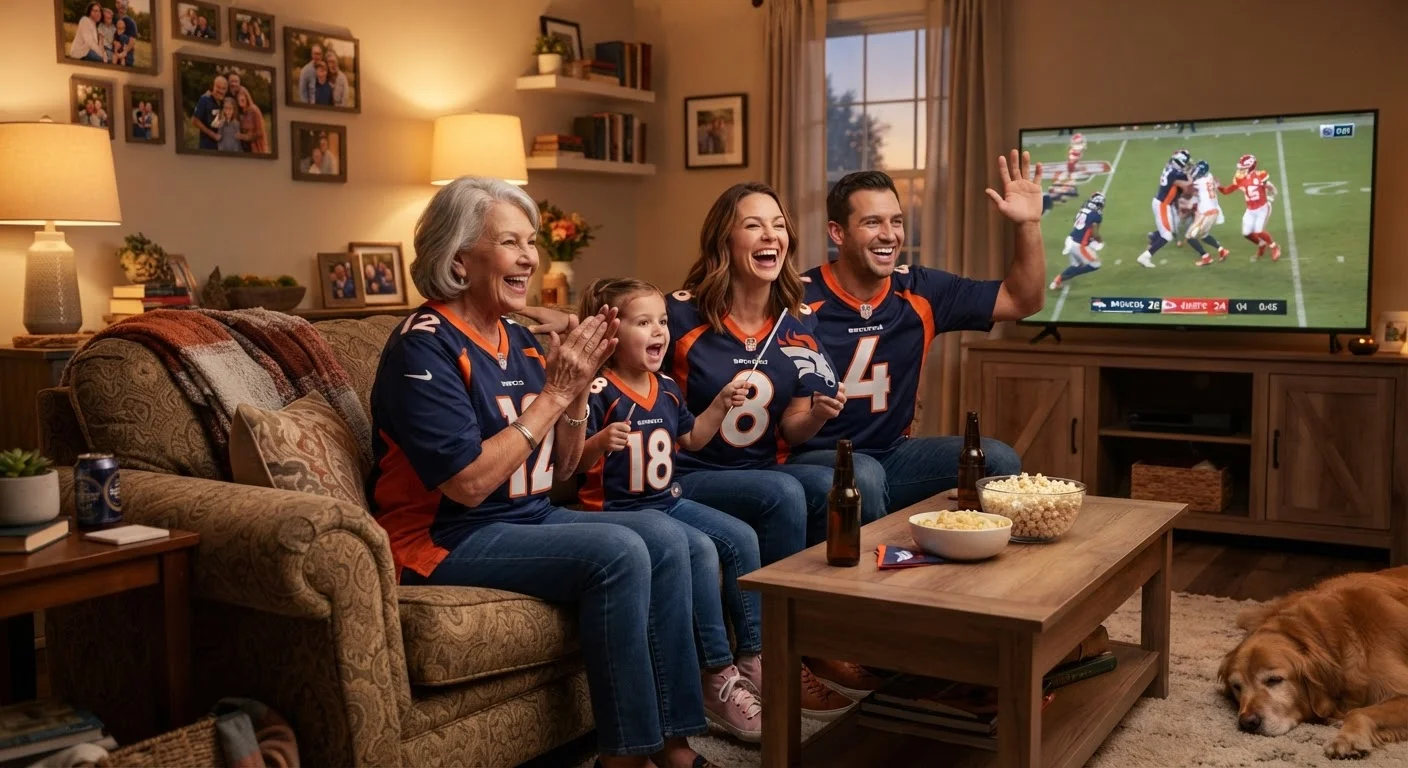
Inherited sports fandom refers to the process by which allegiance to a particular team or sport is transmitted from parents, grandparents, or other family members to younger generations. Rather than choosing a team based on research or merit, many fans develop their loyalties simply by growing up in a household where those loyalties already existed. It's less a conscious decision than a natural absorption of family culture.
Sociologists sometimes describe this as a form of 'identity socialization,' where shared rituals and emotional experiences bond individuals to a group - in this case, a team's fanbase - long before they have the cognitive context to evaluate the choice.
Where Fandom Really Begins
Ask almost any lifelong sports fan when they chose their team, and you'll likely get a puzzled look. Most fans didn't choose at all - the team chose them, delivered by a parent, grandparent, or older sibling before they were old enough to evaluate the roster. It's one of the most reliable patterns in American sports culture: loyalty flows through families like a surname.
This isn't accidental. Children are exquisitely attuned to the emotional lives of the adults around them. When a caregiver erupts with joy after a buzzer-beater or slumps in disappointment after a playoff collapse, the child registers those emotions as meaningful - and begins associating the team with the richness of family life itself. Understanding why this bond forms so early and so durably is the key to understanding what sports fandom actually is. For a deeper look at the emotional mechanics involved, see our piece on the psychology of rooting for a team you never chose.
The Power of Ritual in Fandom Transmission
Fandom doesn't travel between generations through words alone - it travels through ritual. The specific foods prepared on game day, the chair only Dad sits in during fourth quarters, the jersey pulled out of the closet every season: these repeated, sensory experiences wire team identity into a child's memory long before the child understands anything about the game itself.
Families often don't realize they're creating traditions in real time. A grandfather who always makes chili for Sunday NFL games, or a mother who paints her daughter's face before every playoff run, is doing something more significant than celebrating a sport. She's building a shared language that her child will one day speak with her own children. These micro-traditions are the connective tissue of multi-generational fandom.
Make the First Game Memorable
If you're introducing a child to your team for the first time, lean into the full experience: wear the gear, explain what's happening on the field in simple terms, and let them feel the crowd energy. The goal isn't to teach them the rulebook - it's to make them feel like they belong. That emotional imprint is what tends to last a lifetime.
For practical ideas on building those routines, our guide to building a game day tradition at home that actually sticks is a great starting point.
What the Research Suggests - and What Fans Already Know
Sociological research on fan identity consistently points to family as the primary socialization agent in sports. Studies on fandom formation routinely find that early childhood exposure - especially emotionally positive exposure - is the single strongest predictor of lifelong allegiance. A child who attends games with a parent, watches at home with grandparents, or grows up with team memorabilia on the walls is far more likely to carry that allegiance forward than someone who encounters a team as an adult.
~70%
Fans who root for a parent's team
Survey research on sports fandom consistently finds that roughly two-thirds to three-quarters of fans report their team loyalty was shaped primarily by a parent or family member.
Age 7
Typical age of team allegiance formation
Sports psychology research suggests most fans form a stable team identity by middle childhood, often before developing critical reasoning about the choice.
3x
Higher retention with live game attendance
Fan retention studies indicate that children who attend live games with family members are significantly more likely to remain active fans into adulthood compared to those who only watch on TV.
What fans know intuitively - that rooting for a team feels like rooting for your family - reflects something real about how group identity forms. This is also why fandom connects so naturally to place. Teams anchor families to a shared community story, a dynamic explored further in our article on how sports fandom shapes local identity in American cities.
When Kids Forge Their Own Path
Of course, inherited fandom isn't destiny. Some children of devoted Cubs fans grow up to love the White Sox - sometimes deliberately, as an assertion of independence. Others attend a college in a different state and absorb the local team identity so deeply that it rivals or replaces their childhood allegiance. These stories are the exception that proves the rule: diverging from family fandom is notable precisely because family fandom is the default.
It's also worth noting that the landscape has shifted in recent decades. Online fan communities and social media now give young fans access to global sports cultures and distant teams in ways that simply didn't exist a generation ago. A teenager in Ohio can fall deeply in love with a Premier League club through YouTube and Twitter, creating loyalties that owe nothing to family geography. Still, for most American fans, the first team they loved remains the team they love longest - and that team almost always came from home.
As fandom matures, it continues to evolve in fascinating ways. See how allegiances shift over a lifetime in our piece on the long arc of fan identity.