

Key Takeaways
Option A
College Athletics (NCAA)
The tradition-soaked, campus-driven foundation of American sports.
Best for: Fans who value regional identity, school spirit, and the raw passion of student-athletes competing for pride and a shot at the pros.
Option B
Professional Leagues (NFL, NBA, MLB, NHL, etc.)
The polished, business-driven pinnacle of American athletic competition.
Best for: Fans seeking the highest skill level, marquee player storylines, and a nationally organized league structure with franchise stability.
If you crave deep-rooted tradition, school loyalty, and passionate local fanbases
College Athletics (NCAA)
College sports are built around regional and institutional identity that spans generations, making the emotional stakes feel uniquely personal for fans and communities alike.
If you want to watch the very best athletes competing at the highest skill level
Professional Leagues
Pro leagues represent the apex of athletic development, where only the most elite players compete full-time with world-class coaching, training, and resources.
If you're interested in how sports economics and business models work
Professional Leagues
Pro leagues operate sophisticated franchise models with revenue sharing, salary caps, and collective bargaining that make them fascinating case studies in sports business.
If you enjoy underdog stories and watching athletes develop before they become stars
College Athletics (NCAA)
College sports is where future legends cut their teeth - the unpredictability and rapid player turnover creates fresh storylines and genuine upset potential every season.
Ownership, Governance, and Who's in Charge
The most fundamental difference between college and professional sports is who runs the show. Professional leagues like the NFL, NBA, MLB, and NHL are operated by private ownership groups - wealthy individuals or investor consortiums who own franchises as business assets. League decisions flow through a commissioner's office and are shaped by collective bargaining agreements (CBAs) negotiated between team owners and player unions.
College athletics operate through a completely different framework. Teams belong to universities and are governed by the NCAA (National Collegiate Athletic Association), a member-driven organization, alongside individual athletic conferences such as the SEC, Big Ten, ACC, and Pac-12. Schools - not outside owners - control their programs, and decisions about eligibility, recruiting, and competition standards are set by conference rules and NCAA bylaws.
For a deeper look at how pro league structures are built, see our breakdown of American professional sports league organization.
| Criterion | College Athletics (NCAA) | Professional Leagues |
|---|---|---|
| Governing Body | NCAA + athletic conferences | League commissioners + player unions |
| Athlete Pay | Scholarships + NIL deals (no salary) | Negotiated contracts, often millions annually |
| Team Ownership | Universities and colleges | Private franchise owners |
| Revenue Sharing | Conference distributions to schools | League-wide sharing including to players |
| Player Movement | Transfer portal (still regulated) | Free agency, trades, contracts |
| Season Structure | Tied to academic calendar | Standalone annual season schedule |
| Primary Purpose | Educational mission + athletics | Profit-driven sports entertainment |
Athlete Compensation: From Amateurism to NIL
For most of the 20th century, college athletes were governed by strict amateurism rules - they could not accept payment for their athletic performance without losing eligibility. That changed dramatically in 2021 when the Supreme Court ruled against the NCAA in NCAA v. Alston, and the NCAA subsequently permitted athletes to profit from their Name, Image, and Likeness (NIL) - endorsement deals, social media sponsorships, and personal appearances.
Even with NIL, college athletes don't receive direct salaries from their schools. Professional athletes, by contrast, earn negotiated contracts that can run into tens or hundreds of millions of dollars, with guaranteed money, signing bonuses, and performance incentives protected by union agreements.
The contrast is stark: the average NFL player salary is well above $2 million annually, while most college athletes - even those generating enormous revenue for their programs - receive scholarships covering tuition and living expenses, plus whatever NIL deals they can secure independently.
Curious how athlete development connects these two worlds? Our piece on how American athletes rise through the ranks traces that full journey.
Revenue, Money Flows, and Who Benefits
College athletics generate enormous revenue - particularly in football and men's basketball - but the money flows differently than in professional sports. University athletic departments use revenues to fund coaches' salaries (some exceeding $10 million annually), facility upgrades, and non-revenue sports programs. Conferences distribute TV rights money to member schools. Until recently, athletes themselves were largely excluded from this financial windfall.
In professional leagues, revenue sharing is a cornerstone of the business model. The NFL, for example, distributes national TV contract money equally among all 32 franchises, creating competitive balance and ensuring even small-market teams can stay financially viable. Players receive a negotiated share of league revenues through CBAs - typically around 48-50% of defined league revenues in major sports.
$23B+
Estimated annual NCAA athletics revenue
The NCAA and its member institutions collectively generate over $23 billion in annual athletic revenue, with football and basketball dominating.
$12.2B
NFL annual revenue (approximate)
The NFL is the highest-revenue professional sports league in the world, driven largely by its massive television rights deals.
~48-50%
Players' share of league revenues in major pro sports
Collective bargaining agreements in the NFL, NBA, and NHL guarantee players a defined percentage of total league revenues.
For more on the economics side of pro sports, see what people get wrong about how sports franchises make money.
Player Movement, Drafts, and Development Pipelines
College sports serve as the primary developmental pipeline for most American professional leagues. The NFL and NBA conduct annual drafts that pull talent almost exclusively from college programs. MLB operates a minor league system alongside college recruitment, while the NHL blends college, junior leagues, and international pipelines.
In professional sports, player movement is governed by contracts, trades, free agency, and league rules. Players can be bought, sold, and traded as franchise assets - subject to CBA provisions. College athletes, until very recently, had no such mobility: transfer rules severely restricted moving between schools. Updated NCAA transfer portal rules now give athletes more freedom, but the framework remains far more restrictive than the open market of pro sports.
How minor leagues fit into this development picture is another layer worth understanding - especially for baseball and hockey fans.
Culture, Fandom, and What Makes Each World Unique
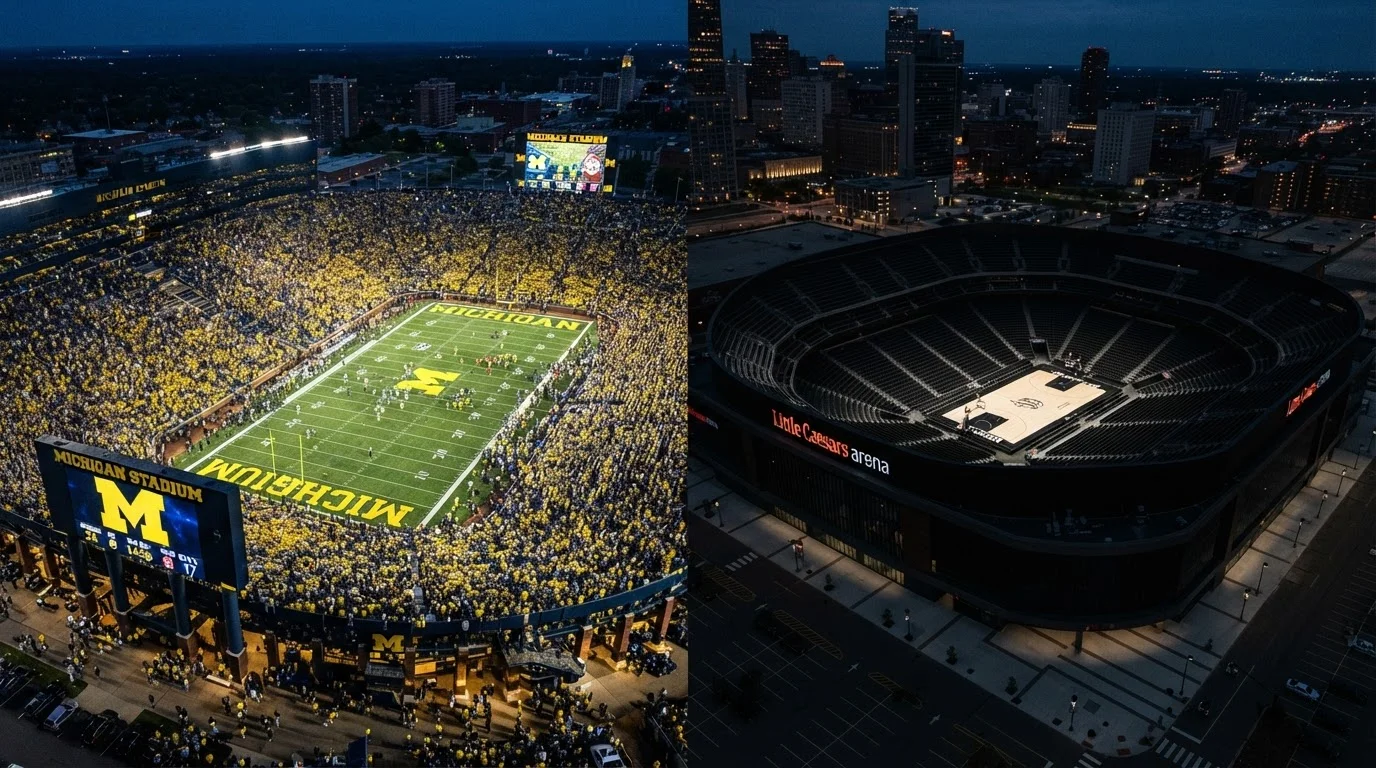
Ask a fan of the University of Alabama or the University of Michigan about their loyalty and you'll quickly understand that college sports fandom is tied to identity - alumni bonds, geographic pride, and generational tradition. College stadiums like Michigan's "Big House" (capacity over 107,000) regularly sell out, and the pageantry of marching bands, rivalries, and bowl games is deeply woven into American culture.
Professional sports fandom tends to be driven more by city and franchise loyalty, superstar players, and championship chases. A fan in Los Angeles might root for the Lakers regardless of where they grew up, attracted by the team's history or a favorite player. The business of pro sports - trades, free agency, salary cap maneuvering - also becomes part of the fan experience in ways that don't exist at the college level.
These two cultures coexist and feed each other: the college star becomes the pro hero, and the pro game elevates the legends first built on campus. For a cultural deep-dive, our article on college vs. professional sports fandom explores exactly what sets these two fan worlds apart.