

Key Takeaways
Minor Leagues
Minor leagues are official developmental systems used by major professional sports organizations to train and evaluate players before they reach the top level of competition. They operate below the major leagues in a tiered structure, giving athletes real game experience while organizations assess readiness for promotion. Each team at the minor league level is typically affiliated with a major league club that funds, staffs, and directs the player development program.
In MLB, the formal affiliation structure is governed by the Professional Baseball Agreement between Major League Baseball and Minor League Baseball, which underwent significant restructuring in 2021, reducing the number of affiliated teams.
The Pipeline Concept: Why Developmental Leagues Exist
Professional sports organizations face a fundamental challenge: how do you evaluate and develop raw talent before trusting it on the biggest stage? The answer, across most major American sports, is the minor league system - a structured, multi-tiered pipeline that turns prospects into professionals.
Think of it as a long runway. A 19-year-old pitcher drafted out of high school doesn't belong in a major league rotation on day one. He needs reps, coaching, and competitive pressure in an environment where failure is part of the learning process. Minor leagues provide exactly that. For a deeper look at how these systems fit into the broader sports landscape, see our breakdown of American professional sports league structure.
120
Affiliated Minor League Baseball teams post-2021
MLB reduced its affiliated minor league system from approximately 160 teams to 120 as part of a restructuring agreement finalized in 2021.
~10%
Draft picks who reach the major leagues
Baseball America and various industry analyses suggest roughly one in ten drafted players ultimately appear in an MLB game, underscoring how competitive the pipeline is.
30+
NBA G League teams operating today
The G League has expanded to mirror the NBA's 30-team footprint, with most franchises maintaining direct one-to-one affiliations with an NBA club.
Baseball's Tiered System: The Most Elaborate in American Sports
No sport has built a more comprehensive developmental infrastructure than Major League Baseball. The modern affiliated minor league system - reformed in 2021 - consists of four primary levels: Rookie/Single-A, Double-A, and Triple-A. Each tier reflects a different stage of player readiness.
- Single-A: Entry-level professional baseball for recent draft picks and international signees.
- Double-A: Often called the toughest proving ground, where only players with legitimate major league potential thrive.
- Triple-A: The final step before the majors, where polished prospects and veteran players compete for roster spots.
Each of MLB's 30 clubs maintains one affiliate at every level. The parent club provides players, coaches, and a development philosophy - but the minor league team itself is locally owned and operated, creating a unique partnership between big-league front offices and small-market communities. Want more on MLB's long organizational history? Explore the complete history of MLB's league structure.
Basketball and Hockey: Different Structures, Same Mission
The NBA G League mirrors MLB's intent, if not its scale. Launched in 2001 as the NBDL and rebranded after Gatorade became its naming rights sponsor, the G League now features more than 30 teams, most directly affiliated one-to-one with an NBA franchise. Players can be called up mid-season, and two-way contracts allow athletes to split time between the G League and the NBA without burning eligibility.
Hockey operates through the American Hockey League (AHL), which functions as the primary developmental circuit for the NHL's 32 teams. The AHL has produced the majority of active NHL players and coaches, making it one of the most effective pipelines in professional sports.
The NFL, notably, has no equivalent system. It leans almost entirely on college football - a topic worth exploring in our comparison of college athletics and professional leagues.
The Human Side: Life in the Minor Leagues
Behind every stat line is a story of sacrifice. Minor leaguers endure long bus rides between small cities, modest per diems, and the constant uncertainty of whether today's performance will be enough for tomorrow's call-up. The emotional and physical toll is real - and only a small fraction of drafted players ever appear in a major league game.
Yet the minor leagues also produce some of American sports' most compelling stories. Late bloomers who refined one pitch in Double-A. Catchers who became managers. Outfielders who found their swing after years of stagnation. For more on those varied developmental journeys, read about the very different roads athletes take to stardom.
The minor leagues also serve a practical roster function: they're where injured major leaguers rehabilitate. A star shortstop nursing a hamstring strain might spend two weeks in Triple-A to regain timing before returning to the big club - a low-stakes environment for high-stakes recovery.
“The minor leagues aren't just about developing players - they're about developing people. The bus rides, the small towns, the grind of 140 games teaches you things the big leagues can't.”
— Buck Showalter, Longtime MLB manager and former minor league player and manager
Why Minor League Baseball Matters to Local Communities
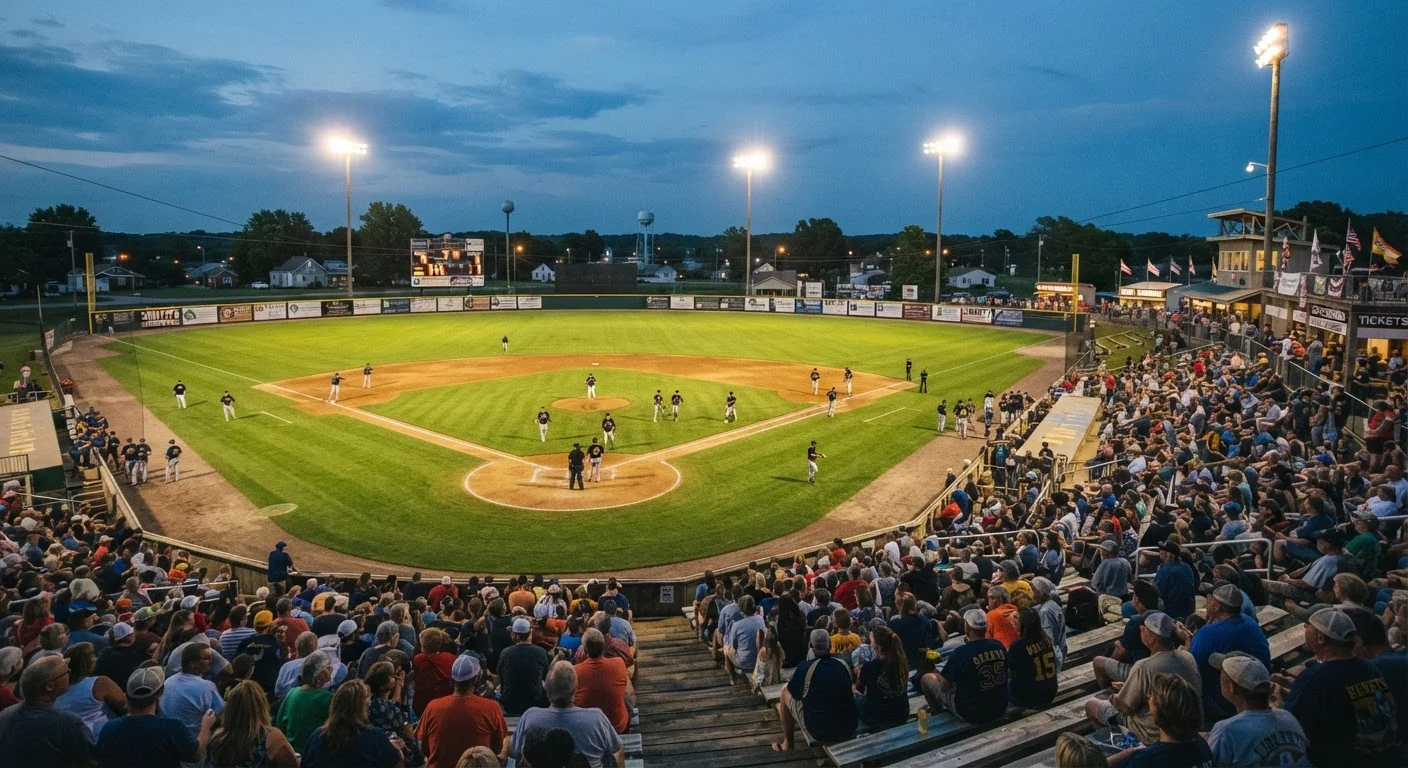
Minor league franchises are often the heartbeat of smaller American cities. In places like Durham, North Carolina, or Sacramento, California, the local affiliated team isn't just a feeder system - it's a civic institution. Affordable tickets, quirky promotions, and the genuine possibility of watching a future All-Star makes minor league baseball a beloved tradition in its own right.
The 2021 restructuring of MLB's affiliation agreements trimmed the number of affiliated teams from roughly 160 to 120, a change that eliminated teams in dozens of communities. That decision sparked significant debate about the balance between organizational efficiency and the cultural value of grassroots professional baseball.
For fans interested in the bigger picture of how American sports organizations are built and what drives their decisions, see how the four major leagues compare across structure and culture. And if you're new to following prospects on their way up, this guide to how athletes rise through the ranks is an excellent next read.