

Key Takeaways
Tailgating
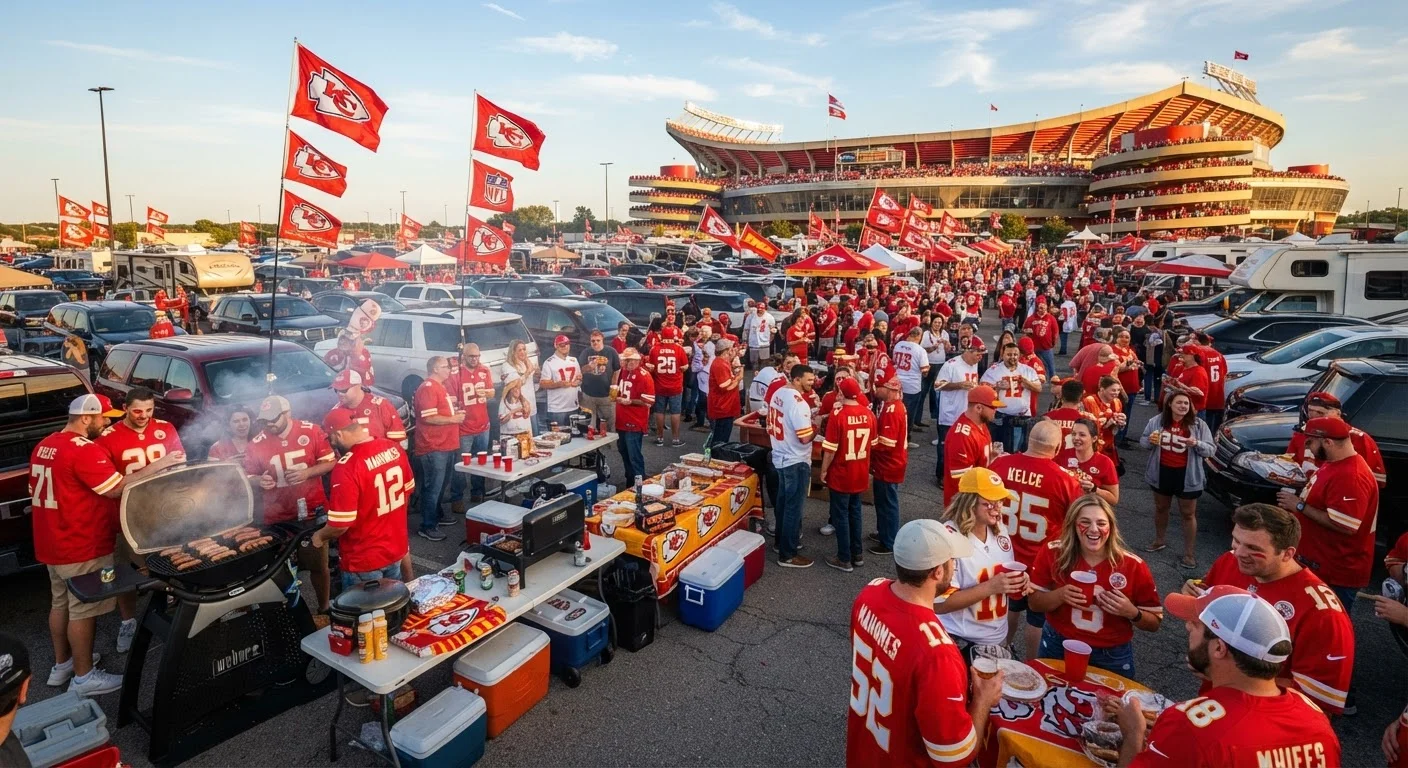
Tailgating is the American tradition of gathering in or around a vehicle in a stadium parking lot before a sporting event to eat, drink, socialize, and celebrate team spirit. Fans set up grills, fold-out tables, lawn chairs, and speakers to create a festive pre-game environment. It's as much about community and ritual as it is about the food.
The term derives from the tailgate - the hinged rear panel of a pickup truck - which fans historically used as a serving surface. Modern tailgating has expanded well beyond trucks to include elaborate tents, generators, and catered setups.
A Tradition Born From Wheels and Team Spirit
Long before gleaming stadiums and jumbo screens, American sports fans were finding ways to turn the journey into part of the event. The tailgate tradition stretches back more than a century, rooted in the practical reality that getting to a game was an adventure - and arriving early meant you needed something to do.
Most historians point to 19th-century college football as the cradle of tailgating, with fans arriving by horse-drawn carriage and gathering to eat before the game. As automobile culture exploded through the mid-1900s and the NFL grew into a national institution, the pickup truck parking lot became the unofficial pregame stadium. By the 1970s and '80s, tailgating had become a fully codified American ritual - complete with rivalries over the best setup, fiercely guarded parking spots, and multigenerational family traditions.
Today, tailgating is recognized as one of the most distinctive features of American sports culture - something visitors from other countries often describe as uniquely fascinating. It's a phenomenon that connects team fandom to local civic identity in ways that go far beyond the scoreboard.
The Rituals That Make It More Than a Meal
What separates a tailgate from a simple cookout is the density of ritual layered into every detail. Serious tailgaters arrive three, four, sometimes five hours before kickoff - not because they need that long to grill, but because setup itself is part of the ceremony.
Team flags go up first. Then the grill. Then the specific playlist that's been playing at this crew's tailgate for the past decade. Every group has its signature dish - a chili recipe passed down from a grandfather, a marinade nobody's allowed to write down. There are toasts, handshakes, and superstitions. There are rival-team jerseys that get good-natured ridicule and newcomers who get folded into the circle within minutes.
First-Time Tailgater? Arrive Early and Bring Something to Share
Tailgate culture rewards early arrivers and generous guests. Showing up two or more hours before kickoff gives you time to absorb the atmosphere and meet your neighbors. Bringing a dish, drinks, or even just extra napkins signals good faith - most experienced tailgaters will welcome a newcomer who comes in that spirit.
These rituals do psychological work. Research in sports sociology suggests that pre-game communal rituals heighten emotional investment in the outcome, bond individuals to their group, and give fans a sense of agency in a situation - the game - where they have none. The tailgate is where fans psyche themselves up collectively, building shared belief before they walk through the gates.
Fan gear plays a central role in this ritual language. Matching jerseys, painted faces, and team-colored accessories all signal belonging and transform strangers into temporary family. For a deeper look at what that gear communicates, this guide to game day gear traditions unpacks the symbolism.
Regional Flavors and Stadium Legends
Ask any seasoned football fan about the best tailgate in America and you'll start an argument that lasts all season. Green Bay's Lambeau Field parking lots are famous for their warmth-in-brutal-cold camaraderie. Kansas City's Arrowhead Stadium regularly tops lists of the most intense tailgate cultures in the NFL. College football's SEC - the Southeastern Conference - boasts scenes like the Grove at Ole Miss, where tens of thousands gather in a manicured park for what amounts to a formal outdoor party.
~50M
Americans who tailgate annually
Industry estimates suggest roughly 50 million Americans participate in some form of tailgating each year, according to figures cited by the American Tailgaters Association.
3-5 hrs
Typical pre-game tailgate window
Experienced tailgaters at major NFL and college venues commonly begin setup three to five hours before kickoff, treating arrival time as a point of pride.
#1
Sport for tailgate culture: NFL football
NFL games consistently generate the largest and most elaborate tailgate gatherings of any American sport, driven by the once-a-week game schedule and high emotional stakes.
The food is regional, and that matters. New Orleans Saints fans are as likely to be serving jambalaya and red beans as burgers. Steelers fans in Pittsburgh have their pierogi traditions. It's not just food - it's cultural identity expressed through a grill.
These local flavors are part of what makes attending a live game a fundamentally different experience than watching from home. If you're heading to your first in-person event, here's what first-time attendees should know about stadium culture - including how to navigate the tailgate scene with confidence.
When the Parking Lot Becomes a Community
Perhaps the most underappreciated dimension of tailgating is what it does for the people involved over years and decades. Many tailgate groups have been showing up to the same spot - sometimes the same parking space - for 20 or 30 years. Children who attended as toddlers now bring their own kids. Friendships that started over a shared cooler have lasted a lifetime.
This is community-building with a weekly rhythm. For many fans, particularly in cities where the local team is a defining civic institution, the tailgate is the neighborhood. It's where people who might otherwise never interact - different professions, backgrounds, age groups - find common ground through shared team devotion.
That spirit doesn't have to stay in the parking lot. Fans who can't make it to games often build analogous rituals at home - same seats, same snacks, same pre-kickoff routine. Building a game day tradition at home can capture some of that same communal energy, even from the couch. And for those who love exploring the psychology of why fans do what they do, fan superstitions share the same emotional roots as tailgate rituals - the need to feel connected and prepared.
The parking lot party isn't pre-game filler. It's the game within the game - and for millions of American fans, it's where the real season lives.