

Key Takeaways
Total Cost of Ownership
Total cost of ownership (TCO) is the full amount you'll spend on a product over its useful life - not just what you paid upfront. It includes consumables, maintenance, required accessories, software subscriptions, and eventual replacement costs. Marketers focus on purchase price; TCO gives you the complete financial picture.
In business accounting, TCO is a formal framework for evaluating capital expenditures. The same logic applies to consumer purchases, though it's rarely presented that way at the point of sale.
Why the Purchase Price Is Just the Beginning
Most consumers evaluate products by comparing upfront prices. That habit works well for simple, one-time purchases - but for a growing share of products on the market, it's an unreliable guide to actual cost. Manufacturers increasingly design revenue models where the hardware or initial product is only an entry point into an ongoing spending relationship.
This isn't new - printer ink has followed this model for decades - but the pattern has spread into categories that once had clean, one-time cost structures: kitchen appliances, personal care devices, fitness equipment, software tools, and home electronics. Understanding how these cost structures work is the first step to evaluating what you're really agreeing to buy. For a broader look at charges that don't appear in advertised prices, see our piece on hidden costs in everyday purchases.
The Three Main Hidden Cost Structures
Most ongoing product costs fall into one of three categories, often used in combination:
1. Consumables
These are materials the product requires repeatedly to function - ink cartridges, filter pods, razor blade cartridges, cleaning solutions, or specialty bags. The unit economics here frequently favor the manufacturer dramatically. A product priced accessibly at retail may require consumables that cost several times the device's price per year of normal use. When evaluating any product with a consumable component, estimate your annual usage volume and price out the consumables independently before committing.
2. Proprietary Accessories and Parts
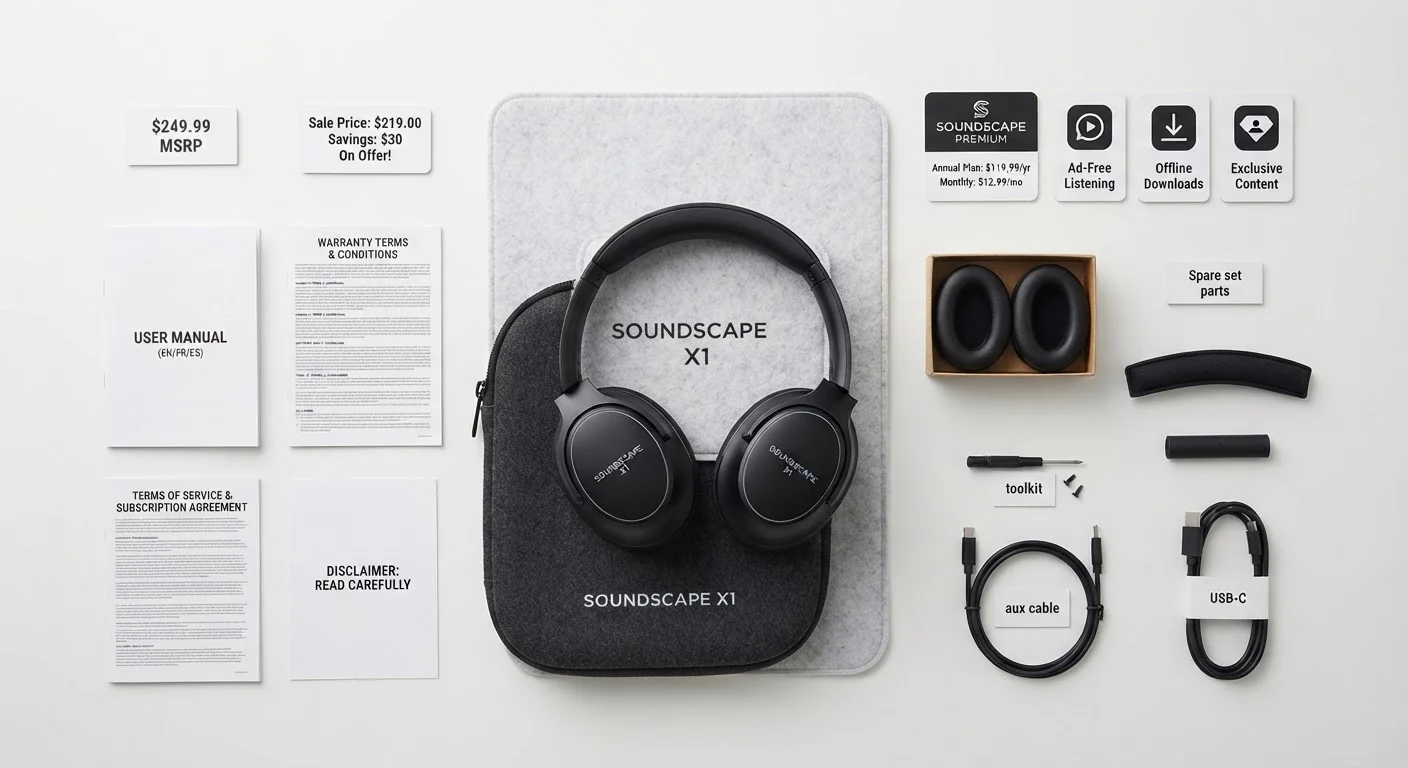
When a manufacturer uses non-standard connectors, proprietary battery formats, or platform-specific components, they control the entire aftermarket. This eliminates price competition and can make repair or expansion significantly more expensive than it would be in an open ecosystem. It also creates a practical lock-in: switching platforms means abandoning your investment in compatible accessories.
3. Subscription-Gated Features
An increasing number of hardware products now require ongoing subscriptions to access core or enhanced functionality - cloud storage for a security camera, advanced metrics from a fitness device, or software features in a smart appliance. When a subscription lapses, so does the functionality. This effectively converts a one-time purchase into a recurring obligation, and the cost compounds over a multi-year ownership period.
~$120-$300
Estimated annual ink cost for a home inkjet printer
Consumer Reports and industry analysts have consistently found that ink and toner cartridges represent the largest ongoing cost of printer ownership, often exceeding the printer's purchase price within the first year of regular use.
3-5x
Ratio of lifetime consumable cost to device price in some categories
Analysis of high-consumable product categories - including single-serve brewers, inkjet printers, and some personal care devices - suggests total consumable spending can exceed initial device cost by several multiples over typical ownership periods.
Over 50%
U.S. adults with at least one paid digital subscription
Surveys by Deloitte and other research firms have found that a majority of American consumers pay for at least one digital subscription, with many underestimating their total monthly subscription spend across all services.
How to Estimate Real Ownership Cost Before You Buy
The goal isn't to avoid products with ongoing costs - it's to make sure you're accounting for them. A few practical steps make this easier:
- Search for consumable pricing before purchase. Look up what the ongoing materials cost, not just the device. Annualize it based on realistic usage frequency.
- Check the accessory ecosystem. Are third-party alternatives available and permitted under warranty terms? Or does the manufacturer require proprietary replacements?
- Read subscription terms carefully. Identify which features require an active subscription versus which are available without one. Determine what happens to your data or functionality if you cancel.
- Calculate a two-year total. Add purchase price plus two years of estimated consumables, subscriptions, and likely accessories. This figure is far more comparable across products than sticker price alone.
This kind of analysis is related to how small recurring spending decisions compound over time - individually manageable, but significant in aggregate. It's also worth understanding how sale pricing can obscure true cost when a discounted device still carries a high ongoing cost structure.
Search Consumable Costs Before You Buy
Before purchasing any product with a recurring consumable - pods, cartridges, filters, blades - search the replacement cost and multiply it by your expected annual usage. Compare that annual figure across competing products, not just the purchase price. This single step often reveals which option is genuinely more affordable over time.
Reframing Value: Cost-Per-Use Over Sticker Price
A more durable, more expensive product that lasts five years without significant ongoing costs may represent considerably less total spending than a cheaper product that requires constant consumable replenishment. The concept that bridges this comparison is cost-per-use: total ownership cost divided by the number of times you actually use the product.
This reframe is particularly useful for frequently used items. A kitchen appliance used daily has a very different cost-per-use calculus than one used monthly. High-use items justify higher upfront investment in quality and lower ongoing costs. Low-use items may not justify premium pricing regardless of build quality.
Pricing tactics at the point of sale - charm pricing, anchor prices, bundle structures - are designed to keep your attention on the initial number. Understanding how psychological pricing shapes perceived value helps you step back from that frame and evaluate products on a total-cost basis instead. Similarly, being able to identify misleading product claims helps you cut through marketing language and focus on structural cost factors that actually affect your wallet.
This article is for general informational purposes only and does not constitute financial or purchasing advice tailored to your individual circumstances.