

Key Takeaways
Psychological Pricing
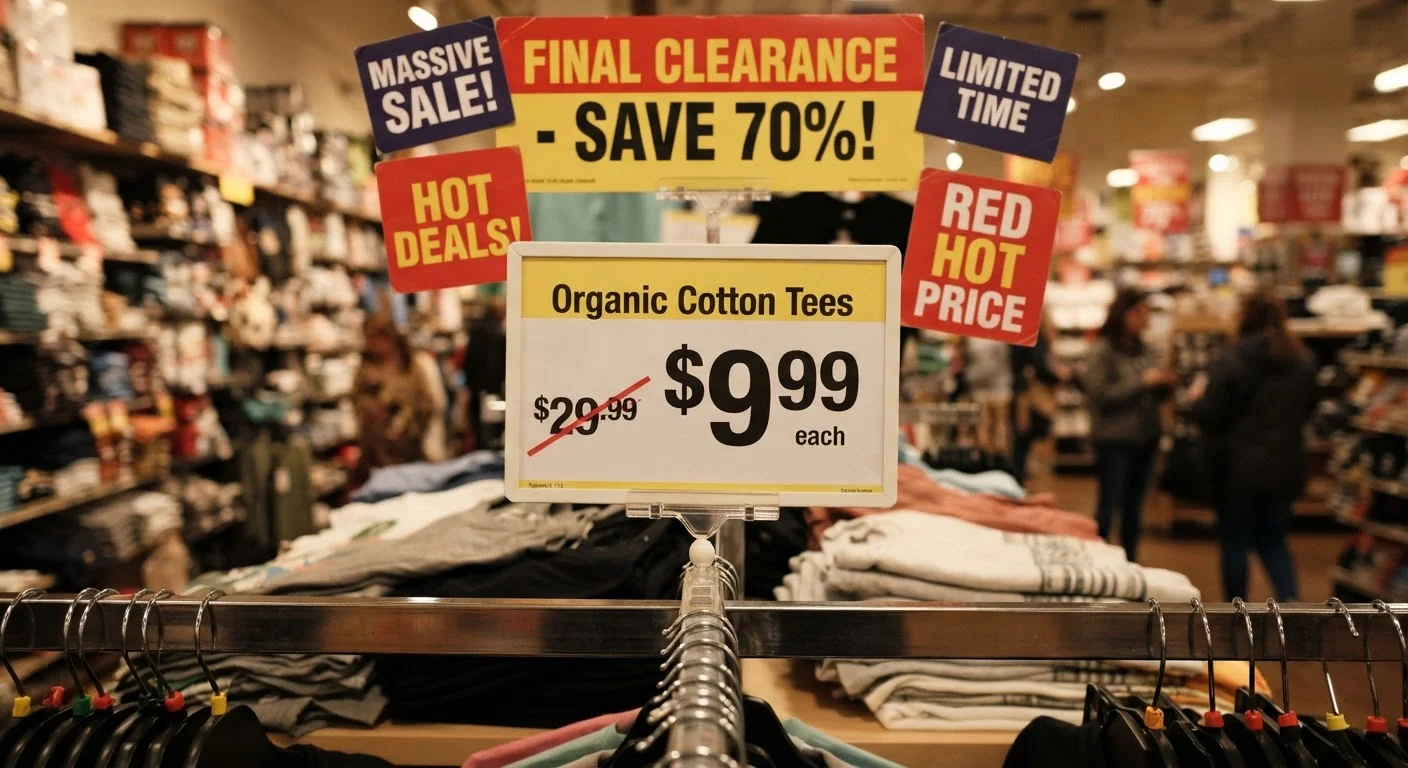
Psychological pricing refers to pricing strategies that exploit how people perceive numbers and value rather than reflecting objective cost. Retailers use techniques like ending prices in .99, displaying inflated "original" prices, or positioning a high-priced item next to a cheaper one to shape what shoppers believe something is worth. These tactics work on intuition, not logic.
Much of the research behind psychological pricing draws on behavioral economics, particularly the concept of 'anchoring' - a cognitive bias first documented by psychologists Amos Tversky and Daniel Kahneman - where the first number encountered disproportionately influences subsequent judgments.
The Mechanics of Charm Pricing
Walk through any U.S. retailer - physical or digital - and the pattern is immediate: prices end in .95, .97, or .99 far more often than in round numbers. This is charm pricing, and its persistence across decades of retail is not coincidence. It works because of a quirk in how the brain encodes numerical magnitude.
When shoppers scan a price, the left-most digit anchors their mental category before they finish reading. A price of $79.99 gets filed under "seventy-something" before the cents register. The one-cent difference becomes cognitively irrelevant, but the category shift - from $80 to $70 - feels substantial. Research in behavioral economics has repeatedly confirmed this left-digit effect, making charm pricing one of the most studied tactics in retail psychology.
The implication for shoppers is straightforward: the brain is not doing arithmetic in the aisle. It is pattern-matching. Treating prices as approximate rather than precise is automatic, which is exactly what retailers rely on.
Check Price History Before Buying
Browser extensions that track price history on major retail sites can show you whether the current price - sale or not - is actually lower than it has been in recent months. This takes less than a minute and removes anchor pricing from the equation. If a deal is genuinely exceptional, the price history will confirm it.
Anchor Prices and the Illusion of Savings
An anchor price is any number presented alongside a selling price to establish a reference point - typically a crossed-out "original" or "compare at" figure. The anchor does not need to reflect reality to influence judgment. Once a number is in front of you, it shapes how you evaluate everything that follows.
This is the anchoring bias at work. If a jacket is marked down from $280 to $140, the $280 becomes the mental baseline. The $140 feels like recovery, like getting something back. Remove the anchor, and $140 is simply $140 - assessed on its own terms against alternatives.
Retailers understand this. So do many online marketplaces, where reference prices can be set by sellers with limited external verification. For a deeper look at how markdown pricing and manufactured urgency interact, see how sale prices can be misleading.
The practical check: ask what the item would cost elsewhere before accepting an anchor price as meaningful context.
Decoy Pricing and the Relativity Trap
Value is almost never assessed in isolation. People judge prices relative to other options nearby - and retailers design those nearby options carefully.
Decoy pricing introduces a strategically inferior third option that makes one of the other two look more attractive by comparison. A classic setup: a small item at $5, a medium at $13, and a large at $15. The medium seems overpriced next to the large, so most buyers choose the large - even if they didn't need that much and wouldn't have chosen it without the decoy.
~65%
Prices in U.S. retail ending below a round number
Academic analyses of retail price distributions consistently find that the large majority of consumer prices are set just below round-number thresholds, confirming the deliberate prevalence of charm pricing.
2-3x
Increase in perceived savings with anchor prices
Behavioral pricing research has shown that displaying a reference (anchor) price alongside a selling price can multiply the consumer's perceived savings relative to seeing the selling price alone.
This tactic appears in subscription tiers, streaming plans, and bundled services just as often as in physical products. When you notice pricing structured in tiers, it is worth asking which option was designed to be chosen - and whether it actually fits your needs.
For a related method of cutting through these comparisons, price-per-unit math offers a grounding tool that sidesteps relative framing entirely.
What Shoppers Can Actually Do About It
Psychological pricing tactics are durable because they operate at the level of automatic processing - the fast, pattern-driven thinking that handles most daily decisions. Awareness is a starting point, not a solution.
Effective counters require introducing deliberate steps before a purchase. Price history tools - available as browser extensions or standalone websites - can show whether a "sale" price is genuinely lower than historical norms. Comparing unit prices rather than sticker prices removes anchor framing from the equation. Unit price versus sticker price is one of the most practical distinctions a shopper can internalize.
It is also worth remembering that the sticker price is only part of what a product costs. Hidden costs built into everyday purchases - from subscriptions to proprietary accessories - can make a psychologically appealing price look very different over time.
Finally, pausing before purchasing is underrated. Many psychological pricing effects are strongest at the moment of first exposure. A short delay allows more deliberate evaluation to catch up with initial impressions.