

Key Takeaways
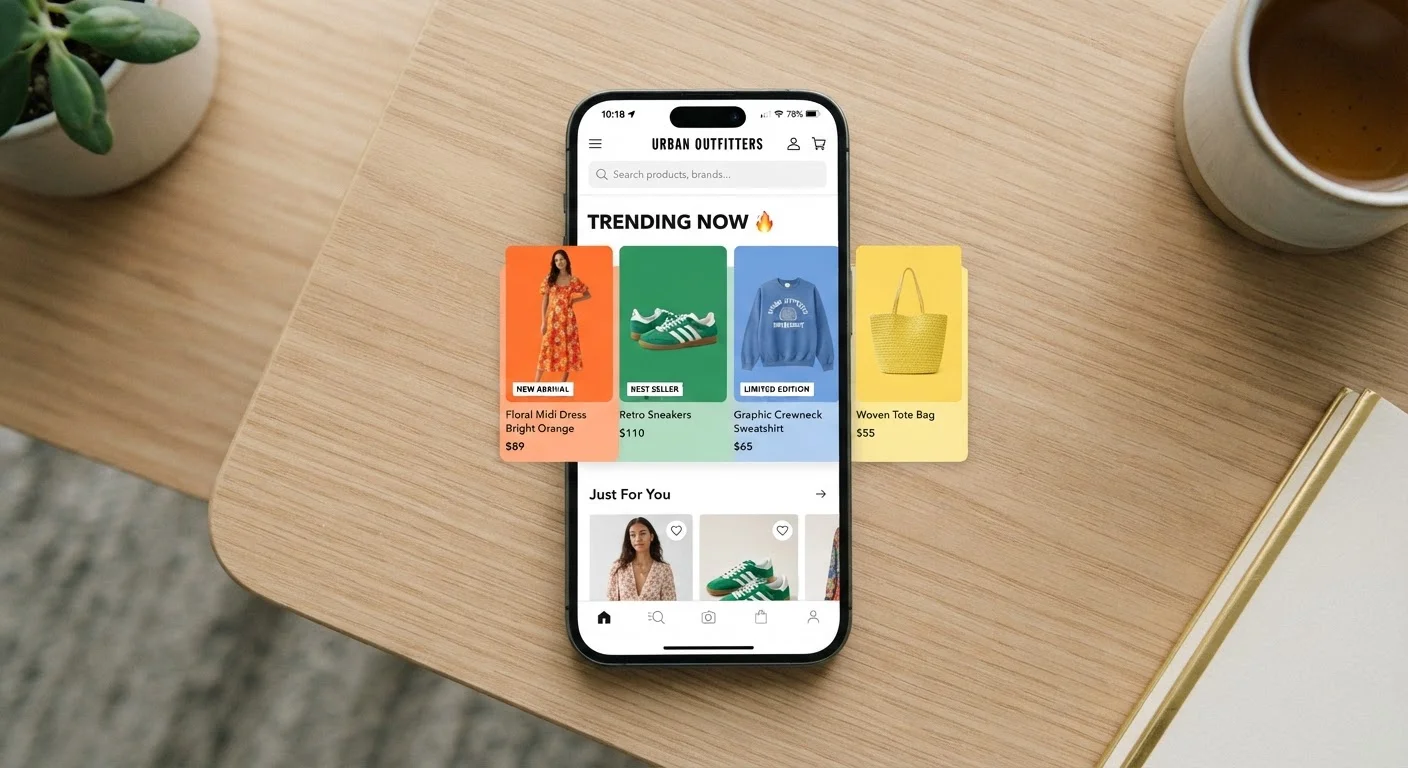
Trending Now Label
A 'Trending Now' label is a tag retailers and platforms apply to products or categories experiencing a notable uptick in consumer activity - such as page views, searches, or sales - over a short period. It's meant to surface what's gaining popularity among other shoppers at that moment. The signal can reflect genuine organic demand, but it can also be shaped by algorithmic curation, sponsored placement, or inventory priorities.
Retailers rarely disclose the exact methodology behind trending labels. The underlying logic may combine real-time clickstream data, purchase velocity, search query volume, and editorial or promotional inputs - all weighted differently by platform.
Where 'Trending' Labels Come From
Every major retail platform - from large general merchandise sites to niche fashion apps - surfaces a trending section somewhere. These sections are designed to do two things simultaneously: help shoppers discover what's popular, and guide traffic toward items the platform has an interest in moving.
The inputs that feed a trending label vary widely. On some platforms, the tag is driven almost entirely by algorithmic signals: a spike in search queries, an unusual jump in product page views, or accelerating add-to-cart rates over a rolling 24- or 48-hour window. On others, editorial teams manually curate what appears, factoring in seasonal relevance, promotional calendars, or sponsored placement agreements.
Most platforms use some combination of both, which means the same 'Trending Now' label might indicate genuine, unprompted consumer enthusiasm on one site and a paid placement strategy on another. Neither version is inherently misleading - but understanding the difference matters when you're using the section to make a purchase decision.
For a broader look at how retail platforms shape shopper behavior, see what retail marketers know about consumer behavior.
What the Signals Actually Measure
Trending labels are often built on engagement data - not sales data. That distinction matters more than it might seem at first glance.
An item can spike in views because a creator posted about it, a news story mentioned it, or it appeared in a viral social post. That surge in attention gets captured as trending activity. But attention and purchase intent are different things. Shoppers may click on a product out of curiosity, compare it to alternatives, and ultimately buy something else entirely - while the original item continues to carry a trending badge.
~70%
Shoppers influenced by 'trending' or 'popular' labels
Research on social proof in retail consistently finds that popularity signals meaningfully influence product consideration, even when shoppers report being skeptical of them.
2-3x
Click rate lift from trending or popularity badges
Industry studies on product listing pages have documented substantially higher click-through rates for items carrying social-proof labels compared to unlabeled equivalents.
Varies widely
Transparency of trending methodology across platforms
No major retail platform publicly discloses a standardized methodology for its trending labels, making cross-platform comparisons difficult for consumers.
Sales velocity is a more reliable signal when it's part of the trending calculation, but most platforms don't specify whether their trending label is weighted toward purchases or just traffic. That ambiguity is worth keeping in mind, especially for higher-cost items where social buzz tends to outpace genuine category demand.
The relationship between social attention and retail trending sections has grown especially close as platforms integrate social discovery features. Social commerce now feeds directly into what shows up as trending on many retail apps, making it harder to separate organic popularity from influencer-driven spikes.
When Trending Sections Are Worth Your Attention
Despite the caveats, trending sections aren't useless. They do serve a legitimate discovery function - especially when you're shopping in a category you don't know well and want a starting point.
They can also surface emerging product types or formats that haven't yet saturated the market. If a new category of kitchen tool or a different fabric technology is suddenly appearing in trending sections across multiple platforms simultaneously, that convergence is a real signal worth investigating - even if individual platform labels are algorithmically noisy.
The most useful approach is to treat trending sections as an initial filter, not a final verdict. Use them to identify candidates, then evaluate those candidates using independent criteria: verified purchase reviews, material or ingredient disclosures, and price-to-function comparisons. Reading reviews critically is a key part of moving from trending discovery to an informed decision.
It's also worth checking whether the trending item is actually priced competitively. Trend momentum often gives retailers cover to hold prices firm or even raise them. As with promotional labels of all kinds, the trending tag and the actual value of what's offered are separate questions - a dynamic explored in depth in how sale prices can mislead.
Reading Trending Labels as a Literate Shopper
Becoming a more informed reader of trending sections doesn't require technical knowledge of retail algorithms. It mostly requires a shift in how you frame the label mentally.
Instead of reading 'Trending Now' as an implicit endorsement - popular, therefore good - read it as a data point about current attention. Ask: What caused this spike? Is it tied to a season, a cultural moment, a media event, or a platform promotion? That context often explains the trend better than the label itself.
Also pay attention to how long an item has been trending. A product that appears in a trending section for weeks is likely reflecting sustained demand. One that appears briefly and disappears may have been riding a single traffic event. Some platforms timestamp their trending data; most don't, which is itself a signal about how much interpretive weight to put on the label.
For shoppers who want to stay aware of consumer culture without being driven by it, practical habits for following trends without overspending offers a grounded framework. And for a broader vocabulary around how shopping behavior is categorized and described, the glossary of modern shopping terms is a useful reference.
Trending sections will continue to evolve as platforms integrate more personalization - meaning two shoppers on the same site may see entirely different trending items based on their browsing history. That personalization makes the label even less of a universal signal and more of a reflection of what the algorithm believes is relevant to you specifically.