

| Term: Showrooming | Viewing in-store, buying online elsewhere |
| Term: Webrooming | Researching online, buying in-store |
| Term: Recommerce | Resale market for secondhand consumer goods |
| Term: Greenwashing | Misleading environmental marketing claims (Subject to FTC regulatory guidance in the U.S.) |
| Term: Impulse Architecture | Store/site design that drives unplanned spending |
| Term: Subscription Fatigue | Burden of accumulated recurring charges |
Why Shopping Has Its Own Language Now
Consumer culture has always generated slang, but the pace at which new terms enter the retail conversation has accelerated sharply alongside social media and platform commerce. Words like showrooming and haul culture aren't just jargon - they describe real behavioral patterns that influence how products are marketed, priced, and discovered. Understanding them gives you a clearer view of the forces nudging your spending decisions.
This reference guide defines the key terms shaping today's shopping landscape. Whether you encounter them in a news story, a brand's marketing copy, or a social feed, knowing what they actually mean helps you engage with the marketplace on your own terms. For a related look at how social platforms have become direct retail channels, see how social commerce works.
Showrooming
The practice of examining a product in a physical store, then purchasing it online - often from a competitor - at a lower price. It became widespread as smartphone use made real-time price comparisons easy while standing in an aisle.
Webrooming
The reverse of showrooming: researching a product extensively online before going to a physical store to complete the purchase. Consumers use this approach to verify quality or avoid shipping delays.
Haul Culture
A social media content format in which creators film themselves unboxing and reviewing large quantities of newly purchased items, often from fast fashion or beauty retailers. Critics link it to normalized overconsumption.
De-influencing
A content trend in which creators actively discourage followers from buying heavily promoted products, positioning themselves as antidotes to standard influencer marketing. The format can itself become a marketing vehicle.
Dupe Culture
The consumer practice of seeking and sharing lower-cost alternatives - 'dupes' - to expensive or viral products. Dupes may be legal alternatives or, in some cases, infringing imitations; the distinction matters legally and for product safety.
Social Commerce
The integration of product discovery, promotion, and direct purchasing within social media platforms, allowing consumers to complete a transaction without leaving an app. Platforms like Instagram and TikTok have built native checkout features to support this.
FOMO Buying
Purchasing decisions driven by fear of missing out - a sense that a product is scarce, time-limited, or culturally necessary. Retailers often design urgency cues (countdown timers, low-stock alerts) to trigger this response.
Recommerce
The resale market for previously owned consumer goods, including clothing, electronics, and furniture. Recommerce platforms facilitate peer-to-peer or retailer-facilitated resale, and the segment has grown alongside interest in value and sustainability.
Greenwashing
Marketing that overstates or misrepresents a product's environmental credentials to attract sustainability-minded consumers. Regulators in several jurisdictions have taken enforcement action against misleading green claims.
Omnichannel Retail
A retail strategy that integrates a brand's physical stores, website, app, and social channels into a unified shopping experience. From a consumer standpoint, it means inventory, pricing, and customer service should be consistent regardless of how you shop.
Subscription Fatigue
The consumer experience of feeling overwhelmed or burdened by the accumulation of recurring subscription charges across products and services. It often prompts periodic audits of auto-renewing memberships.
Impulse Architecture
The deliberate design of retail environments - physical or digital - to encourage unplanned purchases. Examples include checkout-aisle placements in stores and 'Frequently Bought Together' modules online.
How These Trends Shape What You See - and Buy
Retail trends don't exist in a vacuum. Each term in this glossary reflects a feedback loop between consumer behavior, platform design, and brand strategy. Showrooming, for instance, pressured brick-and-mortar retailers to rethink their pricing and in-store experience. De-influencing emerged partly as a backlash to overconsumption content, but it also became its own content format - which means even skepticism can be packaged and monetized.
Haul culture has drawn scrutiny from researchers and consumer advocates who study its relationship to impulse buying and environmental cost. If you want a grounded look at one major driver of haul content, fast fashion's environmental and labor questions are worth understanding separately.
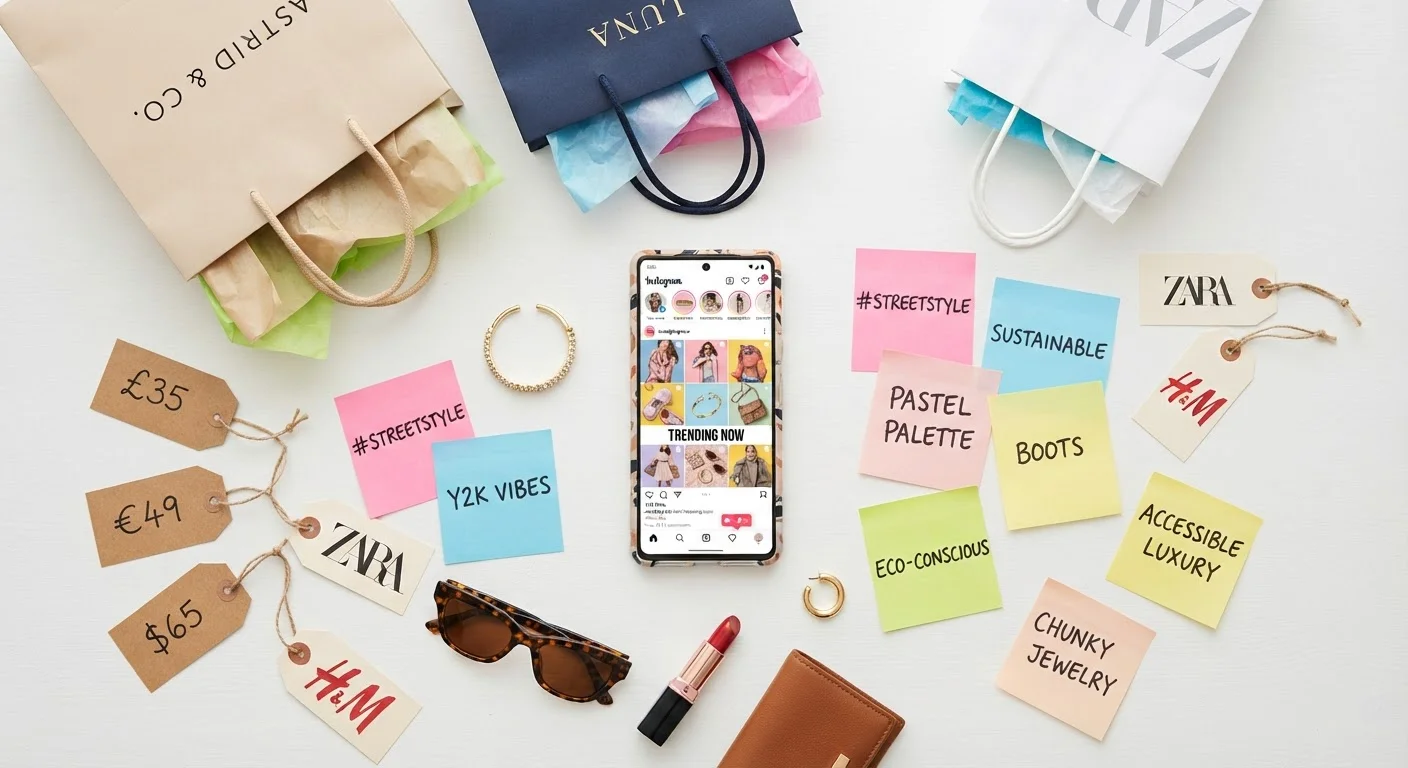
Trend labels applied by retailers - like "Trending Now" banners - often reflect algorithmic signals or inventory priorities rather than independent demand. What those labels actually signal is rarely what it appears on the surface.
Understanding these dynamics doesn't mean avoiding trends entirely - it means engaging with them deliberately. The consumer spending hub and smart products hub offer additional frameworks for evaluating purchases critically before committing.
One practical habit: when you notice a term like FOMO buying or dupe culture shaping your impulse to purchase, pause and ask whether the underlying need is real or manufactured. Staying trend-aware without letting trends drive your spending is a learnable skill, not a personality trait.