

Key Takeaways
What De-Influencing Actually Means
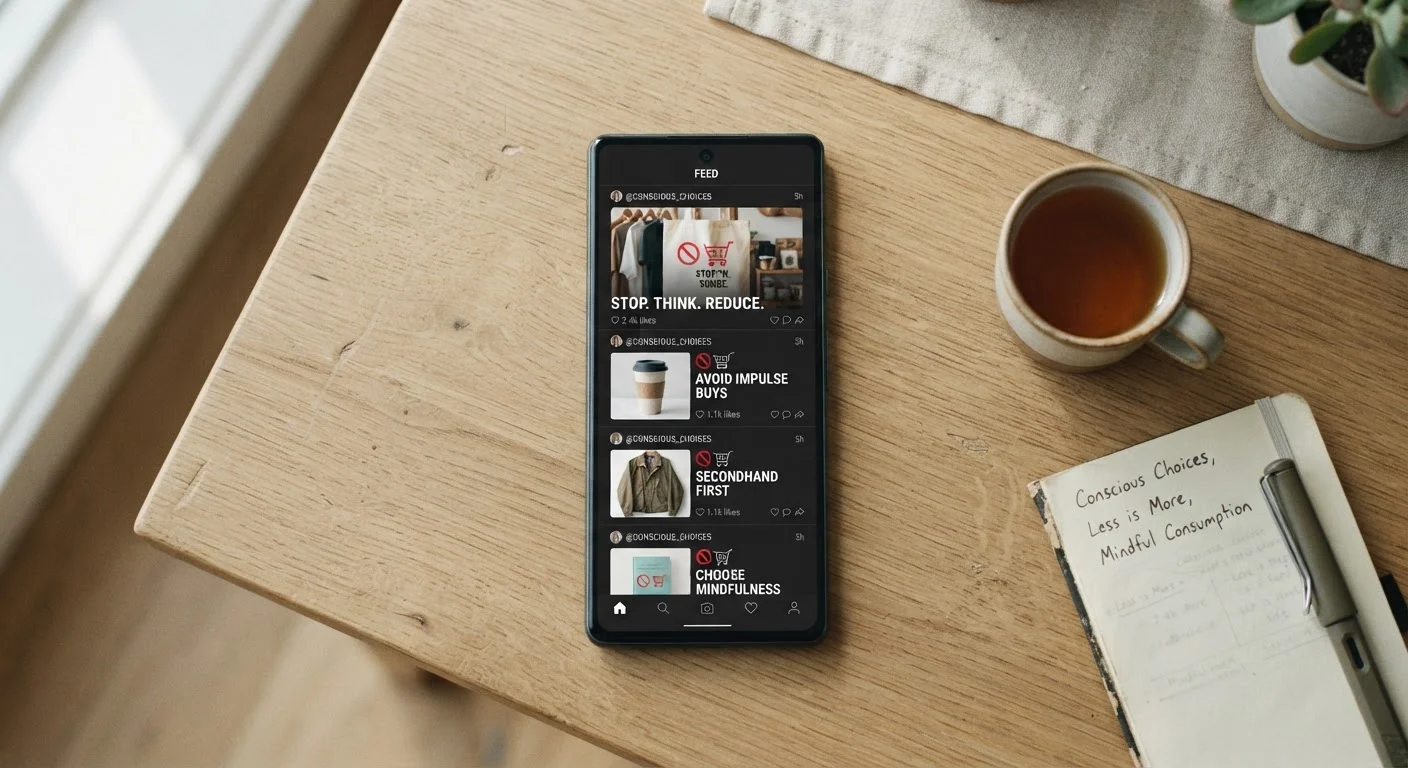
De-influencing is a social media content style in which creators advise their audiences to skip certain purchases - typically products they consider overhyped, poor value, or simply unnecessary. It gained significant visibility on TikTok and Instagram starting around 2023, often appearing in short videos where a creator walks through a product they tried and didn't find worth the cost.
The term is essentially the inverse of traditional influencer marketing, which relies on aspirational framing and product recommendations to drive purchases. De-influencing content instead centers on honesty about disappointment, redundancy, or the gap between a product's social media reputation and real-world performance.
It's part of a broader shift in how Americans think about spending. For more context on that trend, see why Americans are buying less stuff. De-influencing also sits within a growing vocabulary of modern consumer behavior - covered in the glossary of modern shopping trends.
Common Myths vs. What the Evidence Shows
Despite its popularity as a topic, de-influencing is frequently mischaracterized - both by enthusiastic supporters and by skeptics who dismiss it entirely. The reality is more nuanced than either camp acknowledges.
Myth
De-influencing is a grassroots anti-consumerism movement that pushes people to buy less overall.
Fact
Most de-influencing content redirects purchases rather than eliminating them, often substituting one product for another.
The framing of de-influencing as anti-consumerism is appealing but generally overstated. Analysis of de-influencing videos frequently finds that creators recommend an alternative in the same content - a dupe, a drugstore version, or a completely different category of product. Total spending may not decrease; it simply shifts. Genuine minimalism or consumption reduction is a different, less platform-friendly message that rarely goes viral in the same way.
Myth
If a creator isn't being paid to talk about a product, their opinion is automatically unbiased.
Fact
Unpaid opinions can still reflect algorithmic incentives, audience expectations, and platform engagement dynamics.
Credibility on social platforms is itself a form of currency. A creator whose audience rewards skepticism has an incentive to be skeptical - regardless of whether a brand is paying them. That's not necessarily dishonest, but it means "unpaid" doesn't equal "objective." Engagement metrics reward strong takes, and "this product isn't worth it" is often a stronger take than a measured review. Readers benefit from treating all content, paid or organic, with similar critical awareness.
Myth
The de-influencing trend has meaningfully dented influencer marketing as an industry.
Fact
Influencer marketing spend has continued to grow even as de-influencing content has proliferated.
Industry tracking consistently shows that brand investment in influencer and creator marketing has increased year over year, including periods when de-influencing was generating significant media coverage. The two trends coexist because they serve different audience segments and platform moments. De-influencing content may erode trust in specific product categories or creators, but it has not reversed the overall commercial trajectory of the creator economy.
Myth
De-influencing only applies to beauty and skincare products.
Fact
The content format spans home goods, tech, fashion, fitness, and food - any category with a history of viral hype.
While de-influencing gained early traction in beauty - where viral products often carry high markups and frequently overpromise - the format has expanded across virtually every consumer category. Creators have applied the same framework to kitchen appliances, workout equipment, fast fashion, and subscription services. The unifying theme is the gap between social media buzz and actual consumer value, which is not unique to any single product vertical.
How Much Does It Actually Change Behavior?
Consumer research on social media's role in purchasing decisions consistently shows that influence flows in multiple directions. A creator saying "don't buy this" can suppress demand for a specific item - but it can simultaneously redirect that demand toward an alternative the creator mentions in the same video. In that sense, de-influencing often functions as a form of comparative recommendation rather than a genuine push toward restraint.
This dynamic is especially visible when de-influencing content explicitly names a cheaper or "better" substitute. The purchase still happens; only the destination changes. That's a meaningful distinction from the movement's stated goal of reducing overconsumption. For a look at the forces working in the opposite direction, impulse buying in the age of one-click checkout examines how digital design actively accelerates spending decisions.
There is also the question of audience self-selection. People who seek out de-influencing content may already be inclined toward intentional spending. Whether that content causes behavioral change - or simply validates a predisposition - is difficult to isolate.
Structural Tensions Within the Trend
One underreported dimension of de-influencing is the business model underneath it. Many creators who produce this content still monetize through affiliate links, brand partnerships, and sponsored posts. Telling an audience not to buy a luxury serum while linking to a budget alternative in the same caption is, structurally, still influencer marketing - just repositioned.
This doesn't make the content dishonest by default, but it does mean readers should apply the same scrutiny they would to any sponsored recommendation. The tension between authentic consumer advocacy and platform monetization is real, and it's worth keeping in mind when evaluating whether a de-influencing video is primarily editorial or primarily commercial.
Meanwhile, social commerce - the infrastructure that lets platforms convert content directly into purchases - continues to grow. The very ecosystem de-influencing pushes back against is expanding rapidly, as detailed in social commerce demystified. For practical habits that help you stay informed without letting trends drive your spending, see keeping up with shopping trends without overspending.
Understanding de-influencing as a marketplace phenomenon - rather than a personal finance solution - is the most accurate way to engage with it. It reflects real consumer fatigue with hype culture, but it operates within the same attention economy it critiques.