

Key Takeaways
Experience Economy
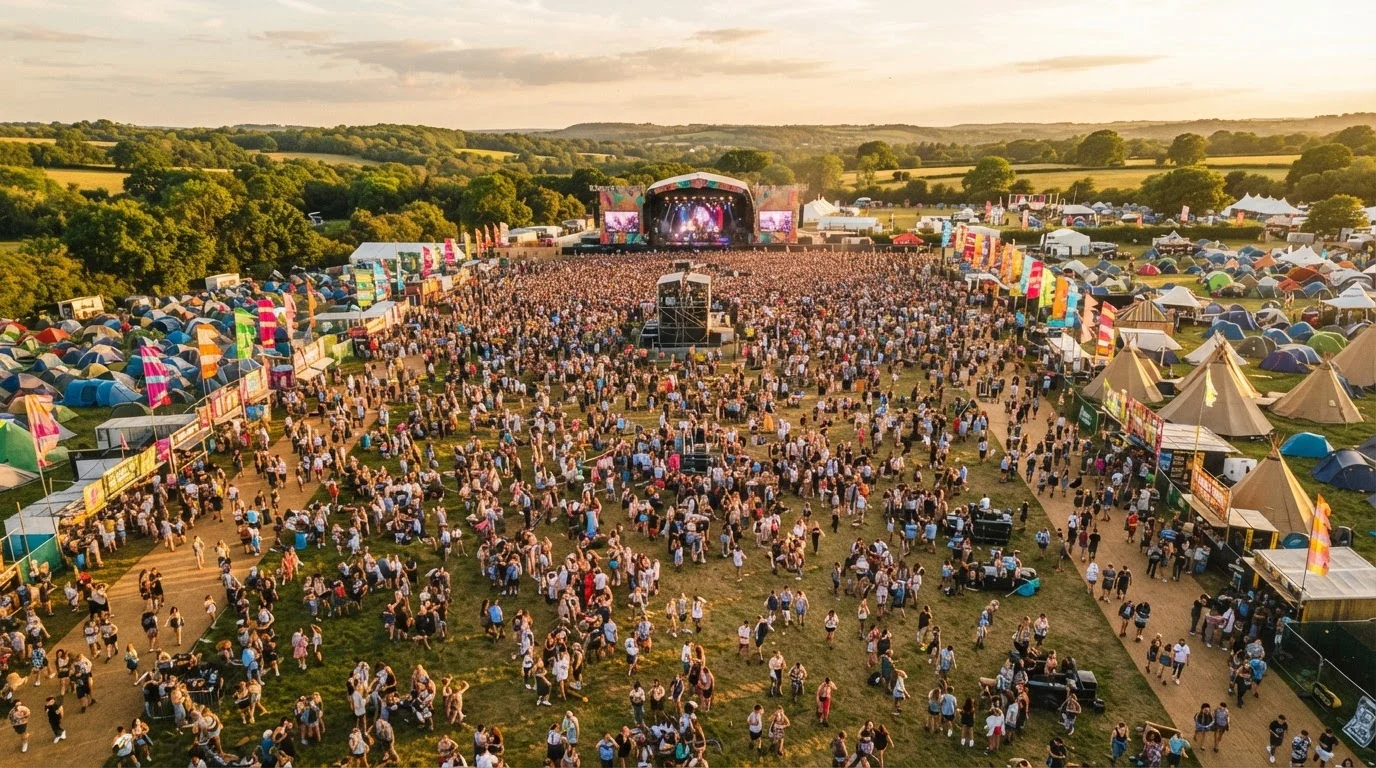
The experience economy describes a shift in consumer spending where people prioritize paying for activities, events, and memories over buying physical products. Instead of accumulating things, consumers increasingly invest in concerts, travel, dining out, and classes. This shift reflects changing values about what generates lasting satisfaction.
Economists Joseph Pine and B. Joseph Gilmore introduced the term in a 1998 Harvard Business Review article, arguing that experiences represent a distinct, higher-value economic offering beyond goods and services.
The Shift in Plain Numbers
For most of the 20th century, buying things was the primary language of American prosperity. A new car, a bigger television, a well-furnished home - goods were the scoreboard. That relationship has been visibly changing. Data from the U.S. Bureau of Economic Analysis shows that services spending, which includes travel, entertainment, and dining, has grown as a share of personal consumption while durable and non-durable goods spending has faced more pressure, especially as pandemic-era goods demand normalized.
Consumer sentiment surveys have reinforced this pattern. Multiple Gallup and Deloitte consumer studies have found majorities of respondents preferring to spend discretionary money on experiences rather than things. The shift is not sudden - it has been building steadily since the mid-2010s - but it accelerated sharply after 2020 as Americans reassessed what they actually wanted from their spending.
78%
Consumers preferring experiences over things
A widely cited Eventbrite-commissioned Harris Poll found roughly 78% of millennials would choose to spend on a desirable experience over a desirable object.
~70%
Share of U.S. GDP from services spending
The U.S. Bureau of Economic Analysis consistently reports that services - including recreation, travel, and food services - account for approximately 70% of personal consumption expenditures.
2x
Travel recovery speed vs. goods demand
Post-pandemic travel spending rebounded roughly twice as fast as the pre-COVID trend line, according to analysis from multiple travel industry research groups.
What's Actually Driving It
Several distinct forces are converging to push spending from goods toward experiences.
The Psychology of Lasting Satisfaction
Decades of consumer psychology research, much of it associated with Cornell professor Thomas Gilovich, has found that people adapt quickly to new possessions - a phenomenon called hedonic adaptation - but tend to derive more sustained satisfaction from experiences. An experience becomes part of your personal story; a new gadget becomes the baseline faster than expected. This research has moved from academic journals into mainstream financial conversation, and there is evidence consumers are internalizing it.
Understanding these mental patterns is part of a larger picture - see the psychology behind why we overspend for a deeper look at how cognitive biases shape everyday purchasing decisions.
Post-Pandemic Reprioritization
The pandemic forced an extended period of enforced stillness. Travel stopped, events canceled, social gatherings disappeared. When restrictions lifted, many Americans experienced a sharp revaluation of time and connection. Spending on concerts, dining, and travel surged in ways that surprised some analysts. That pent-up demand has partially normalized, but it left behind a recalibrated sense of what spending is actually for.
Inflation and Selective Restraint
Rising prices across goods categories have also pushed consumers to make deliberate trade-offs. When everything costs more, many households cut back on discretionary physical purchases while protecting spending on experiences they regard as meaningful. This is partly preference and partly arithmetic.
Who Is Shifting - and Who Isn't
The experience economy narrative can obscure significant variation. Younger consumers, particularly millennials and Gen Z, are most frequently cited as driving the trend. They entered adulthood with smaller wealth buffers, witnessed the 2008 financial crisis, and came of age on social platforms that reward shareable moments over acquired objects.
Higher-income households, however, account for a disproportionate share of actual experience spending. Travel, premium events, and wellness experiences are not uniformly accessible. Lower-income Americans often want similar things but face a harder budget reality. The trend is real, but describing it as a universal American behavior overstates the picture.
Age also matters in different ways than the generational shorthand suggests. Older Americans with retirement savings and reduced debt loads are significant contributors to travel and leisure spending - often outspending younger cohorts in absolute dollars even if younger consumers are loudest in surveys.
This connects to broader patterns in how the American consumer spending cycle actually works, where life stage and financial position shape priorities more than generational identity alone.
What This Means for Retailers and Consumers
The goods-to-experiences shift is not a death sentence for physical retail, but it is a forcing function for adaptation. Retailers who sell products adjacent to experiences - outdoor gear, cooking equipment, musical instruments - have found ways to position their goods as experience enablers rather than objects. In-store events, community programming, and educational workshops have become tools to give physical spaces a reason to exist beyond transaction.
For consumers, the shift raises useful questions about their own spending patterns. Haul culture and intentional consumption represent opposing ends of the goods-buying spectrum, and where someone lands often reflects whether they've examined the actual satisfaction their purchases deliver.
It's also worth recognizing that experience spending carries its own traps. Small experience purchases - subscriptions, food delivery, streaming, weekend outings add up just as quietly as impulse goods. The category change doesn't automatically make spending more intentional.
Audit Your Experience Spending Too
Experience spending can drift just as easily as goods spending. Before assuming you're spending more intentionally because the category changed, track what you're actually paying for experiences over a 90-day period. Subscriptions, dining, and event tickets are common areas where experience costs accumulate without clear recall. Awareness is the first step toward intentionality in any spending category.
This article is for general informational purposes only and does not constitute financial or investment advice. Readers should consult a qualified financial professional for guidance specific to their individual circumstances.