

Key Takeaways
Neighborhood Trend Effect
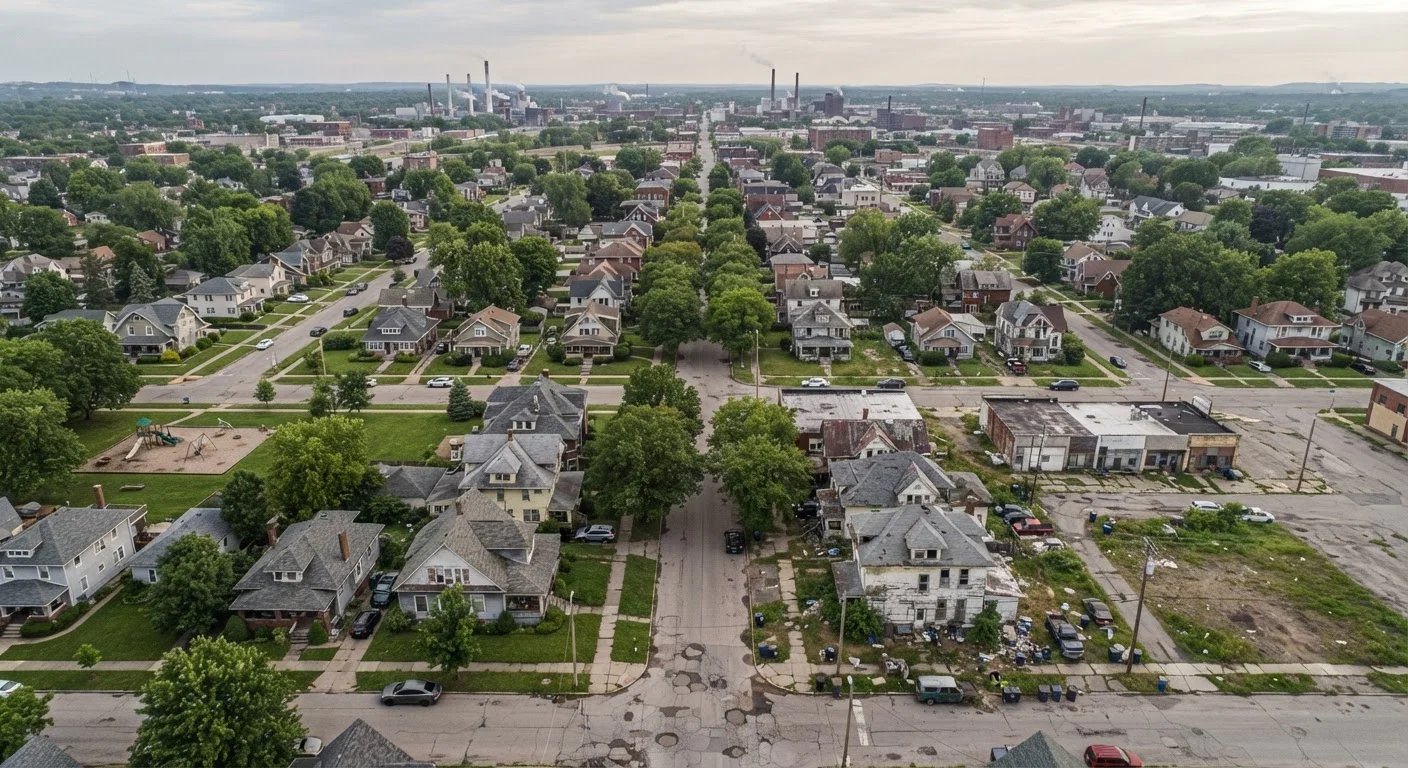
The neighborhood trend effect refers to the way broader local forces - such as economic shifts, demographic changes, infrastructure investment, and nearby development - shape a home's market value independent of what's inside it. A property's worth is not determined in isolation; it is heavily anchored to what is happening on the street, in the school district, and across the surrounding community. This means external forces can lift or erode a home's value regardless of interior condition or upgrades.
Appraisers formalize this through the concept of 'regression to the mean' and location-based comparable sales (comps), where nearby sold prices set the ceiling and floor for any individual property's appraised value.
The Market Doesn't Value Your Home in a Vacuum
When a licensed appraiser values your home, they don't start inside it. They start with the neighborhood. Comparable sales - homes similar in size, age, and condition that have recently sold nearby - establish the floor and ceiling within which your property will be priced. That process is how a freshly remodeled kitchen can still result in a disappointing appraisal: if the neighborhood's recent comps don't support the higher number, the upgrade simply won't translate into proportional value.
This is a hard truth for many homeowners to accept, especially after significant investment in improvements. But it reflects a basic reality of how real estate markets work. As the forces that drive home values make clear, location-level dynamics - school quality, employment access, crime rates, and infrastructure - are foundational inputs to value that no interior project can override.
~50%
Of home value attributed to location factors
Real estate research and appraisal practice consistently finds that location-level attributes - neighborhood, school district, and access to employment - account for roughly half or more of a residential property's appraised value.
60-70%
Average cost recouped on major kitchen remodel
According to Remodeling Magazine's Cost vs. Value reports, major kitchen remodels have historically recouped between 60 and 70 cents on the dollar at resale, with results varying significantly by local market conditions.
5-10%
Premium for top-rated school districts
Studies published by the National Bureau of Economic Research have found that homes in higher-rated school districts command meaningful price premiums over comparable homes in lower-rated districts in the same metro area.
What Neighborhood Trends Actually Look Like
Neighborhood trends aren't always dramatic. They build slowly and are often invisible until they've already moved the market. A few patterns worth watching:
- Employment base shifts: When a major employer expands or closes in a region, nearby residential demand moves with it. Areas near growing job centers tend to appreciate; communities dependent on a single employer that downsizes often see softening prices.
- School district performance: Changes in school ratings - whether due to budget cuts, leadership changes, or population shifts - are closely tracked by buyers with children and show up in price data over time.
- Commercial investment signals: New retail, restaurant, and infrastructure development near a neighborhood often foreshadows rising demand. Conversely, persistent vacancies and business closures can be early indicators of declining appeal.
- Demographic shifts: Population inflows of younger households or higher-income residents frequently correlate with rising values. Sustained outflows can have the opposite effect.
For homeowners thinking about staying put longer than originally planned, understanding these trends is especially important. Owning a home longer than expected makes neighborhood trajectory a key variable in your long-term equity picture.
The Danger of Over-Improving for Your Street
Over-improvement is one of the most common and costly mistakes homeowners make. It happens when renovation spending pushes a home's expected value well above what comparable properties in the area support. Because buyers and appraisers reference nearby sales to set value, a home priced significantly above its neighbors - regardless of finish quality - will sit on the market or require price reductions to sell.
This doesn't mean improvements are pointless. Maintenance and targeted upgrades do matter, particularly for marketability and condition-based adjustments in appraisals. But the expected return is bounded by location. Which renovations tend to add value and which are primarily for personal enjoyment is a distinction every owner should understand before committing major capital to a project.
Similarly, exterior presentation - while important - operates within the same neighborhood ceiling. Curb appeal's role in what buyers and appraisers see is real, but it is a factor layered on top of, not independent of, neighborhood-level market conditions.
How to Monitor Your Neighborhood's Trajectory
Homeowners who track local trends are better positioned to make sound decisions about maintenance investment, timing a sale, or planning for refinancing. A few practical approaches:
- Review recent comparable sales quarterly. Public property records and real estate listing platforms publish sale prices by address. Comparing these over six to twelve months reveals whether your immediate area is appreciating, holding, or softening.
- Watch local government budgets and plans. Capital improvement plans - road resurfacing, transit investment, park development - often preview where a municipality is directing resources and where demand may follow.
- Track school performance data. Most states publish annual school ratings. Sustained improvement or decline in nearby schools tends to register in home prices within a few years.
- Talk to a local real estate professional. A licensed agent active in your market can provide specific, current insight that no algorithm fully captures.
Understanding how interest rates shape what homes are worth adds another layer to this analysis, since rate environments affect buyer purchasing power and neighborhood demand simultaneously.
It's also worth examining your assumptions. Many popular beliefs about what builds or protects home value - from the impact of pools to the universality of renovation returns - don't hold up consistently across neighborhoods. Common beliefs about home values that simply aren't true is a useful check on inherited wisdom.
This article provides general real estate education and is not a substitute for personalized advice from a licensed real estate professional, appraiser, or financial adviser familiar with your specific market and circumstances.