

Key Takeaways
Why Renovation ROI Is So Misunderstood
Homeowners spend billions each year upgrading their properties, often assuming that money spent equals value added. That assumption doesn't hold up consistently. The relationship between renovation cost and resale value is shaped by local market conditions, neighborhood price ceilings, buyer preferences, and how well the upgrade fits the home's existing character.
Industry data - including annual cost-vs-value surveys published by remodeling trade publications - consistently shows that most renovations recoup somewhere between 50% and 80% of their cost at resale, with wide variation by project type and region. Very few projects return 100% or more. Understanding this gap helps owners make smarter choices about where to direct improvement dollars.
It's also worth noting: renovations done purely for personal enjoyment are perfectly valid. The problem arises when owners expect personal-preference upgrades to pay full dividends at sale. As our coverage of common home value myths explains, the belief that renovations always pay off is one of the most persistent misconceptions in real estate.
Minor Kitchen Remodels
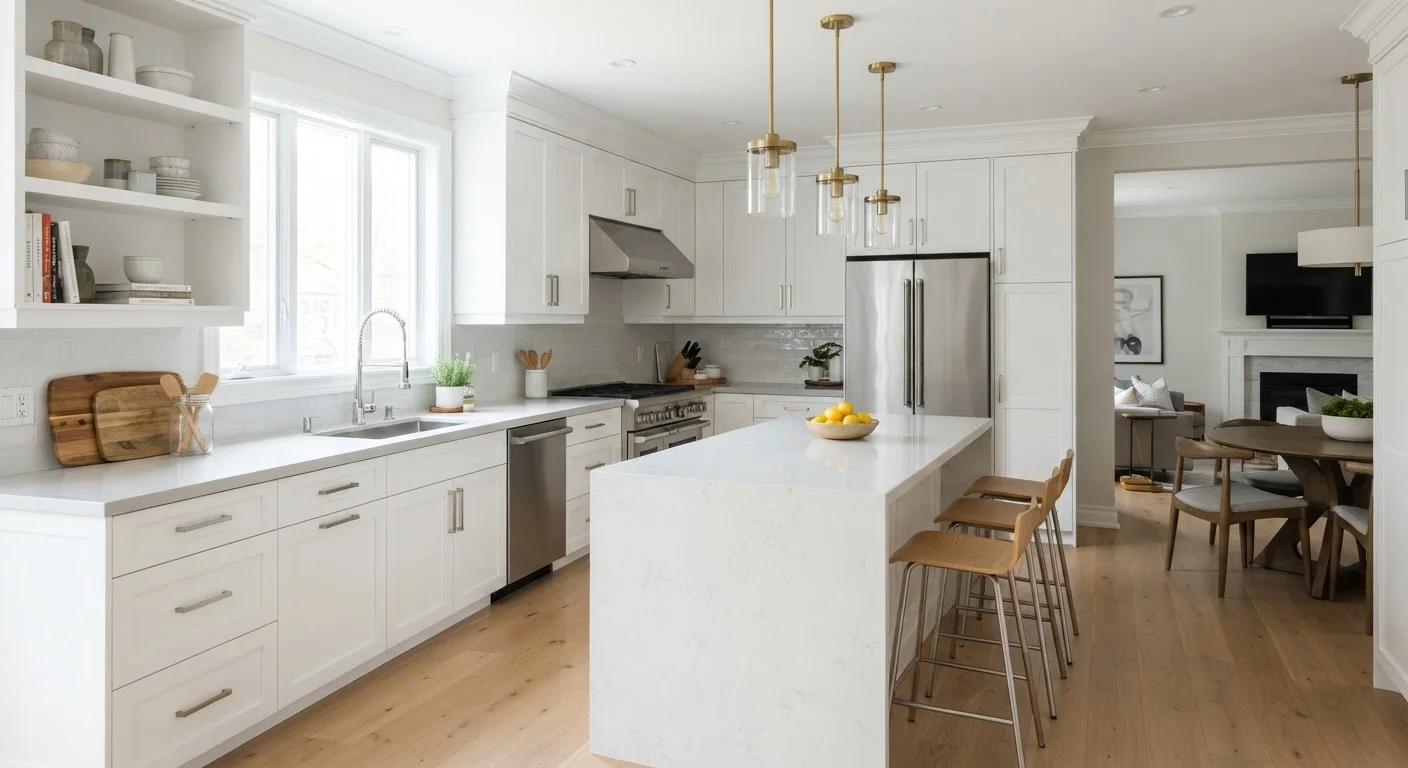
A full kitchen gut renovation is expensive, often running well into five figures, and rarely returns its full cost. A minor kitchen remodel - replacing cabinet fronts, updating hardware, installing a new countertop, and swapping out dated appliances for mid-range models - consistently outperforms the full overhaul in cost recovery. Buyers want a kitchen that feels fresh and functional; they don't necessarily need custom cabinetry to feel that way.
The sweet spot is updating without over-specifying. Choosing finishes that appeal broadly rather than reflecting highly personal taste keeps the upgrade accessible to more buyers.
A refreshed kitchen beats a gut renovation when it comes to recouping costs at resale.
Garage Door and Entry Door Replacement
These two projects regularly appear near the top of cost-recovery rankings - and the reason is straightforward. They're among the first things buyers and appraisers see. A worn garage door or a scuffed, outdated entry door signals neglect before anyone steps inside. Replacing them is relatively affordable and delivers a disproportionate visual impact.
Our separate look at curb appeal's role in appraisals and buyer perception goes deeper on why first impressions carry measurable weight in how a home is valued.
Entry and garage door replacements deliver outsized curb appeal relative to their cost.
Bathroom Updates (Not Full Gut Jobs)
Similar to kitchens, a targeted bathroom refresh - re-grouting tile, replacing a vanity, upgrading fixtures, improving lighting - tends to return more per dollar than a complete teardown-and-rebuild. Full bathroom additions can add value when a home is genuinely under-bathed for its size and price range, but adding a fourth bathroom to a three-bedroom home in a mid-range neighborhood rarely pencils out.
Focus on cleanliness of finish and functionality. Buyers discount dated or poorly maintained bathrooms quickly; updated ones simply don't draw attention, which is exactly the goal.
Targeted bathroom refreshes outperform full gut renovations in cost recovery most of the time.
Deck and Outdoor Living Additions
Deck additions occupy a middle tier - they add usable square footage and genuine lifestyle value, and they typically recover a meaningful portion of their cost, though figures vary considerably by region. In markets where outdoor living is a year-round priority, a well-built deck or patio addition can move the needle more noticeably than in colder climates where outdoor space is used seasonally.
Material choice matters: pressure-treated wood decks generally recoup a larger percentage of cost than composite decking, which costs more upfront despite its durability advantages. Buyers tend to value the space itself more than the material premium.
Deck additions add lifestyle value and partial cost recovery, with returns varying by climate and region.
Luxury and Highly Personalized Upgrades
This is where expectation most often diverges from reality. Inground swimming pools, elaborate home theaters, wine cellars, high-end home gyms, and similar luxury additions are rarely recouped at resale. In some markets, pools can actually narrow the buyer pool - some buyers see them as liability and maintenance cost rather than amenity.
Highly personalized finishes - bold wallpaper, unusual tile choices, custom built-ins designed for a specific lifestyle - tend to appeal to a narrow segment of buyers and may require removal costs before a home shows well. As we've noted in our coverage of mistakes that quietly hurt property value, over-personalizing a home is a common and correctable error.
Luxury pools and bespoke finishes are best approached as personal enjoyment, not investment strategies.
Energy Efficiency Upgrades
Insulation improvements, window replacements, and HVAC system upgrades occupy an interesting position. They may not always return their full cost in appraised value, but they can improve marketability - particularly with buyers who are factoring ongoing utility costs into affordability calculations. Some energy improvements also qualify for federal tax incentives; consult a qualified tax professional for guidance on your specific situation.
The clearest cases for energy upgrades are when existing systems are failing or approaching end of life. Replacing a 20-year-old furnace isn't glamorous, but it removes a negotiating chip from buyers and supports the home's overall condition rating.
Energy upgrades often improve marketability and reduce buyer negotiating leverage, even when full cost recovery is uncertain.
Making the Right Call Before You Renovate
Before committing to any significant upgrade, consider the price ceiling of your neighborhood. Over-improving relative to comparable homes - what appraisers sometimes call being "over-improved for the market" - means buyers will be unwilling to pay for features that exceed local norms. A renovated kitchen in a $250,000 neighborhood will be judged against $250,000 comparables, not against what the renovation cost.
Similarly, don't let improvement projects crowd out basic upkeep. Deferred maintenance quietly erodes property value in ways that no cosmetic upgrade can fully offset. A leaking roof or failing HVAC system will draw more attention from an appraiser than a new backsplash will earn.
Get a Pre-Renovation Market Perspective
Before budgeting a major renovation, ask a local real estate agent to pull recent comparable sales and identify what buyers in your price range actually expect. This one step can prevent costly over-improvement. It also helps you distinguish between upgrades that fix a genuine deficit versus those that simply reflect personal preference.
Finally, remember that market conditions shift. What added value in a hot seller's market may be viewed differently by buyers in a cooler one. Consult a licensed real estate professional familiar with your local market before making significant renovation decisions based on resale expectations.
This article is for general informational and educational purposes only. It does not constitute financial, legal, or real estate advice tailored to your individual circumstances. Consult a qualified real estate professional or financial adviser before making renovation or investment decisions.