

Key Takeaways
Option A
U.S. Passport Book
The universal travel document accepted virtually everywhere.
Best for: Anyone flying internationally or traveling beyond land and sea border zones.
Option B
U.S. Passport Card
The compact, wallet-friendly option for specific land and sea crossings.
Best for: Frequent land or ferry crossers between the U.S., Canada, Mexico, and the Caribbean.
If you're taking any international flight
U.S. Passport Book
Airlines require a passport book for international departures. The passport card is not accepted at airport check-in for international routes - no exceptions.
If you regularly drive or take ferries to Canada or Mexico
U.S. Passport Card
The passport card is a valid, wallet-sized WHTI-compliant document for land and sea border crossings, making it a convenient everyday carry for regular cross-border commuters.
If you want one document that covers every scenario
U.S. Passport Book
The passport book works everywhere the card works - and then some. If you can only have one, the book offers complete international travel coverage.
If you want a backup ID for domestic use and occasional border crossings
U.S. Passport Card
The card functions as a federally issued photo ID and is accepted at land and sea ports of entry, making it a practical supplemental document alongside a full passport book.
What Each Document Actually Is
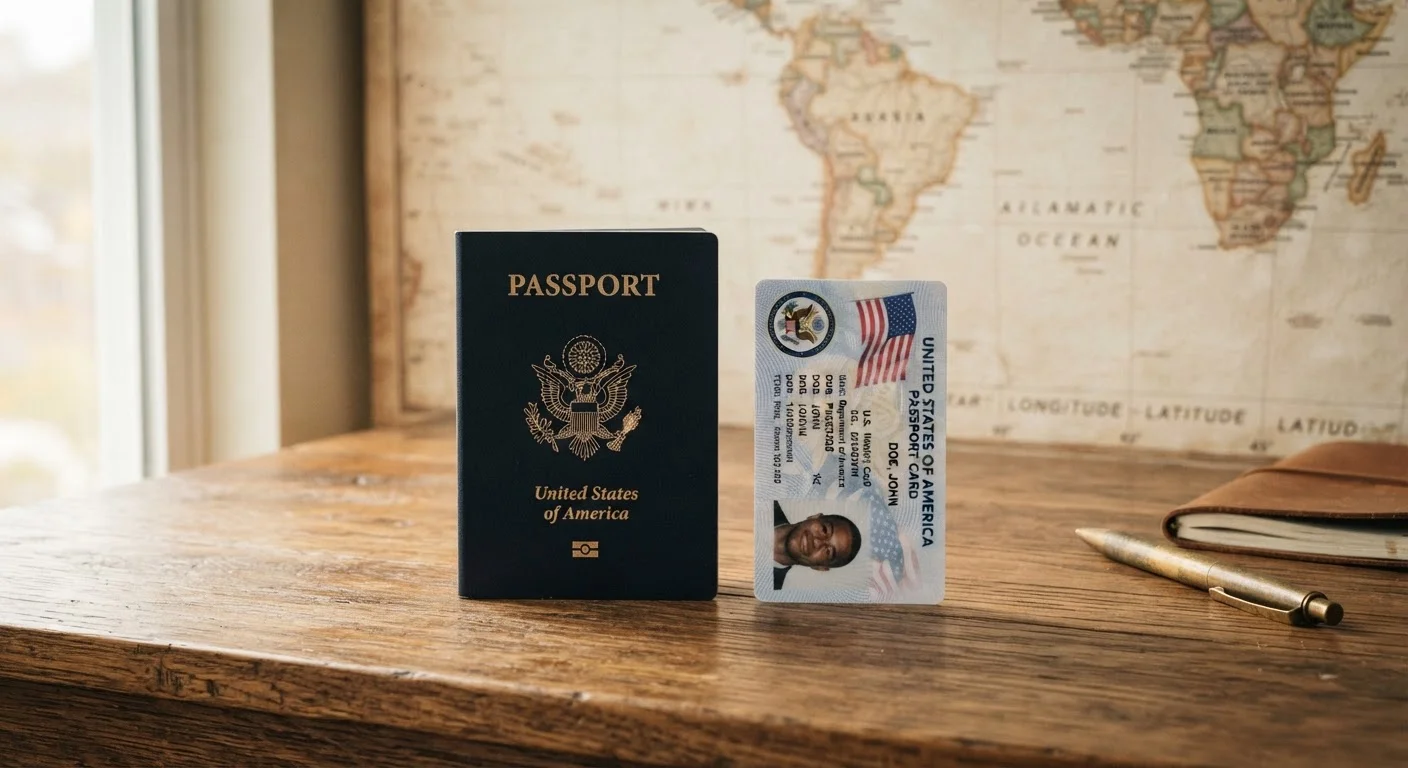
The U.S. State Department issues two distinct forms of passport: the traditional passport book and the passport card. Both are official proof of U.S. citizenship and identity, but they are not interchangeable - and confusing them can mean missing a flight or being turned away at a border crossing.
The passport book is the familiar navy booklet with multiple visa pages. It's the document most people picture when they hear the word "passport," and it's accepted for entry into virtually every country in the world by air, land, or sea.
The passport card is a credit-card-sized document introduced to make border crossing easier for Americans who frequently travel between the U.S. and its immediate neighbors. It's wallet-friendly in both size and cost - but its coverage is limited by design. As part of your broader international planning, see our guide to key differences in international trip planning for a fuller picture of what to verify before you depart.
Where the Passport Card Falls Short
The single most important thing to know: the passport card cannot be used to board an international flight. This catches travelers off guard more than almost any other document mistake. Even if your destination country would technically accept a passport card at a land border, the airline will not accept it at the gate for an international departure.
The card is valid only at land border crossings and sea ports of entry - and only for travel to and from Canada, Mexico, Bermuda, and the Caribbean. That's it. If you're flying to Europe, Central America, Asia, or anywhere outside that narrow list, the passport card offers zero help.
| Criterion | Passport Book | Passport Card |
|---|---|---|
| International air travel | ✓ Accepted worldwide | ✗ Not accepted |
| Land border crossings (Canada/Mexico) | ✓ Accepted | ✓ Accepted |
| Sea ports of entry (Caribbean/Bermuda) | ✓ Accepted | ✓ Accepted |
| Travel to Europe, Asia, etc. | ✓ Accepted | ✗ Not valid |
| Size | Standard booklet | Credit-card sized |
| Validity period (adults) | 10 years | 10 years |
| Domestic photo ID use | Generally accepted | Federally issued ID |
This is worth double-checking before every trip. Passport myths are surprisingly persistent - read about common travel myths that lead to missed flights for more on assumptions that trip travelers up at the worst moment.
When the Passport Card Makes Sense
The passport card genuinely earns its place for a specific type of traveler. If you live near the U.S.-Mexico or U.S.-Canada border and regularly cross by car, the card is a practical everyday carry. It's also valid for cruises that depart and return to U.S. ports, making it convenient for Caribbean sailings.
Because it's sized like a driver's license, it fits in a wallet without the bulk of a passport book - reducing the risk of forgetting or damaging your main travel document. Many experienced travelers carry both: the book for flying, the card as a backup ID and land-border convenience.
The card also functions as a federally issued photo ID for domestic purposes, which adds everyday utility beyond travel. Still, before any trip - domestic or international - use a solid pre-departure routine. Our pre-departure checklist for international travel covers document validity, emergency contacts, and more.
Cost, Validity, and Practical Considerations
Both documents are issued through the U.S. State Department and share the same 10-year validity period for adults (5 years for minors under 16). Application processes are similar, and you can apply for both simultaneously if you choose.
10 years
Adult passport validity for both documents
Both the passport book and passport card are valid for 10 years for adults, per U.S. State Department guidelines.
4 regions
Areas where the passport card is accepted
The card is valid only for land and sea entry from Canada, Mexico, Bermuda, and the Caribbean, according to the U.S. State Department.
0
International airlines accepting the passport card
No airline accepts the U.S. passport card in place of a passport book for international departure check-in.
One thing to keep in mind regardless of which document you carry: many countries require your passport to be valid for at least six months beyond your travel dates. The passport card is subject to the same consideration at the borders where it's accepted. Always confirm current entry requirements through official government sources - requirements can and do change. While you're preparing for your trip, it's also worth reviewing what travel insurance for international trips actually covers, since a document issue that delays or cancels your travel may have insurance implications.
Always Verify Entry Requirements Officially
Entry rules - including which documents are accepted, visa requirements, and passport validity windows - can change without much notice. Before any international trip, check the official U.S. State Department travel website (travel.state.gov) and the destination country's official embassy or consulate for the most current requirements. Don't rely solely on third-party sources or information that may be out of date.