

Key Takeaways
Why NHL Traditions Cut Deeper Than Most
In a league built on toughness, speed, and unrelenting competition, it might surprise outsiders that the NHL is also one of the most tradition-bound organizations in professional sports. From the moment the puck drops in October to the final handshake in June, the season is shaped by rituals that stretch back decades - some nearly as old as the league itself, founded in 1917.
These traditions aren't just ceremonial. They give the game its emotional architecture. They tell players what the sport demands of them and remind fans why they fell in love with hockey in the first place. Whether you're a lifelong devotee or a newcomer to the sport, understanding these rituals is key to understanding what makes the NHL uniquely compelling. For a broader look at how fan traditions take shape across all sports, see our guide to game day gear and fan culture.
The Playoff Handshake Line
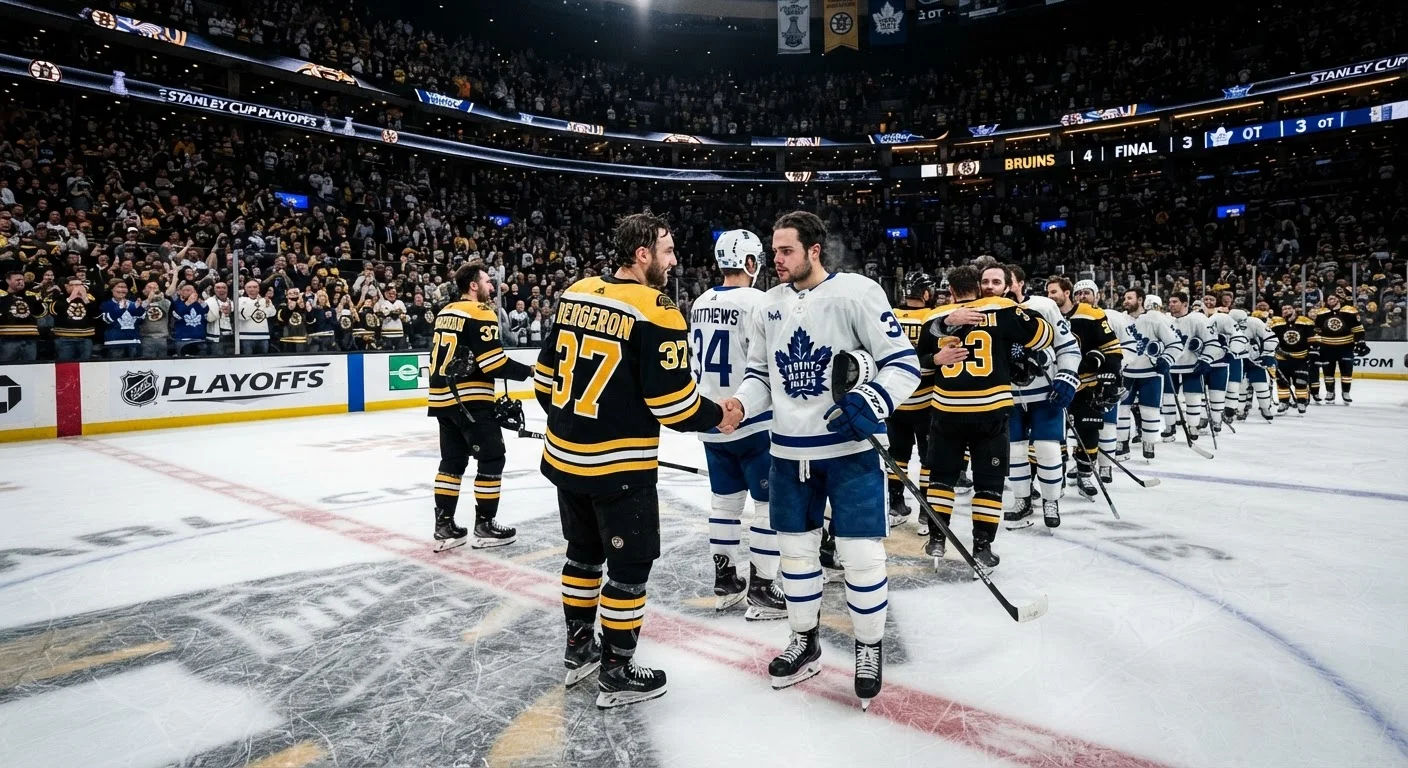
When a playoff series ends - no matter how brutal or emotionally draining - both teams line up at center ice and shake hands, one by one, player to player, coach to coach. It's mandatory, unrehearsed, and almost always deeply sincere. Rivals who spent seven games hitting, slashing, and jawing at each other offer quiet words of respect or consolation.
No other major American professional sport has an equivalent. The NFL, NBA, and MLB have no structured postgame ritual of this kind at the championship level. Hockey's handshake line stands apart precisely because of what precedes it - the sheer physical and emotional investment of a playoff series makes the mutual acknowledgment at the end feel genuinely earned.
No other major American sport has anything quite like this moment of mutual respect at the end.
The Playoff Beard
Players stop shaving the moment their team enters the postseason. The beard grows as long as the run continues. It began as a superstition - don't change anything, keep winning - but over decades it transformed into something richer: a visible symbol of collective sacrifice and shared mission.
The playoff beard has become so culturally embedded that fans grow their own in solidarity, and clean-shaven players returning in the offseason are sometimes barely recognizable. It draws attention to the cumulative toll of a playoff run in a way that feels raw and authentic. The tradition is thought to have gained widespread traction in the 1980s, though its exact origins are debated among hockey historians.
What began as superstition became one of hockey's most recognized symbols of playoff sacrifice.
Not Touching the Conference Trophies
Win the Eastern or Western Conference championship and you'll receive a gleaming trophy - which almost no player on the winning team will touch. The unwritten rule is firm: the only trophy worth holding is the Stanley Cup itself. Touching the conference trophies is seen as premature celebration, a jinx, an insult to the ultimate goal.
It's a tradition rooted in competitive hunger rather than superstition alone. Players who've been around long enough know that winning a conference title means nothing if you fall in the Final. The deliberate refusal to celebrate is its own statement of ambition. Fans recognize and respect the gesture every time it happens.
Refusing to touch the conference trophy is hockey's most powerful statement of unfinished business.
The Winter Classic
Since its debut on January 1, 2008, the Winter Classic has become one of the NHL's signature events - an outdoor regular-season game played in football stadiums, ballparks, and iconic venues across North America. The concept taps into hockey's origins: the sport was born outdoors, on frozen ponds and rivers, long before arenas existed.
The event draws massive television audiences and gives the league a culturally significant moment at the start of each calendar year. It also generates genuinely beautiful hockey - players bundled in throwback jerseys, breath visible in the cold air, the atmosphere somewhere between a major sporting event and a neighborhood pickup game scaled to stadium size.
The Winter Classic reconnects modern professional hockey with the outdoor spirit where the sport began.
The Hat Trick Hat Toss
When a player scores three goals in a single game - a hat trick - fans hurl their hats onto the ice. The arena fills with hundreds, sometimes thousands, of caps raining down in celebration. Ice crew members spend several minutes scooping them up before play resumes. The hats are typically donated to charity or kept by arena staff.
The tradition's origins are murky, with various accounts tracing it to the 1940s and 1950s in Canada. Regardless of its precise history, the hat toss is one of sport's most joyful collective expressions - spontaneous, chaotic, and visually spectacular. It's a moment that even casual observers find immediately captivating.
Hats raining onto the ice is one of sport's most joyful and visually spectacular spontaneous celebrations.
Stanley Cup Engraving and Player Tradition
The Stanley Cup is the oldest professional sports trophy in North America, first awarded in 1893. But it isn't just a trophy - it's a living document. Every player, coach, and key team member on a championship roster has their name engraved on the Cup's bands, creating a continuous record of hockey excellence spanning more than a century.
Championship teams also receive individual days with the Cup, a tradition managed by the Hockey Hall of Fame. Players bring the trophy to their hometowns, dip it in lakes, bring it to hospitals, and share it with family. The Cup has been to every corner of the globe. That personal relationship between player and trophy has no real parallel in any other major sport.
Every champion's name is engraved on the Cup, making it a living record of hockey history dating to 1893.
Local Franchise Rituals
Beyond league-wide traditions, individual franchises have developed their own rituals that define the fan experience in specific cities. Detroit Red Wings fans have thrown octopuses onto the ice since 1952 - originally because eight tentacles symbolized the eight wins needed for a Stanley Cup at the time. The Chicago Blackhawks play the national anthem with an extended crowd response that has to be heard live to be fully appreciated.
These hyper-local traditions are reminders that the NHL's culture is both unified and wonderfully diverse. Each city brings its own history, personality, and fandom to the arena. They're the kind of rituals that get passed down through families - which connects to the broader phenomenon explored in how sports fandom is passed down through generations.
Local rituals like Detroit's octopus toss prove that the NHL's culture is unified yet wonderfully diverse.
Living Traditions, Living Fandom
What's remarkable about NHL traditions is that they aren't museum pieces - they're active, evolving, and passionately defended by players and fans alike. Teams protect their local rituals fiercely, and new ones organically emerge from playoff runs, memorable moments, and community bonds. These shared experiences are part of what makes hockey fandom so deeply personal, something explored more broadly in how sports fandom shapes local identity in American cities.
Traditions also travel through families, often passed from parent to child at rinkside or in living rooms during Game 7s. If you're thinking about building your own hockey rituals at home, building a game day tradition that actually sticks offers a thoughtful starting point. The NHL's best traditions remind us that sports, at their core, are about belonging.
New to Hockey? Start with a Playoff Game
If you've never experienced the NHL at its most intense, watching even a single playoff game - in person or on television - will introduce you to most of these traditions organically. The playoff beard, the crowd energy, and the ceremonial handshake line at the end of a series tell the story of the sport more vividly than any explainer can. Pair it with some background on the teams playing and you'll find the traditions make immediate, emotional sense.