

Key Takeaways
Online Fan Community
An online fan community is a digital gathering place - a subreddit, Twitter/X thread, Discord server, Facebook group, or dedicated forum - where sports fans connect, react, debate, and celebrate together around shared team or league loyalties. Unlike traditional fandom rooted in geography, these communities can include anyone with an internet connection, regardless of where they live. They exist in real time during games and continue the conversation long after the final whistle.
Researchers in sports sociology sometimes call this phenomenon 'networked fandom' - the way digital platforms enable parasocial interaction, collective identity formation, and participatory culture at a scale impossible in the pre-internet era.
From Local Bars to Global Timelines
Not long ago, the sports viewing experience was mostly local. You watched the game with family, joined friends at a bar, or called a buddy after a big play. Fan communities existed - booster clubs, stadium sections, morning-radio call-ins - but they were bounded by geography and broadcast schedules.
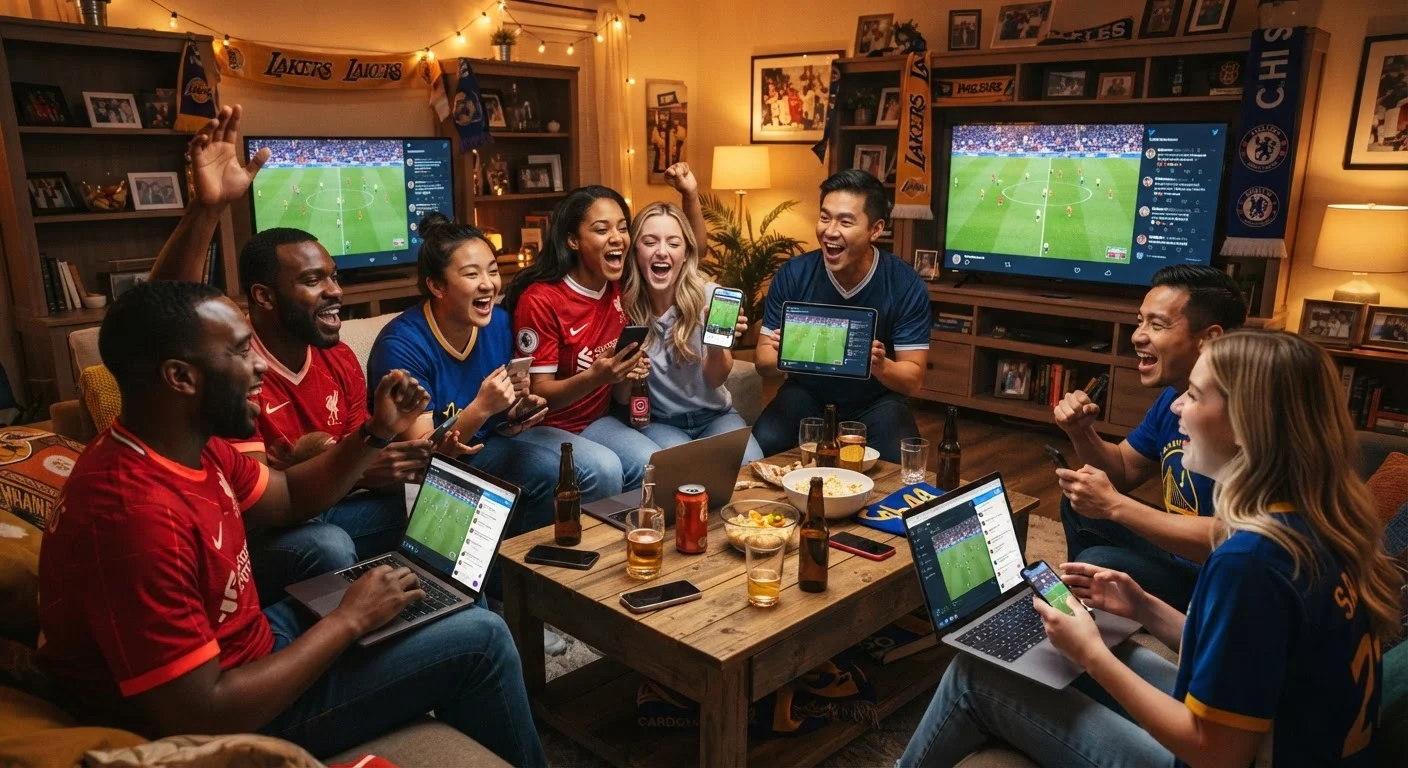
Social media blew those walls down. Today, a Green Bay Packers fan in rural Montana can spend every Sunday in a live game thread alongside thousands of other fans, trading takes on every drive. An NBA enthusiast in Phoenix can dive into the same Discord channel as someone in New York and someone in Ohio, all watching the same play from slightly different living rooms. The audience became a community, and the community became global.
This shift didn't happen overnight. Message boards and early fan forums in the 1990s and 2000s laid the groundwork, but the explosion of Twitter, Reddit, and later TikTok turned passive viewing into a participatory experience. According to Pew Research Center surveys, a substantial share of social media users say they follow sports accounts and engage with sports content online - and that engagement frequently happens during games, not just before or after them. That real-time dimension is what makes online fandom feel genuinely new.
The New Rituals of Digital Fandom
Every fan community develops its own rituals, and online sports communities are no different. Game threads on Reddit - where thousands of fans post moment-by-moment reactions - have become a modern version of the stadium crowd roar: chaotic, funny, passionate, and sometimes brutal. Meme culture has given fans a shared visual language; a well-timed GIF or custom graphic can communicate a feeling faster than any written take.
Live-tweeting during games is another ritual that has become deeply embedded in sports culture. Journalists, analysts, athletes, and regular fans all participate simultaneously, creating a layered conversation that no single television broadcast can replicate. For many fans, the second screen - phone in hand while the game plays on TV - has become as essential as the broadcast itself.
Finding the Right Fan Community for You
Start with the official subreddit for your team - most have active game threads, pinned guides for newcomers, and a range of casual and analytical discussion. If you want something more conversational and real-time, search for your team's Discord server. Many fan-run servers are welcoming to new members and organized into channels by topic, so you can engage at whatever depth suits you.
Fantasy sports have added yet another dimension. Fans who might follow one or two teams casually find themselves tracking players across the entire league, deepening their engagement. The intersection of fantasy sports and real fandom is a fascinating place where stat obsession and genuine team loyalty sometimes pull in opposite directions.
Belonging Without Borders
One of the most meaningful things online fan communities provide is a sense of belonging that geography alone can no longer guarantee. Americans move frequently, and a fan who grew up rooting for the Cleveland Browns may spend decades in cities with no local NFL team. Online communities become the anchor that maintains that connection across distance.
This is especially significant for fans of expansion teams still building their identity. A franchise in a new market struggles to generate the generational loyalty that older clubs enjoy, but online communities can accelerate that bonding process by giving scattered early adopters a place to gather. For more on that challenge, see our piece on building fan bases for expansion teams.
Online fandom also intersects meaningfully with local identity. Even as digital communities transcend geography, they often reinforce - and sometimes intensify - the civic pride that comes from rooting for a hometown team. That relationship between city and franchise is explored in depth in our look at how sports fandom shapes local identity.
The Tradeoffs: Community, Toxicity, and the Algorithm
Online fan communities aren't without their complications. The same anonymity and scale that makes them vibrant also creates conditions for harassment, groupthink, and toxic behavior. A bad loss can turn a game thread into something ugly fast, and athletes - who now exist on the same social platforms as their most passionate (and most hostile) fans - have spoken openly about the mental toll of that unfiltered exposure.
Moderation matters enormously. Well-run communities invest in clear rules and active enforcement; poorly moderated spaces can drive away casual fans and newcomers, leaving only the loudest voices. Platform algorithms also play an invisible role, amplifying outrage because it generates engagement, which can push fan discourse toward conflict rather than celebration.
Despite these tensions, the energy and creativity within online fan communities remains genuinely impressive. They produce original analysis, highlight underappreciated players, organize charitable initiatives, and keep the flame alive for sports during off-seasons and rebuilding years. The communities that thrive tend to be the ones that take moderation seriously and make space for the full range of fandom - from the die-hards to the curious newcomers. For a different angle on how fandom forms and evolves, our article on the long arc of fan identity is worth a read.