

Key Takeaways
The Phrase That Promises Everything and Guarantees Nothing
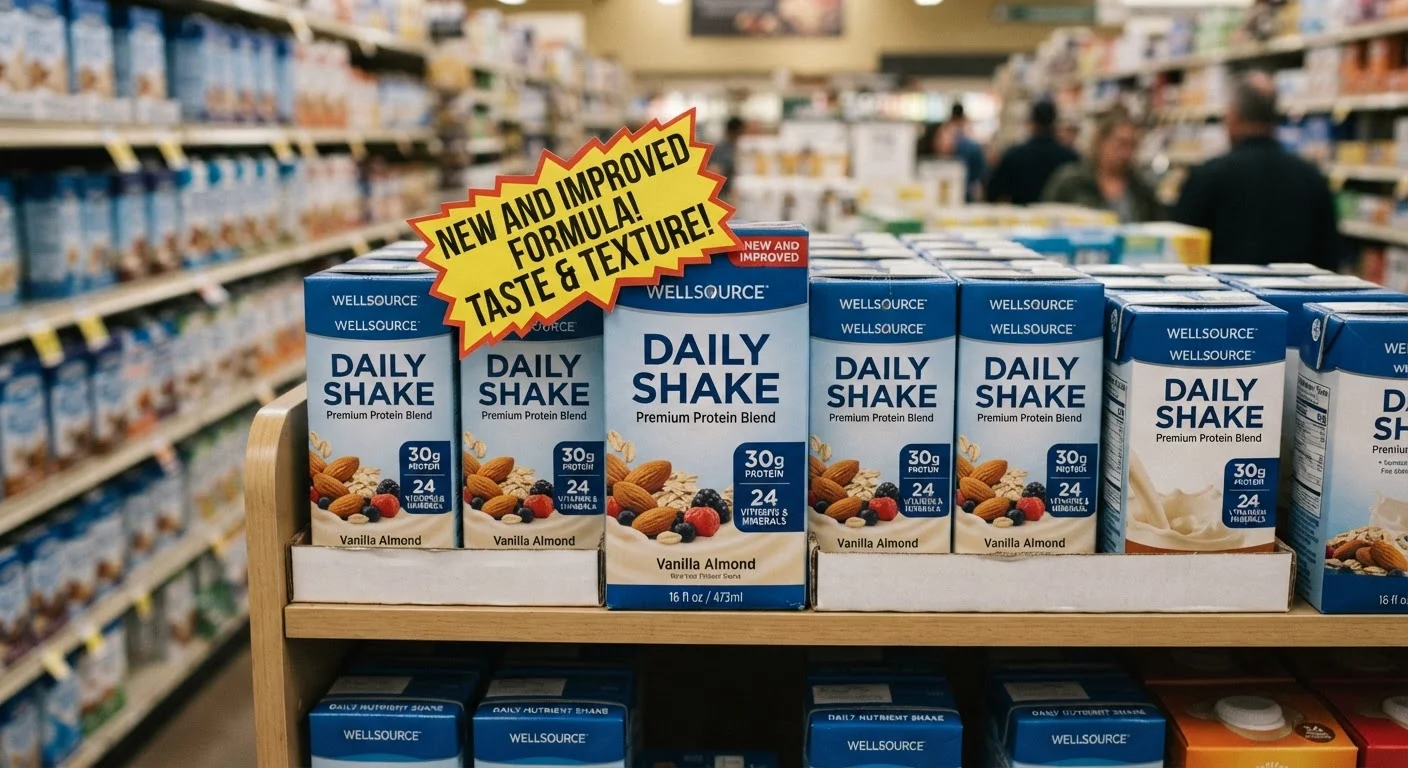
Walk through any grocery or drugstore aisle and you'll encounter products wearing a familiar badge: New and Improved. It implies progress - a better version of something you already trust. But unlike nutritional claims or organic certifications, "new and improved" carries no regulatory definition in the United States. The Federal Trade Commission requires that advertising claims be truthful and substantiated, but the bar for what qualifies as a meaningful "improvement" is remarkably low.
In practice, the phrase functions as a versatility tool. Manufacturers apply it to everything from a genuine formula overhaul to a cap redesign that's easier to open. That ambiguity is the point. Consumers interpret "improved" as meaningful product advancement; manufacturers use it to signal freshness without committing to specifics. Understanding the gap between those two things is the starting point for smarter shopping.
For a broader look at how vague language is used in consumer marketing, see how misleading product claims are constructed.
Common Myths About 'New and Improved' Products
Several durable misconceptions drive the effectiveness of this marketing phrase. The myth-and-fact breakdowns below cover the most consequential ones for everyday shoppers.
Myth
If a product says 'new and improved,' something meaningful must have gotten better.
Fact
The phrase is unregulated and can be applied to any change, including cosmetic ones with no bearing on product performance.
There is no federal standard requiring a minimum threshold of change before a manufacturer can use this phrase. A new cap color, a revised font, or a slight fragrance adjustment can all legally qualify. Shoppers who take the label at face value may pay renewed attention - and renewed loyalty - to a product that is functionally identical to what they already owned.
Myth
Reformulated products always perform better than the original version.
Fact
Reformulations are often cost-driven, substituting cheaper ingredients while maintaining the appearance of the product.
Ingredient substitution is a common manufacturing lever for managing costs. When a key input becomes more expensive, formulators may replace it with a functional - but not equivalent - alternative. The outward result looks and smells similar; the performance may differ subtly. This is especially common in personal care, cleaning products, and packaged foods, where ingredient swaps are rarely disclosed prominently.
Myth
A new package design signals a better product inside.
Fact
Packaging redesigns are primarily a marketing investment, not a product quality signal.
Consumer goods companies invest heavily in packaging research because visual freshness resets purchase habits and can prompt trial among lapsed buyers. The redesign cycle is largely independent of what's inside the package. Research in consumer behavior consistently shows that updated packaging increases perceived product quality even when the formula is unchanged - a dynamic manufacturers understand and rely on.
Myth
If the price is the same, the product can't have gotten worse.
Fact
Price stability can accompany reduced quantity, cheaper ingredients, or both - effectively raising the per-unit cost to the consumer.
Holding the shelf price steady while reducing net weight or substituting lower-cost inputs is a well-documented cost-management strategy. Because the price point doesn't change, many consumers don't notice. The net effect is that each dollar buys less product or lower-quality product than before. Checking net weight and comparing ingredient rankings (ingredients are listed in descending order by weight) between versions is the most direct way to detect this.
Myth
Manufacturers are required to disclose what changed when they relaunch a product.
Fact
No U.S. regulation currently mandates disclosure of formula or packaging changes at the point of sale.
Outside of specific regulated categories - certain drug products, for instance - manufacturers face no obligation to inform consumers what specifically changed from one version to the next. The "new and improved" label itself functions as the entire disclosure. This places the burden of comparison entirely on the consumer, which is why building habits around reading ingredient lists and unit pricing matters more than trusting marketing language.
What Actually Changes - and What Doesn't
When a product is relaunched with fanfare, the changes tend to cluster into a few familiar categories. Packaging updates are the most frequent trigger: a new color palette, reshaped bottle, or updated typography gives a product visual freshness at minimal cost. Formula tweaks are next - sometimes these are genuine improvements (a cleaner preservative, a more stable active ingredient), but they are just as often neutral changes that happen to coincide with cost-saving reformulations elsewhere in the recipe.
What rarely changes: core performance characteristics, net weight, and price. In some cases, the "new" version is actually smaller or uses cheaper filler ingredients while the price holds steady - a pattern closely related to shrinkflation. The quiet ways products shrink or cheapen without announcement is worth understanding alongside any "improved" claim.
The most reliable way to evaluate a relaunched product is to compare the ingredient list, net weight, and nutrition panel (where applicable) side by side with the previous version. Retailer product pages sometimes archive older versions; third-party apps that track product changes can also flag when ingredient order - which indicates proportion - has shifted.
"Premium" is another label often applied during relaunches. See what 'premium' actually means on a label for context on how that word is used.
How to Evaluate a 'New' Product Version Yourself
Skepticism doesn't require expertise - it requires a short checklist. Before assuming a reformulated product is better, ask:
- What specifically changed? If the packaging doesn't say, look at the ingredient list. If the first three to five ingredients are identical, core composition is likely unchanged.
- Did the net quantity change? Check the net weight or fluid ounces against what you remember or against archived product pages. A smaller amount at the same price is a price increase, not an improvement.
- Is the claim tied to a certifiable attribute? Claims like "now with 20% more active ingredient" or "reformulated with clinically tested X" are more testable than vague language. Look for specificity.
- Is this a category where meaningful innovation is common? Some product categories - sunscreen, cleaning concentrates, certain supplements - do see legitimate formula advances. Others, like commodity pantry staples, have limited room for genuine improvement.
Informed consumers are the best check on low-effort relaunch marketing. The more fluency you build in reading labels and tracking what actually shifts, the less the phrase "new and improved" can do its persuasive work unchallenged.