

Key Takeaways
Premium (Product Label)
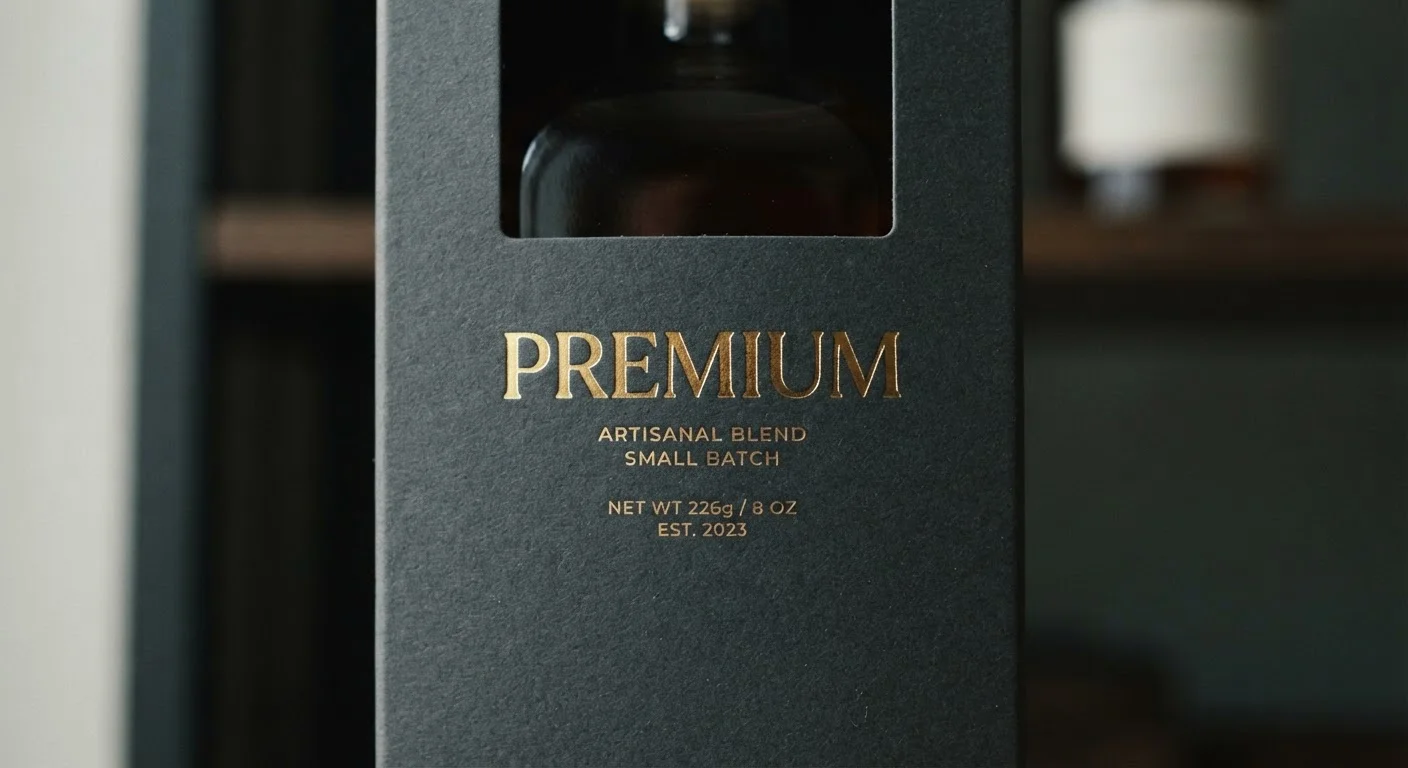
'Premium' on a product label is a marketing term with no standardized legal or regulatory definition in the United States. Manufacturers apply it voluntarily to signal higher quality, superior ingredients, or elevated status - but no independent body verifies those claims. In practice, it functions more as a positioning tool than a factual descriptor.
Unlike terms such as 'organic' or 'USDA Choice,' which carry enforceable federal standards, 'premium' is unregulated across virtually all consumer product categories, meaning its meaning is entirely at the discretion of the brand using it.
A Word With No Rulebook
'Premium' is one of the most common words in consumer product marketing - and one of the least meaningful. Unlike terms such as 'USDA Organic' or 'UL Listed,' which require third-party verification and must meet documented criteria, 'premium' carries no federal standard in the U.S. Any manufacturer can print it on any package, for any product, without meeting a single external requirement.
This isn't a loophole - it's by design. Words like 'premium,' 'artisan,' 'craft,' and 'natural' exist in what consumer advocates call the unregulated descriptor space: terms that sound meaningful but function primarily as brand positioning tools. Understanding that distinction is the first step toward cutting through the noise. For a broader look at how these rhetorical tactics work, see the anatomy of a misleading product claim.
Unregulated
Federal status of 'premium' label claims
The U.S. Federal Trade Commission does not define or regulate the use of 'premium' as a product descriptor across mainstream consumer categories.
~20-25%
Typical price premium attached to 'premium' labeled goods
Academic research on consumer packaged goods has found that premium-positioned products frequently command price premiums in this range over standard-tier alternatives in the same category.
Billions
Annual consumer spending influenced by aspirational label language
Marketing research organizations estimate that descriptor-driven positioning - including terms like 'premium,' 'artisan,' and 'craft' - influences a substantial share of consumer packaged goods purchasing decisions annually.
What 'Premium' Is Usually Signaling
When a brand uses 'premium,' it is almost always communicating one of three things: a higher price point, a target consumer identity, or a competitive distinction from a lower-tier version within its own product line. None of those signals automatically tells you anything about what's inside the package.
In food and beverage categories, 'premium' often correlates with richer ingredients, smaller batch production, or fewer additives - but that correlation is inconsistent and unverified. In personal care and household products, it frequently tracks with fragrance, packaging aesthetic, and marketing spend rather than formula complexity. In electronics, it tends to map to design choices, finishes, or bundle inclusions rather than core performance improvements.
The word also functions differently depending on context. A 'premium' tier within a store's own private-label lineup may simply mean the retailer's highest price point in that category. A 'premium' descriptor on a brand-name product may signal a genuine reformulation - or just a new package. Why 'new and improved' is rarely either explores similar patterns in product upgrade claims.
How to Find Signals That Actually Mean Something
Because 'premium' is self-defined, the practical move is to look past it entirely and focus on verifiable quality indicators. These fall into a few reliable categories:
- Third-party certifications: Look for marks from recognized independent bodies - NSF International, Consumer Reports testing, UL, or category-specific certifiers. These require documented compliance.
- Ingredient or material transparency: Products that list full ingredients, sourcing, or material grades give you something concrete to evaluate. Vague descriptors without specifics are a red flag.
- Measurable specifications: In categories like tools, appliances, or electronics, look for published performance data - torque ratings, lumens output, thread count in actual fiber composition terms - rather than adjective-heavy copy.
- Warranty terms: A stronger, clearer warranty can be a genuine signal of manufacturer confidence. See how to interpret those promises in our guide to warranty fine print.
Price alone is not a proxy for quality, even when a brand uses premium positioning to justify it. Judging whether something is worth more requires looking at what's actually different, not what the label implies.
The Practical Takeaway for Shoppers
Treating 'premium' as a meaningful signal without verification is exactly what product marketers count on. The word earns brands higher perceived value at low cost - there's no compliance burden, no audit, and no consumer recourse if the claim feels empty.
That doesn't mean every product labeled 'premium' is inferior. Some genuinely are better-formulated, more carefully sourced, or more durably built. But the label itself is not evidence of that. Your job as a consumer is to find the evidence elsewhere: in the ingredient list, the spec sheet, the certification mark, or the independent test result. The consumer spending hub has additional resources for making those comparisons more systematically.
When you notice 'premium' on a product, treat it the way you'd treat any unverified claim: as a starting point for a question, not an answer.