

Key Takeaways
Product Durability Testing
Product durability testing refers to structured, repeatable processes used to measure how well a product holds up under stress, repeated use, environmental exposure, or physical force. These tests are conducted by manufacturers, independent laboratories, or third-party certification bodies. The results determine whether a product lives up to claims like 'heavy-duty' or 'long-lasting' - terms that have no universal legal definition on their own.
Formal durability standards are often set by bodies such as ASTM International, ANSI, or ISO, and vary significantly by product category. Compliance with a specific standard should be stated explicitly by the manufacturer, not implied.
Why 'Durable' Means Almost Nothing on Its Own
Walk through any hardware, outdoor gear, or home goods section and you'll encounter the same cluster of words: durable, heavy-duty, long-lasting, built to last. These phrases carry emotional weight - they signal quality and justify higher prices. But in most product categories, none of these terms are regulated. No federal agency requires a manufacturer to prove a durability claim before printing it on packaging.
This isn't a minor technicality. It means a product marketed as 'heavy-duty' may have undergone rigorous independent testing - or no testing at all. The word alone tells you nothing. What matters is what sits behind it: a named test standard, a disclosed testing methodology, and ideally, a result from an independent party.
Understanding this gap is the first step toward evaluating products on evidence rather than marketing language. For a broader look at how vague claims get packaged as facts, see our article on misleading product claims.
What Credible Durability Testing Actually Involves
Legitimate durability testing is specific, repeatable, and tied to a defined standard. Depending on the product category, this might include:
- Abrasion resistance tests - measuring how many cycles of friction a fabric or surface can withstand before showing wear (e.g., ASTM D4157 for upholstery)
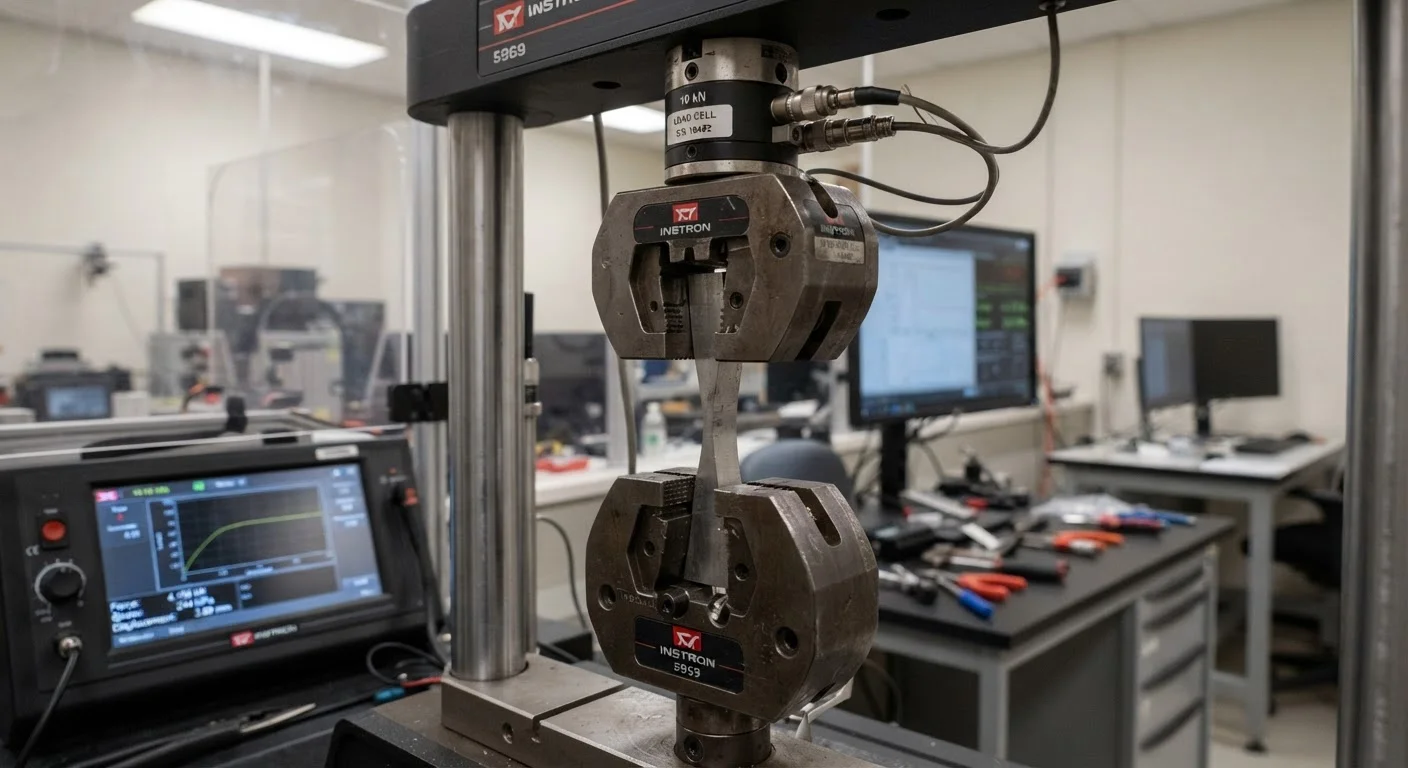
- Load and stress tests - applying measured force to structural components like joints, frames, or fasteners until failure
- Environmental exposure tests - subjecting materials to UV radiation, humidity, salt spray, or temperature cycling to simulate years of outdoor use
- Impact and drop tests - controlled falls or strikes assessed against a pass/fail threshold
The key feature of credible testing is transparency: the standard is named, the conditions are specified, and the result is quantified - not summarized as simply 'passed.'
No federal standard
Regulating the word 'durable' on product labels
In most U.S. consumer product categories, the FTC does not regulate vague durability descriptors like 'heavy-duty' or 'long-lasting' unless an environmental claim (e.g., 'durable, not disposable') is involved.
Dozens
ASTM standards covering product durability by category
ASTM International publishes category-specific test standards across textiles, plastics, metals, and building materials - each with defined pass/fail thresholds that manufacturers may choose to reference voluntarily.
When a product description cites a specific standard, that's meaningful. When it says only 'rigorously tested in our facilities,' treat that claim with appropriate skepticism.
The Independence Problem: Who Did the Testing?
Even when a product references a real test standard, the source of that testing matters. There are three main testing scenarios consumers encounter:
- Manufacturer self-testing - The company runs its own tests in its own facility. This isn't inherently dishonest, but there is an obvious conflict of interest. Results are rarely made public in full.
- Third-party laboratory testing - An independent lab, often accredited by a recognized body, administers the test. This is more credible because the tester has no stake in the outcome.
- Consumer and editorial testing - Organizations like Consumer Reports conduct their own hands-on evaluations using defined protocols, often providing the most practically useful comparisons for everyday buyers.
When evaluating a durability claim, ask: who tested this, under what conditions, and is the full methodology available? Products that answer all three questions clearly are outliers - and worth noticing.
This connects directly to the broader challenge of trusting brand reputation over product evidence - a well-known name is not a substitute for disclosed test data.
Certifications, Seals, and What They Do (or Don't) Prove
Many products display logos or badge-style graphics suggesting external validation. These range from genuinely meaningful to entirely self-referential. An independently verified certification - such as UL listing for electrical safety, NSF certification for food-contact materials, or compliance with a specific ASTM or ISO standard - involves a documented process administered by a recognized body with defined criteria.
By contrast, seals that read 'Quality Assured' or 'Performance Tested' without naming a standard or testing body are effectively marketing graphics. They may look identical on the shelf to a legitimate certification, but they represent only the manufacturer's own assertion.
For a practical guide to distinguishing the two, see our article on certifications worth trusting vs. self-awarded seals.
One useful rule: a legitimate certification body can be looked up independently, and its criteria for the certification are publicly available. If a seal's granting organization doesn't have a searchable presence or published standards, that's informative.
Putting It Into Practice Before You Buy
Applying this framework doesn't require a laboratory. It requires a few focused questions at the point of purchase or research:
- Does the durability claim reference a specific, named test standard?
- Was the testing conducted by an independent party, or by the manufacturer?
- Is the test result quantified, or just described as 'passed'?
- Can the certifying body or testing organization be independently verified?
- How does the warranty coverage relate to - and differ from - the durability claim?
For a complete pre-purchase evaluation framework, the critical evaluation checklist for any product covers these questions alongside pricing, materials, and total cost of ownership.
Durability claims are one piece of a larger picture. When they're backed by transparent, independent testing, they're genuinely useful signals. When they're not, they're decoration - and spending wisely means knowing the difference.
For a full guide to evaluating any product from start to finish, see Smart Shopping From Start to Finish.