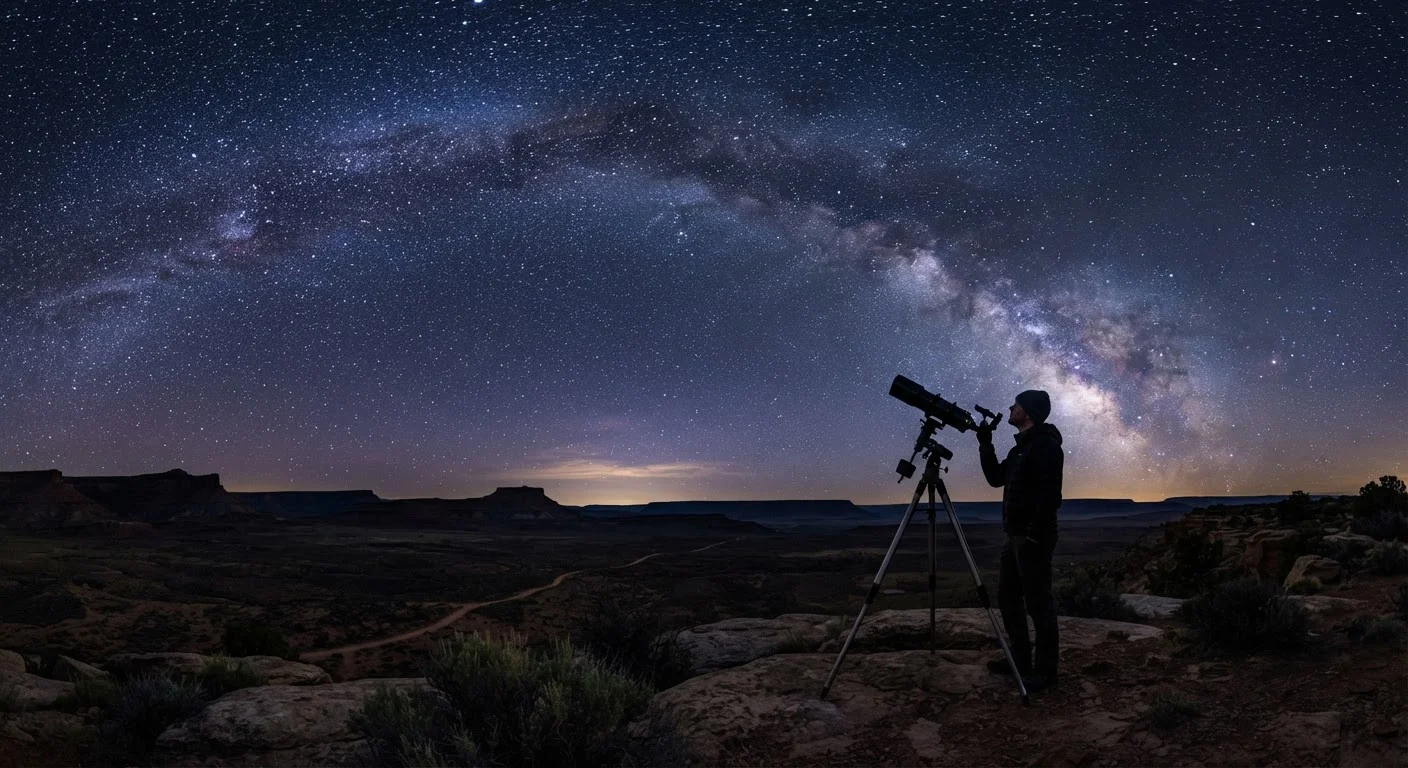
Moon phase is the single biggest variable affecting how much you can see on any given night.
Light pollution maps help you find genuinely dark sky locations within driving distance.
Dark adaptation takes 20-30 minutes and is easily ruined by white light exposure.
Dressing in layers prevents cold from cutting your session short, even in mild seasons.
A printed or downloaded sky chart removes dependence on phone signal in remote areas.
30–60 min
Summary
22 items · 30-60 minutes of planning before you head out
Why Preparation Makes or Breaks a Stargazing Night
Most failed stargazing sessions share a common cause: avoidable surprises. A bright gibbous moon washes out faint nebulae. An unexpected cloud band rolls in at midnight. A phone battery dies before you finish identifying a constellation. None of these outcomes are inevitable - they're planning gaps.
Astronomy rewards preparation more than almost any other outdoor hobby. Unlike hiking, where a poor forecast just means a wet trail, a compromised sky means you may see nothing at all. This checklist walks you through every decision point, from picking the right calendar date to packing your bag, so that when you arrive at your chosen spot, the only variable left is the universe itself.
Whether you're heading out with naked eyes, binoculars, or a telescope, the fundamentals apply equally. If you're still sorting out which optical instrument suits your goals, our guide to amateur astronomy equipment offers a clear breakdown of the trade-offs.
Timing and Sky Conditions
Check the current moon phase and plan sessions around new moon, when the moon is below the horizon for most of the night.Must
Verify the weather forecast for cloud cover, humidity, and wind - aim for stable, low-humidity nights with seeing forecasts rated "good" or better.Must
Look up astronomical twilight end time for your location so you know exactly when the sky reaches full darkness.Must
Check whether any notable events (meteor showers, planetary oppositions, ISS passes) coincide with your session date.Should
Site Selection
Use a light pollution map (such as the widely referenced Bortle scale visualization) to identify the darkest accessible location within a reasonable drive.Must
Confirm the site is legally accessible at night - many parks and preserves have after-hours restrictions.Must
Scout for a location with a clear horizon in the direction of your primary targets, with minimal obstructions from trees or buildings.Should
Note nearby amenities such as restrooms or shelter in case weather changes unexpectedly.Nice to have
Equipment Preparation
Collimate your telescope (align its optics) at home in daylight if it hasn't been checked recently - misaligned optics significantly degrade image quality.Must
Charge all battery-powered devices: red flashlight, phone, dew heater controllers, and any electronic mount hand controllers.Must
Download your sky-charting app's offline data or print a star chart so you're not dependent on cell signal at a remote site.Must
Pack a variety of eyepieces to allow different magnifications - low power for wide fields, higher power for planetary detail.Should
Bring a dew shield or anti-dew strap for your telescope's primary optics if nighttime humidity is forecast above 70%.Should
Include a notebook or voice recorder to log what you observe - records help you track improvement over time.Nice to have
Personal Comfort and Safety
Dress in layers, adding at least one more layer than the forecast temperature suggests - nighttime radiative cooling can drop temperatures significantly after sunset.Must
Bring insulated seating or a reclining chair for extended naked-eye or binocular sessions to avoid neck strain.Should
Pack sufficient water and light snacks - sessions often run longer than planned.Should
Share your location and expected return time with someone before heading to a remote site.Must
Carry a basic first-aid kit and know the nearest route to cell coverage or an emergency service location.Should
Bring insect repellent during warmer months - extended sessions in fields and meadows can involve significant bug exposure.Nice to have
What to Know Once You Arrive at Your Site
Preparation doesn't end at the car door. The first 30 minutes on-site are critical, and treating them carelessly erases the benefit of good planning.
Dark adaptation is the physiological process by which your eyes shift from cone-dominated daytime vision to rod-dominated night vision. Rods are far more sensitive to dim light, but they require roughly 20-30 minutes without white light exposure to reach peak sensitivity. A single glance at an unfiltered phone screen can reset this process substantially. Use a red-light flashlight for any on-site tasks - red wavelengths have minimal effect on rod cells.
Once dark-adapted, orient yourself before reaching for the eyepiece. Use a printed or downloaded star chart to identify the brightest stars and constellations overhead first, then work inward toward your targets. Our article on reading a star map explains how to translate a flat chart into what you actually see overhead - an invaluable skill for any observer.
If planets are among your targets, knowing their current positions and what surface features or moons are visible that night adds significant depth to a session. The planets worth watching overview covers what makes each world observationally interesting.
White Light Ruins Dark Adaptation Instantly
Even a brief exposure to a standard flashlight, unshielded phone screen, or car headlights will reset your eyes' dark adaptation, requiring another 20-30 minutes to recover fully. Configure your phone to its dimmest red-tinted display mode before leaving home, and remind anyone joining your session to do the same. Keep your car's interior lights disabled when retrieving gear.
Science Editorial Team is the collective byline for our editorial team and contributor network. Articles published under this byline or an editorial pen name are researched, written, and reviewed according to our editorial standards for clarity, consistency, and independence before publication.
Disclaimer: The content on this site is for informational purposes only and is not a substitute for professional advice. Always consult a qualified professional for guidance specific to your situation.