

Key Takeaways
Gives beginners a quick decision-making filter
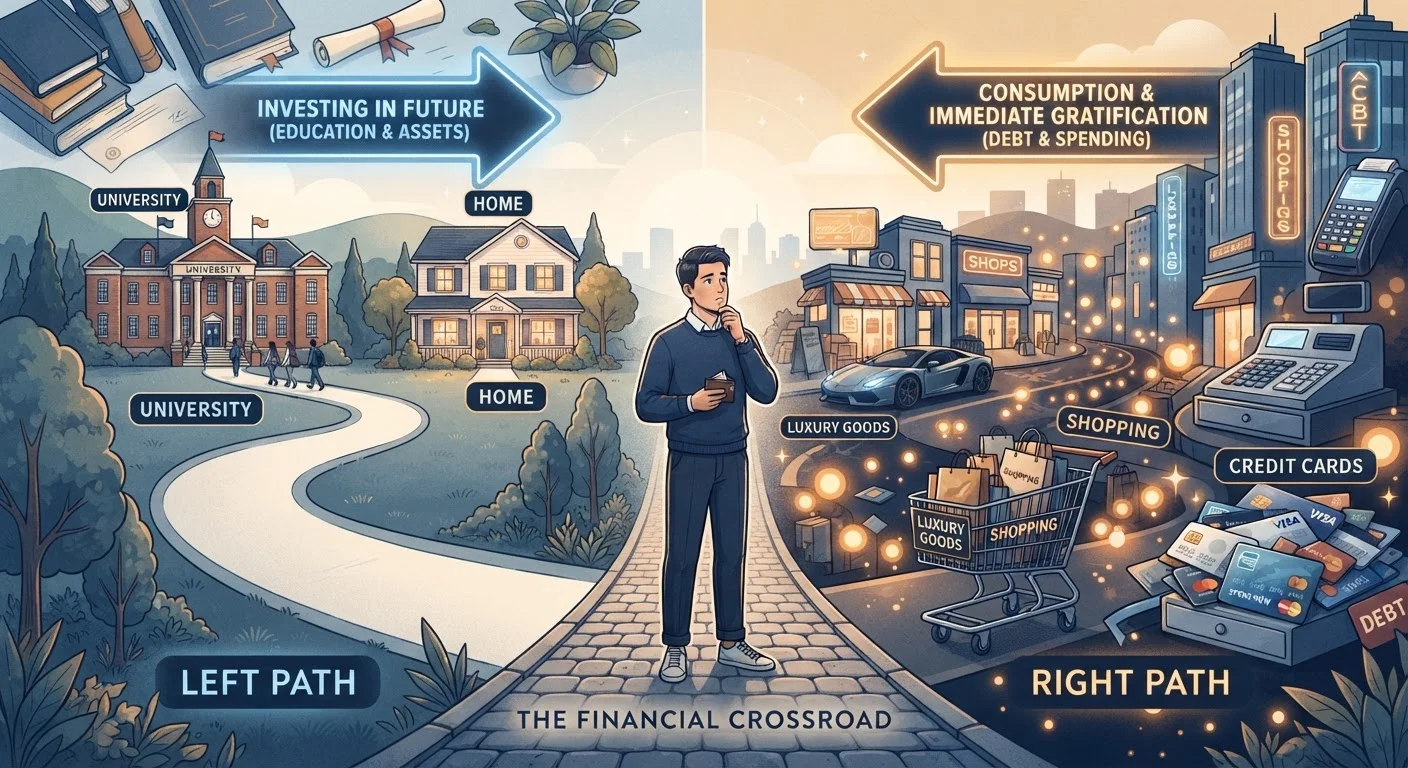
For someone just starting to manage their finances, having a rough rule - borrowing to invest good, borrowing to consume bad - reduces paralysis and encourages more intentional borrowing.
Highlights that not all borrowing carries equal risk
Low-interest, long-term debt tied to assets like property or education typically carries different financial consequences than high-interest short-term consumer debt, and the framework captures that difference directionally.
Encourages questioning the purpose before borrowing
Asking whether debt is "good" or "bad" prompts people to think about what the borrowed money will actually accomplish, which is a meaningful step toward more deliberate financial choices.
Ignores interest rate and loan terms entirely
A student loan or mortgage at a very high interest rate can become a significant financial burden regardless of its category. The label says nothing about actual cost.
Assumes asset values move in one direction
Mortgages are labeled good partly because homes are assumed to appreciate, but housing markets are not uniformly upward, and local conditions can significantly affect that assumption.
Applies moral judgment where context is needed
Calling consumer debt "bad" can discourage people from addressing it honestly. Shame often leads to avoidance, which prolongs repayment rather than accelerating it.
Does not account for individual income and cash flow
A debt that is manageable for one income level can be destabilizing for another. The category of debt matters far less than whether the monthly obligation fits your actual financial position.
Our Verdict
The good debt vs. bad debt framework gives beginners a mental shortcut, but it can create false confidence or unnecessary shame. A mortgage or student loan isn't automatically safe, and a personal loan isn't automatically ruinous - terms, affordability, and purpose all shape the real impact. Treating debt as a spectrum rather than a binary is a more honest and useful approach.
Best suited to readers who want a foundational understanding of debt categories and are ready to look beyond simplified labels toward more nuanced borrowing decisions.
Where the Framework Comes From
The idea that some debt is "good" and other debt is "bad" has been a staple of personal finance advice for decades. The basic logic: debt used to build wealth or increase earning potential is good; debt used to buy depreciating goods or fund consumption is bad. Mortgages and student loans typically land in the "good" column. Credit card balances and payday loans go in the "bad" column.
The framework gained traction because it is easy to communicate and broadly directional - borrowing to invest in an asset that can grow in value is generally more defensible than borrowing to finance a vacation. For someone new to managing money, it provides a rough filter for decisions. But filters that work in simple cases can mislead in complex ones, and personal finance is almost always complex.
Understanding how debt is structured - not just categorized - is equally important. For a deeper look at how lenders actually classify what you borrow, see our article on secured vs. unsecured debt and why the difference matters.
What the Framework Gets Right
There are genuine reasons the good/bad distinction has persisted. Debt that funds an education, a home, or a small business can create long-term financial value - though none of those outcomes is guaranteed. These borrowing types also tend to carry lower interest rates and longer repayment windows, which reduces the per-month burden relative to the total borrowed.
Gives beginners a quick decision-making filter
For someone just starting to manage their finances, having a rough rule - borrowing to invest good, borrowing to consume bad - reduces paralysis and encourages more intentional borrowing.
Highlights that not all borrowing carries equal risk
Low-interest, long-term debt tied to assets like property or education typically carries different financial consequences than high-interest short-term consumer debt, and the framework captures that difference directionally.
Encourages questioning the purpose before borrowing
Asking whether debt is "good" or "bad" prompts people to think about what the borrowed money will actually accomplish, which is a meaningful step toward more deliberate financial choices.
The framework also encourages people to pause before borrowing and ask: what is this debt actually doing for me? That question alone has value. Impulse borrowing - financing wants rather than needs without a repayment plan - is a genuine driver of financial stress, and the simple label "bad debt" can interrupt that pattern.
Where It Falls Short
The framework breaks down quickly when you examine real-world conditions rather than idealized categories. Student loan debt is frequently cited as "good," but a graduate facing a weak job market in their field, with a high loan balance and a modest income, may find that debt severely constraining regardless of its label. A mortgage is broadly considered "good," yet borrowing at a high interest rate for a home in a declining market introduces risk the label ignores.
Ignores interest rate and loan terms entirely
A student loan or mortgage at a very high interest rate can become a significant financial burden regardless of its category. The label says nothing about actual cost.
Assumes asset values move in one direction
Mortgages are labeled good partly because homes are assumed to appreciate, but housing markets are not uniformly upward, and local conditions can significantly affect that assumption.
Applies moral judgment where context is needed
Calling consumer debt "bad" can discourage people from addressing it honestly. Shame often leads to avoidance, which prolongs repayment rather than accelerating it.
Does not account for individual income and cash flow
A debt that is manageable for one income level can be destabilizing for another. The category of debt matters far less than whether the monthly obligation fits your actual financial position.
The binary also tends to assign moral weight to financial decisions in ways that aren't always helpful. Labeling credit card debt "bad" can discourage people from looking honestly at the interest costs and building a payoff plan - instead, shame can lead to avoidance. For a look at the behavioral patterns that actually extend debt repayment timelines, see our guide on borrowing habits that tend to keep people in debt longer.
Good Debt Can Still Become Unmanageable
The 'good debt' label does not insulate a borrower from financial hardship. A mortgage becomes problematic if income drops or the home loses value; student loans become burdensome if earnings don't rise to meet them. The category describes the debt's intended purpose - not its actual impact on your financial life. Always evaluate affordability alongside intent.
A More Useful Way to Evaluate Debt
Rather than asking whether a debt is good or bad, consider evaluating it across several practical dimensions: the interest rate relative to your other financial priorities, whether the purpose of the borrowing is likely to retain or grow value, how the monthly payment fits within your actual cash flow, and what happens to your financial position if circumstances change.
These questions don't produce a simple label, but they produce better decisions. Someone comparing two approaches to paying down existing debt - without adding to it - may find structured methods like those explained in our overview of the debt snowball and debt avalanche methods more actionable than any category label.
~43M
Americans with federal student loan debt
According to U.S. Department of Education data, roughly 43 million borrowers hold federal student loans - widely classified as 'good' debt, yet a significant source of financial strain for millions.
20%+
Typical credit card APR in recent years
Federal Reserve data has shown average credit card interest rates exceeding 20% annually in recent years, illustrating why cost - not just category - is the critical variable.
If you are actively carrying debt and want to understand whether it is becoming a strain, tracking concrete warning signs is more reliable than relying on gut instinct. Our article on signals your debt load may be becoming unmanageable covers the patterns worth watching. For broader principles that apply regardless of debt type or income level, see our guide to managing debt responsibly.
This article is for general informational purposes only and does not constitute personalised financial, legal, or tax advice. Readers should consult a qualified financial adviser before making borrowing or debt management decisions.