

Key Takeaways
Our Verdict
Both the debt snowball and debt avalanche are proven frameworks for paying off debt systematically. The avalanche typically costs less over time, while the snowball tends to keep people engaged through early wins. The right method is ultimately the one you'll stick with.
| Best for | Recommended |
|---|---|
| Those who need motivational momentum to stay on track | Debt Snowball |
| Those focused on minimizing total interest paid over time | Debt Avalanche |
| Those with several small balances they want to eliminate quickly | Debt Snowball |
| Those with high-interest debt such as credit cards carrying large balances | Debt Avalanche |
What These Two Methods Actually Are
When you're juggling multiple debts - credit cards, personal loans, medical bills - having a structured repayment plan makes a measurable difference. Two of the most widely recognized approaches are the debt snowball and the debt avalanche. Both follow the same basic operating rule: make minimum payments on every debt, then direct any extra money toward one specific target debt. They differ in how they choose that target.
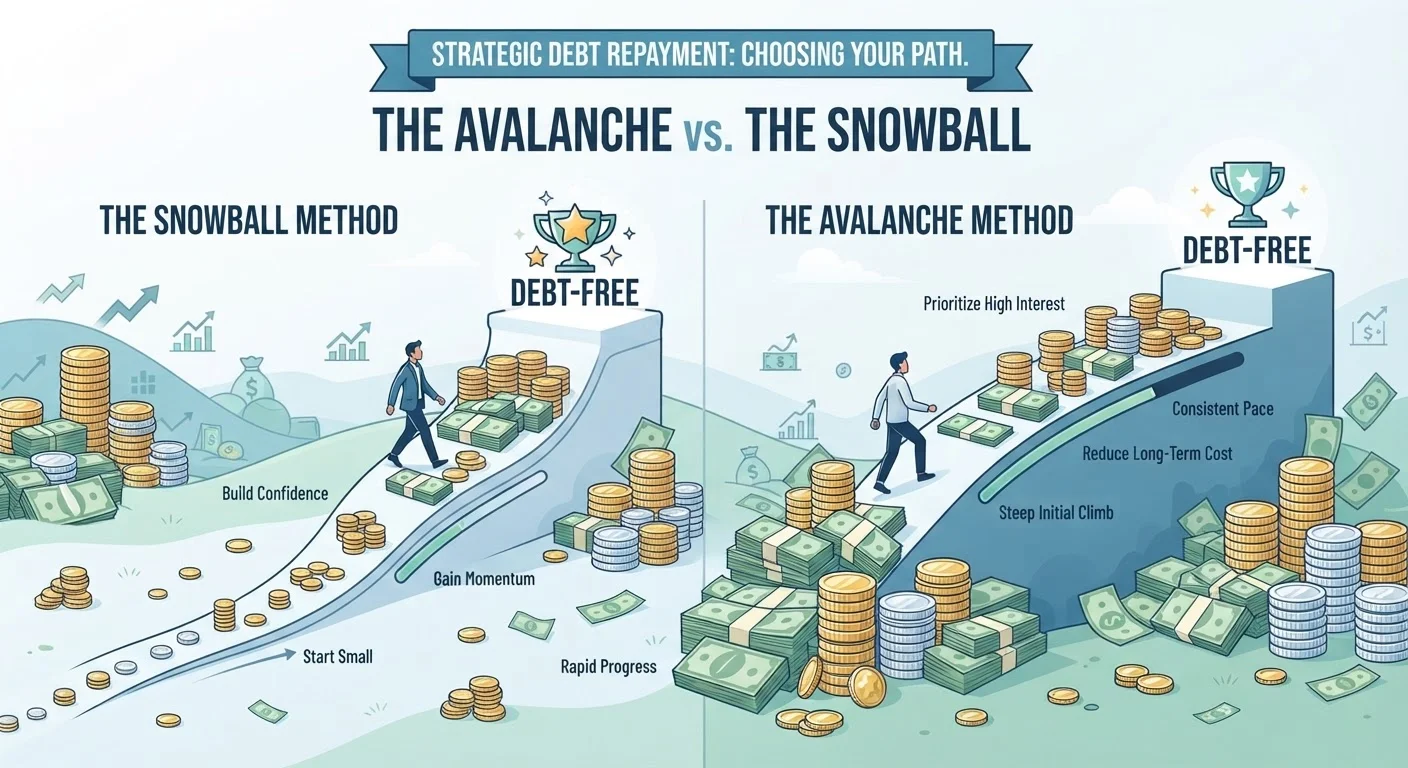
The debt snowball ranks your debts by balance size, from smallest to largest, regardless of interest rate. You attack the smallest balance first. Once it's paid off, you roll that payment into the next smallest, building momentum as you go.
The debt avalanche ranks debts by interest rate, from highest to lowest. You put extra funds toward the debt costing you the most in interest each month. Once eliminated, you redirect that payment toward the next highest-rate debt.
Understanding what kind of debt you're dealing with is also worth considering before choosing a strategy - see our article on secured vs. unsecured debt for helpful context.
How They Compare Across Key Factors
The table below breaks down the practical differences between the two methods across the dimensions that matter most to most borrowers.
| Debt Snowball | Debt Avalanche | |
|---|---|---|
| Repayment order | Smallest balance first | Highest interest rate first |
| Total interest paid | Typically higher | Typically lower |
| Time to first payoff | Faster (small balances cleared quickly) | Slower if smallest debt has low rate |
| Motivational impact | High - frequent account closures | Moderate - wins may take longer |
| Mathematical efficiency | Lower | Higher |
| Best suited to | Motivation-driven borrowers | Analytically focused borrowers |
One important nuance: the psychological dimension is not a soft factor. Research in behavioral finance consistently shows that people are more likely to abandon debt repayment plans that don't deliver visible progress. For some borrowers, the avalanche's mathematical efficiency is irrelevant if they disengage before reaching it.
When Each Strategy Works Best
The snowball method tends to suit people who have struggled with motivation in the past or who have several smaller balances creating mental clutter. Eliminating accounts entirely provides a concrete sense of progress that can reinforce the habit of paying extra toward debt. If you find yourself losing steam on long-term financial goals, quicker wins can help sustain commitment.
The avalanche is generally more effective for borrowers who are comfortable with delayed gratification and whose primary concern is the total cost of repayment. If your highest-interest debt also carries a large balance, the difference in interest savings compared to the snowball can be meaningful over months or years.
It's also worth examining the borrowing behaviors that may have contributed to your current debt load. Our piece on habits that keep people in debt longer outlines patterns worth recognizing early.
For a broader foundation, managing debt responsibly covers the core habits that support any repayment strategy at any income level.
Putting a Method Into Practice
Whichever approach you choose, the mechanics are similar:
- List all your debts with their current balances, minimum payments, and interest rates.
- Order them by your chosen method - smallest balance first (snowball) or highest rate first (avalanche).
- Set a monthly extra payment amount - even a modest figure accelerates your timeline significantly.
- Apply that extra payment consistently to your target debt each month.
- When one debt is cleared, add its full payment to the next target rather than absorbing it into general spending.
A household budget is an essential companion to either strategy. Without a clear picture of income and expenses, finding that extra payment amount becomes guesswork. Budgeting basics offers straightforward ways to track spending and free up room for debt repayment.
If your debt feels harder to manage than either of these strategies can address, it's worth reviewing the signals that debt may be becoming unmanageable and speaking with a certified nonprofit credit counselor or a licensed financial adviser about your options.
This article is for general informational and educational purposes only and does not constitute personalized financial, legal, or tax advice. Readers should consult a qualified financial professional before making decisions about their specific debt situation.