

Key Takeaways
Option A
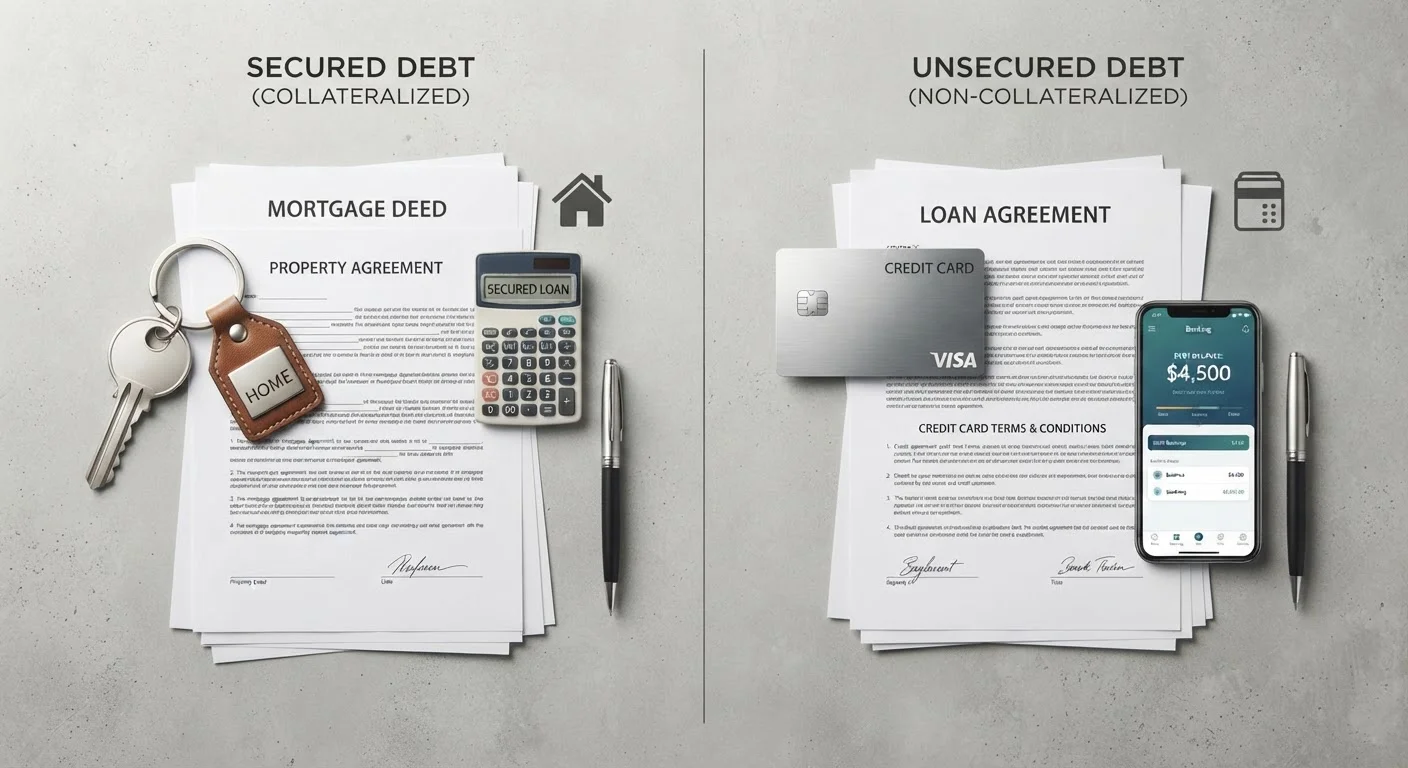
Secured Debt
Collateral-backed borrowing with lower rates and higher stakes.
Best for: Borrowers financing large purchases - like a home or car - who can accept the risk of losing the underlying asset if they default.
Option B
Unsecured Debt
No collateral required, but typically costlier and riskier for lenders.
Best for: Borrowers who need flexible access to credit for everyday expenses or emergencies without pledging a specific asset.
If you're financing a home or vehicle purchase
Secured Debt
Mortgage and auto loans are typically secured, enabling larger loan amounts and lower interest rates - provided you're confident in your ability to repay.
If you need short-term funds without pledging an asset
Unsecured Debt
Personal loans or credit cards don't put property at immediate risk of seizure, though higher rates mean you should repay balances as quickly as possible.
If you're managing debt repayment priorities
Secured Debt
Secured obligations - especially mortgages - generally warrant priority to avoid losing essential property like your home.
If you're rebuilding credit with limited assets
Unsecured Debt
A secured credit card (backed by a cash deposit) aside, unsecured credit products offer a path to building credit history without risking major collateral.
What Makes Debt 'Secured' or 'Unsecured'?
The distinction between secured and unsecured debt comes down to one concept: collateral. Collateral is an asset - such as a house, a car, or a savings account - that a borrower pledges to a lender as security for a loan. If the borrower fails to repay, the lender has a legal claim to that asset.
Secured debt is backed by collateral. A mortgage is the most familiar example: the home itself secures the loan, and a lender can initiate foreclosure if payments stop. Auto loans work similarly - the vehicle is the collateral. Other examples include home equity loans and secured credit cards (where a cash deposit backs the credit limit).
Unsecured debt, by contrast, isn't tied to any specific asset. If you borrow through a personal loan, a credit card, or a student loan, the lender has no automatic right to seize a particular possession if you default. Instead, they may pursue legal action, send the account to collections, and report the delinquency to credit bureaus - all of which can seriously damage your financial standing.
Before signing any loan agreement, it helps to understand the terminology involved. Our plain-language glossary of borrowing terms breaks down concepts like principal, APR, and default in straightforward language.
How Interest Rates and Loan Terms Differ
Because secured loans give lenders a direct claim on an asset, lenders take on less risk - and they typically price that reduced risk into the interest rate. Secured loans generally carry lower interest rates than unsecured ones of comparable size.
This difference compounds significantly over time. A mortgage at a relatively low fixed rate will cost far less in interest over 30 years than an equivalent amount carried on a high-rate credit card. Understanding how interest accumulates is critical: our guide on how interest compounds on debt explains the mechanics and long-term impact clearly.
| Criterion | Secured Debt | Unsecured Debt |
|---|---|---|
| Collateral required | Yes - specific asset pledged | No asset required |
| Typical interest rate | Generally lower | Generally higher |
| Common examples | Mortgage, auto loan, HELOC | Credit card, personal loan, student loan |
| Lender remedy on default | Repossession or foreclosure | Collections, legal judgment, credit damage |
| Typical loan term | Long-term (years to decades) | Short to medium-term (varies) |
| Risk to borrower | Loss of pledged asset | Credit damage, potential wage garnishment |
Loan terms - meaning the repayment period - also tend to differ. Secured loans often span years or decades (mortgages, for example), while unsecured personal loans may run one to seven years, and credit card balances have no fixed repayment schedule, which creates a trap for some borrowers.
What Happens When You Can't Pay
The consequences of defaulting - failing to make required payments - differ meaningfully between the two debt types, and understanding this can help you prioritize if money gets tight.
With secured debt, the lender's most significant remedy is repossession or foreclosure. A lender can reclaim the collateral to recover what's owed. Losing a home or vehicle has serious, immediate consequences for daily life. That's a key reason financial professionals generally advise prioritizing secured debt payments when budgets are strained.
With unsecured debt, there is no collateral to seize directly. However, lenders can pursue legal judgments, which in some states may allow wage garnishment or bank account levies. Accounts in default are typically reported to credit bureaus, and the damage to your credit score can affect your ability to borrow, rent housing, or sometimes even secure employment.
Both types of default are serious. The difference is the speed and directness of the lender's remedy. Some borrowing behaviors make default more likely - habits that extend debt repayment timelines are worth understanding before they become costly patterns.
Choosing the Right Type for Your Situation
Neither secured nor unsecured debt is inherently better - the right choice depends on your purpose, risk tolerance, and financial situation. A few guiding principles can help:
- Match the debt type to the purchase. Large, durable assets like homes and vehicles are commonly financed with secured loans because the collateral aligns with the loan's purpose.
- Consider your repayment certainty. If your income is variable or uncertain, pledging a critical asset as collateral carries added risk. An unsecured loan removes that specific exposure, though the higher cost must be weighed carefully.
- Watch the total cost of borrowing. A lower interest rate on a secured loan doesn't automatically make it the less expensive choice if the loan term is much longer and the total interest paid is higher.
- Understand the framework you're working within. The good debt vs. bad debt framework is a useful starting point, though the reality of any debt depends heavily on your personal financial picture.
This article provides general financial information and education. It is not personalized financial, legal, or tax advice. For decisions specific to your situation, consider consulting a qualified financial adviser or licensed professional.
This article is for informational purposes only and does not constitute financial, legal, or tax advice. Consult a qualified financial professional before making borrowing decisions specific to your circumstances.