

Key Takeaways
Fixed vs. Variable Expenses
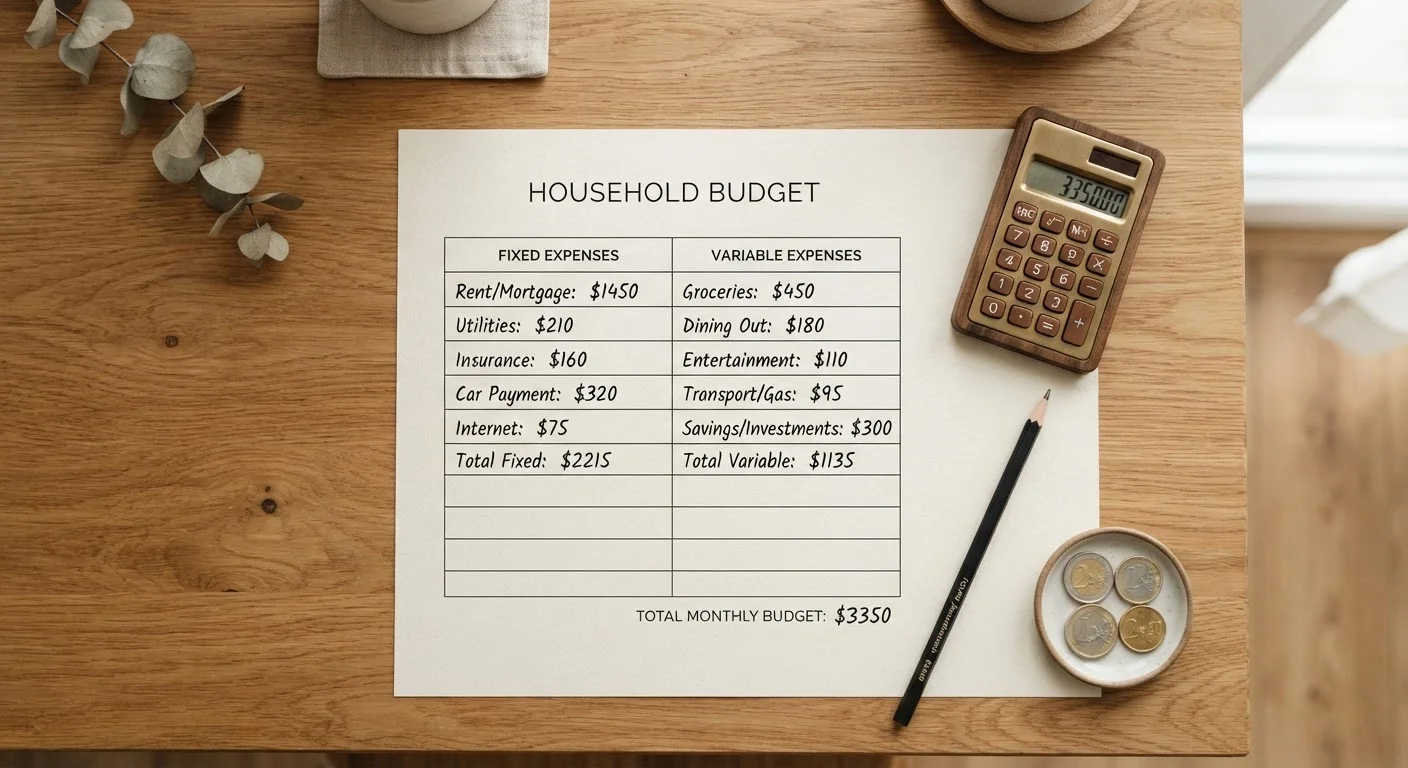
Fixed expenses are costs that stay the same amount every billing period, such as a rent payment or car loan. Variable expenses fluctuate from month to month depending on usage, behavior, or circumstance - groceries and utility bills are common examples. Together, these two categories form the foundation of any personal budget.
In managerial accounting, 'fixed' and 'variable' costs are defined relative to production output; in personal finance, the distinction is based on predictability and discretion rather than production volume.
What Makes an Expense 'Fixed'?
A fixed expense is one that costs the same amount on a recurring basis, regardless of how you spend your time or money in a given month. Your rent or mortgage payment is the most familiar example - it arrives the same day each month for the same dollar amount. Other common fixed expenses include car loan payments, insurance premiums, subscription services billed at a flat rate, and minimum debt payments.
The defining quality of a fixed expense is predictability. You know exactly what you owe before the month even begins. That predictability makes fixed expenses the logical starting point for any budget: list them first, subtract them from your monthly income, and you immediately know how much you have left to work with. For a broader look at how these costs fit into a complete budgeting vocabulary, see the Personal Budgeting Complete Reference.
What Makes an Expense 'Variable'?
Variable expenses change in amount from one period to the next. Groceries, gasoline, dining out, entertainment, clothing, and utility bills are all examples of variable costs in a household budget. The amount you spend depends on choices, consumption habits, and sometimes circumstances outside your control - a cold winter drives up a heating bill even if your behavior stays the same.
Variable expenses are where most budgeting flexibility lives. Because these costs fluctuate, they are also the most responsive to intentional changes. Cutting back on restaurant meals or finding a lower-cost grocery option directly reduces your variable spending in ways that are simply not available with fixed costs. Understanding this distinction is closely related to the broader framework of needs, wants, and savings, since most discretionary spending falls into the variable category.
Track Variable Spending for Three Months First
Before you assign budget targets to variable expenses, look back at three months of actual bank and credit card statements. Real spending patterns are almost always higher than estimates made from memory. Using actual averages produces a budget that is far more likely to hold up in practice.
The Middle Ground: Semi-Variable Expenses
Not every cost fits neatly into one box. Semi-variable expenses - sometimes called mixed costs - carry both a fixed base and a variable component. A cell phone plan might charge a flat monthly fee plus overage charges if you exceed your data limit. An electricity bill may include a fixed connection fee alongside a charge that varies by kilowatt-hours used.
For budgeting purposes, the most practical approach is to estimate the variable portion using past bills and add it to the fixed base. Averaging two or three months of statements gives you a reasonable planning figure. Recognizing semi-variable costs prevents you from under-budgeting for expenses that appear stable at first glance.
~33%
Share of income the average U.S. household spends on housing
According to the U.S. Bureau of Labor Statistics Consumer Expenditure Survey, housing consistently represents the largest single expense category for American households, underscoring how much of the average budget is locked into a fixed cost.
~15%
Share of household spending on food (at home and away)
The BLS Consumer Expenditure Survey shows food spending is split between groceries and dining out, both of which are variable expenses subject to meaningful behavioral control.
How This Distinction Shapes Your Budget Strategy
Once you categorize your spending, the practical implications become clear. Fixed expenses set the floor - they must be paid, on time, every period. If your fixed costs consume a large share of your income, your financial margin for savings and discretionary spending narrows considerably. This is why financial educators often advise keeping fixed commitments (rent, loan payments, insurance) to a manageable proportion of take-home pay, though the right ratio depends on individual circumstances.
Variable expenses, by contrast, are where budget adjustments happen in real time. If an unexpected cost arises in a given month, variable spending is typically the first place to look for room. Planning for variable expenses using historical averages - rather than best-case scenarios - also helps fund irregular but predictable needs, a topic explored further in our guide to emergency funds, sinking funds, and savings goals.
This same fixed-versus-variable logic extends well beyond household budgeting. It applies when planning travel costs - see The Trip Budget Breakdown Most Travelers Overlook - and even surfaces in mortgage decisions, where the choice between a fixed and adjustable rate is, in essence, a decision about cost predictability over time, as discussed in Fixed-Rate vs. Adjustable-Rate Mortgages.
This article provides general financial education and is not personalized financial advice. For guidance specific to your situation, consult a qualified financial professional.