

Key Takeaways
Option A
Gulf Coast
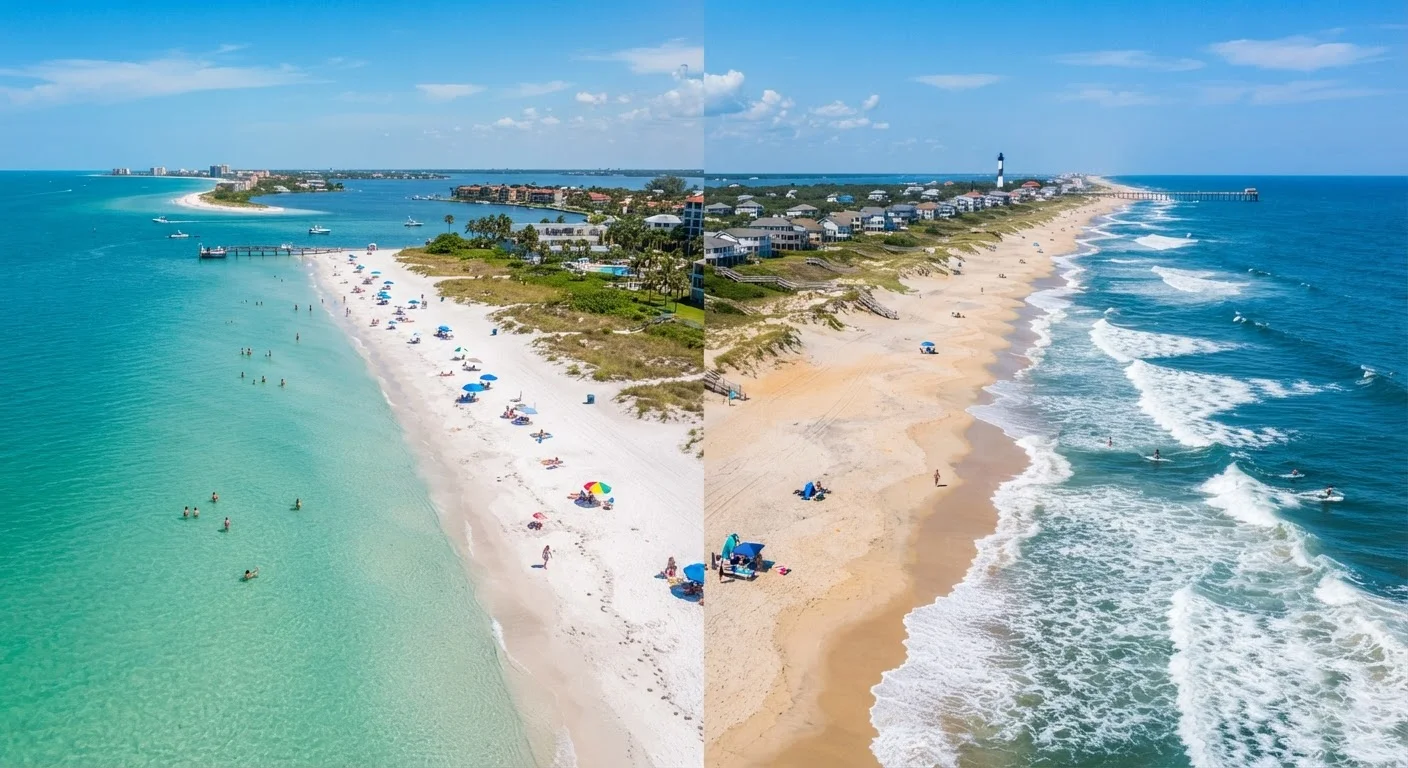
The calm, warm, and laid-back shoreline.
Best for: Families, snorkelers, and anyone who wants bathwater-warm water with minimal wave action.
Option B
Atlantic Coast
The classic, energetic, and diverse American seaboard.
Best for: Surfers, history lovers, and travelers who enjoy a lively boardwalk scene alongside the beach.
If you're traveling with toddlers or young children
Gulf Coast
The Gulf's gentle, shallow surf and warm water temperatures make it significantly safer and more comfortable for small kids to splash around freely.
If you want surf, boardwalks, and a buzzing beach-town atmosphere
Atlantic Coast
From the Jersey Shore to the Outer Banks, the Atlantic delivers iconic beach-town energy, bigger waves, and a rich coastal culture that's hard to match.
If scenic variety and cultural exploration matter as much as sand
Atlantic Coast
The Atlantic seaboard encompasses colonial history in the Carolinas, lobster shacks in Maine, and art scenes in Miami - one coastline with wildly different personalities.
If you prioritize clear water and picture-perfect sand
Gulf Coast
The Gulf's emerald-green, highly transparent water and powdery white-quartz sand - especially in the Florida Panhandle - are genuinely hard to beat for sheer visual beauty.
If you want to travel in shoulder season on a more flexible budget
Atlantic Coast
The Atlantic's longer stretch of destinations means more options for off-peak timing. See our guide to off-season travel for how to time it right.
Water, Waves, and What You'll Actually Feel
The single biggest difference between these two coastlines comes down to the water itself. The Gulf of Mexico is a largely enclosed body of water, which means it heats up faster and stays warmer longer - Gulf water temperatures often hover between 80°F and 85°F in summer. The Atlantic, open to the full force of the ocean, tends to run cooler, especially north of the Carolinas, where summer temps can linger in the low-to-mid 60s°F even in July.
Wave action follows a similar pattern. The Gulf is generally calm - almost lake-like on many days - making it a genuine paradise for families with young children or anyone who just wants to float peacefully. The Atlantic delivers real surf, which is great news for body-boarders and surfers but can feel overwhelming for nervous swimmers or little ones.
That said, both coasts are susceptible to rip currents, and both sit within the Atlantic hurricane belt (June through November). Always check local conditions and flag warnings before entering the water, regardless of which coast you choose.
| Criterion | Gulf Coast | Atlantic Coast |
|---|---|---|
| Water temperature (summer) | 80-85°F typically | 60-80°F (varies by latitude) |
| Wave intensity | Calm, gentle surf | Moderate to strong waves |
| Sand character | Fine white quartz, cool underfoot | Ranges from rocky to broad barrier-island |
| Scenic variety | Consistently tropical-looking | Extremely diverse by region |
| Cultural attractions nearby | New Orleans, Gulf town culture | Historic towns, cities, seafood traditions |
| Hurricane risk season | June-November | June-November |
| Best for families with small children | Yes - calm, shallow water | Varies - calmer in some spots |
| Extended warm-weather season | Into late October | Shorter in the north, longer in Florida |
The Scenery: Sugar Sand vs. Wild Variety
Ask most Gulf Coast devotees why they keep going back, and the answer is almost always the sand. Florida's Panhandle - think Destin, Panama City Beach, and the areas around Gulf Islands National Seashore - is famous for its fine white-quartz sand that stays cool underfoot even in peak summer heat. Alabama's Gulf Shores and Mississippi's barrier islands share a similar look. It's consistently beautiful in a way that feels almost tropical.
The Atlantic Coast is harder to generalize because it spans roughly 2,200 miles from Maine's rocky headlands to the flat, reef-fringed shores of South Florida. You might spend a morning on the boulder-strewn coast of Acadia National Park in Maine and a few days later be on a broad, barrier-island beach in the Outer Banks of North Carolina. The variety is genuinely staggering - and for travelers who find one-note scenery limiting, that's a major selling point.
For those who find the beach itself isn't enough, the Atlantic's cultural density is unmatched. Colonial history, seafood traditions, art districts, and wildlife refuges all sit within driving distance of the shoreline. The Gulf Coast has its own charm - New Orleans is just inland, and Gulf towns have a relaxed, unhurried culture - but the sheer range of experiences along the Atlantic is broader. You can read about other underappreciated American landscapes in our piece on the Mississippi River corridor.
Practical Planning: Season, Access, and What to Pack
Both coastlines peak in summer, but they cool off differently. Gulf Coast destinations in Florida and Alabama tend to stay warm well into October, making fall a genuinely pleasant time to visit. New England's Atlantic shores, by contrast, can feel chilly by late September, though that's exactly when foliage kicks in and crowds thin out - a trade-off worth considering.
Access depends heavily on where you're departing from. The Atlantic Coast has the advantage of proximity to the densely populated Eastern Seaboard; millions of Americans can reach an Atlantic beach within a few hours' drive. Gulf Coast beaches, particularly in Alabama and Mississippi, tend to draw heavily from the South and Midwest and may require a flight for travelers on the East Coast or West Coast.
Packing needs differ more than most travelers expect. Gulf summers are hot and humid, with afternoon thunderstorms common. Atlantic packing varies dramatically by latitude - lightweight layers are smart even in summer for New England trips, while South Florida in summer demands serious sun protection and rain gear. Our regional packing guide breaks this down climate by climate so you don't overpack or get caught off guard.
Hurricane Season Affects Both Coasts
The Atlantic hurricane season runs from June 1 through November 30 and can bring storms to both the Gulf Coast and the Atlantic seaboard. While the statistical risk on any given week is low, it's worth monitoring the National Hurricane Center's forecasts if you're traveling between late August and October. Travel insurance that covers weather-related disruptions is worth considering for trips during this window - consult a licensed insurance provider for options suited to your plans.
Always verify current travel conditions, entry requirements for any national parks or protected areas, and local safety advisories with official sources before your trip. Conditions along both coasts can change with short notice, particularly during hurricane season.