

Key Takeaways
What Makes the Southwest Distinct
The American Southwest - broadly defined as Arizona, New Mexico, Utah, and Nevada, often including Colorado's canyon country - is unlike any other region in the United States. Its defining feature isn't just the geology, though the geology is extraordinary. It's the layering: ancient rock carved by wind and water over hundreds of millions of years, sitting beneath skies so wide they feel theatrical, all of it shaped by the cultures of dozens of Indigenous nations whose presence here long predates European contact.
What draws travelers isn't one thing. It's the combination of raw natural drama, living Indigenous cultures, small towns with deep histories, and a pace that forces you to slow down. The desert demands attention. Plan a trip to the Southwest with that in mind.
The Iconic Landscapes You've Seen in Photos
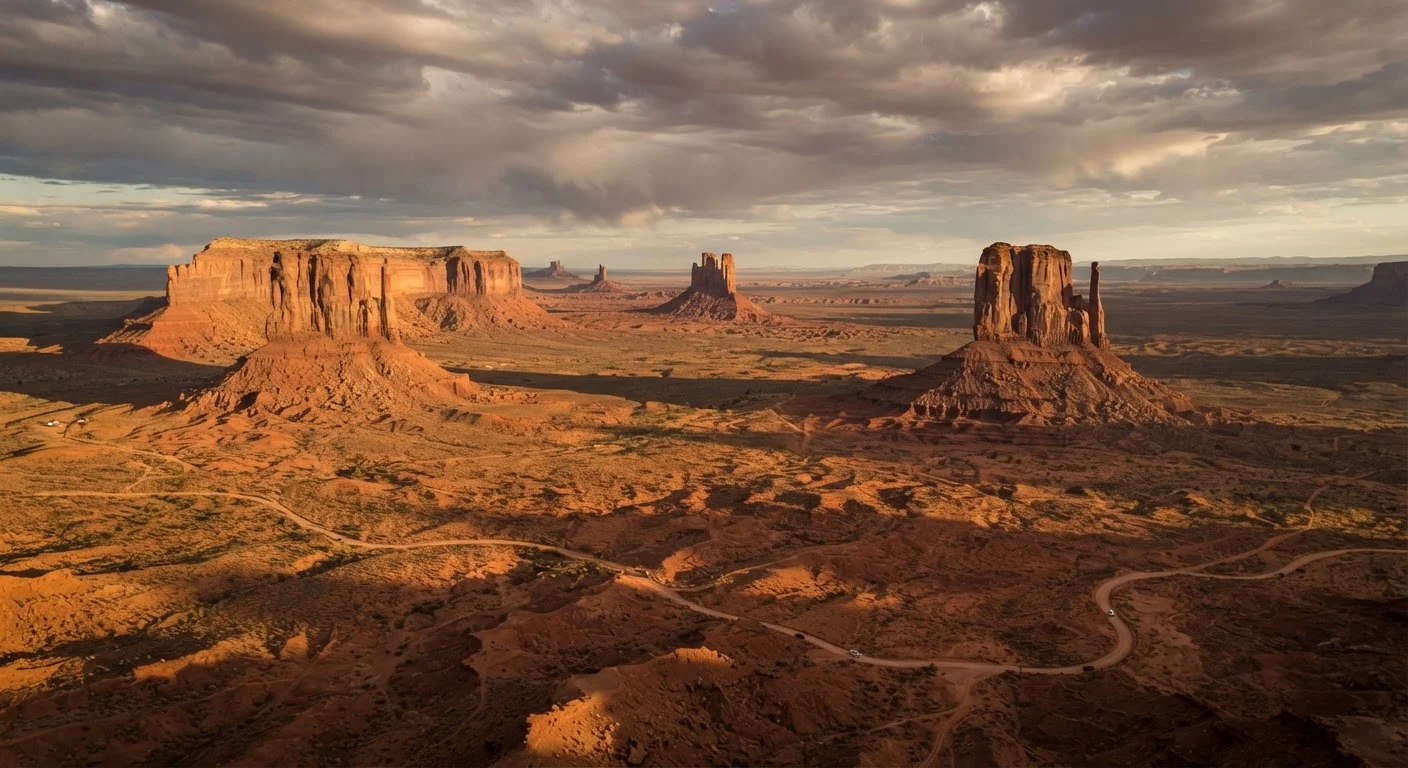
Certain Southwest images are burned into the collective imagination: the sandstone towers of Monument Valley, the layered canyon walls of Bryce and Zion, the alien hoodoos of Goblin Valley, the vast emptiness of White Sands. These places are famous for good reason - they are genuinely breathtaking.
The Grand Canyon remains in a category of its own. At roughly 277 miles long and over a mile deep, no photograph accurately conveys its scale. The South Rim is accessible year-round and draws the majority of visitors; the North Rim is higher in elevation, cooler in summer, and considerably quieter.
Utah's Mighty Five - Zion, Bryce Canyon, Capitol Reef, Canyonlands, and Arches - can be loosely connected into a single multi-day road trip. Each park has a completely different character. See our guide to national parks beyond the most famous names for sites that don't always make the shortlist.
277 miles
Length of the Grand Canyon
According to the National Park Service, the Grand Canyon stretches 277 river miles and reaches depths of over a mile.
6+ million
Annual Grand Canyon visitors
The National Park Service consistently records the Grand Canyon among the most visited parks in the country each year.
17.5M acres
Navajo Nation land area
The Navajo Nation spans roughly 17.5 million acres across Arizona, Utah, and New Mexico, making it the largest Native American territory by area in the U.S.
Indigenous Heritage: Understanding the Region's Deep History
The Southwest is home to some of the most significant Indigenous archaeological sites in North America. Mesa Verde National Park in Colorado preserves cliff dwellings built by the ancestral Puebloans over 700 years ago. Chaco Culture National Historical Park in New Mexico - a UNESCO World Heritage Site - contains the remnants of a sophisticated society that flourished between roughly 850 and 1150 CE. Wupatki National Monument in Arizona protects hundreds of pueblos constructed by multiple cultures over centuries.
These are not ruins in any diminished sense. Many of today's Pueblo communities - including Acoma, Zuni, Taos, and Hopi - trace direct cultural lineage to the builders of these sites. The Navajo Nation, the largest Native American territory in the United States by land area, occupies a vast swath of the Four Corners region. The Diné (Navajo) people have stewarded Monument Valley and many other sites for generations.
Understanding this living continuity changes how you experience the landscape. The Southwest's history didn't end centuries ago. It's ongoing.
How to Visit Respectfully
Good intentions are a starting point, not a destination. Many travelers arrive at Indigenous cultural sites without understanding basic protocols, and the consequences - eroded sites, disrespected ceremonies, cultural harm - are real. Our deeper resource on common missteps at Indigenous cultural sites covers specifics in detail, but a few principles apply everywhere.
- Photography restrictions are serious. Many tribal lands and ceremonial spaces prohibit photography entirely, or require permits. Ask before you shoot; accept a no gracefully.
- Stay on designated trails. Archaeological sites are fragile. A single footstep on an ancient wall can cause irreversible damage.
- Purchase directly from Indigenous artists. Buying art and crafts from tribal markets or certified Indigenous vendors supports communities directly. Avoid mass-produced imitations.
- Some areas are not open to the public. Certain sites, ceremonies, and villages are private. Respect closures without requiring an explanation.
Before visiting any tribal land, spend 20 minutes on the tribe's official website - most publish visitor guidelines, photography rules, and cultural context that will shape your entire experience for the better.
Tribal websites are the most accurate and up-to-date source for entry rules, closures, and visitor expectations, and reading them signals genuine respect before you even arrive.
Book timed-entry permits for popular parks like Zion and Arches as early as the reservation window opens - these sell out weeks in advance during peak season.
The National Park Service introduced timed-entry systems at several high-traffic Southwest parks to reduce congestion; walking up without a permit during peak periods can mean being turned away at the gate.
When visiting tribal-operated parks and monuments, entrance fees paid directly to the tribe fund cultural preservation and community programs - a meaningful distinction from federal park fees.
Practical Planning: Timing, Safety, and Packing
The Southwest is a year-round destination in theory, but summer heat in low-elevation desert areas is genuinely dangerous. Temperatures in Phoenix, the Grand Canyon's inner gorge, and Death Valley regularly exceed 110°F between June and August. Dehydration, heat exhaustion, and heat stroke are among the most common causes of emergency rescues in national parks.
Spring (March-May) and fall (September-November) are ideal for most desert destinations. Temperatures are moderate, wildflowers occasionally bloom after wet winters, and crowds - while still present at popular parks - are more manageable.
For gear specifics tailored to desert conditions, see our regional packing guide. Key considerations include sun protection (wide-brim hat, SPF 50+, UV-blocking layers), water capacity (at least 1 liter per hour of hiking in heat), and navigation tools - cell service is unreliable or nonexistent across large portions of the region.
If you're connecting destinations by road, plan for long distances between services. Gas stations, food, and lodging can be 50-100 miles apart in rural areas. Our road trip planning guide covers logistics that will save you real headaches.
Beyond the Obvious: Underrated Corners Worth Exploring
The Southwest's famous sites deserve their reputations, but the region's lesser-known destinations often deliver equally memorable experiences with a fraction of the crowds. A few worth knowing:
- Bisti/De-Na-Zin Wilderness, New Mexico
- An otherworldly badlands landscape of crumbling rock formations called hoodoos and alien-looking clay mounds. No marked trails, no entrance fee, and almost no other visitors most days.
- Canyon de Chelly National Monument, Arizona
- One of the most significant archaeological and cultural sites in the Southwest, located within the Navajo Nation. The canyon floor can only be visited with a Navajo guide - which makes the experience richer, not more restrictive.
- Great Basin National Park, Nevada
- Contains ancient bristlecone pines - among the oldest living organisms on Earth - and a cave system with striking limestone formations. It regularly ranks among the least-visited national parks.
- Bandelier National Monument, New Mexico
- Ancestral Puebloan cliff dwellings carved directly into volcanic tuff, set in a forested canyon near Los Alamos. Far less crowded than Mesa Verde.
Exploring these places takes a bit more planning, but the payoff - genuine solitude in landscapes that feel like discoveries - is exactly what the Southwest is capable of delivering at its most honest.
Travel conditions, entry requirements, and site access can change. Always verify current information with official park and tribal government sources before visiting.