

Key Takeaways
Why New Orleans Deserves More Than a Weekend
New Orleans is one of the most genuinely unique cities in the United States - a place shaped by French, Spanish, African, and Caribbean influences that blended into a culture unlike anywhere else in North America. Most first-timers land, walk Bourbon Street, eat a beignet, and leave thinking they've seen it. They haven't seen much at all.
A full week gives you room to breathe, explore, and actually absorb what makes this city extraordinary. If you're still building your broader travel confidence, our ground-up trip planning guide is a great place to start before diving into the logistics here.
New Orleans is compact enough to navigate without a car, but rich enough to fill seven days without repeating yourself. The key is knowing which neighborhoods to prioritize - and what most visitors skip entirely.
A Neighborhood-by-Neighborhood Game Plan
Think of your week as a series of distinct chapters, each set in a different part of the city.
French Quarter (Days 1-2)
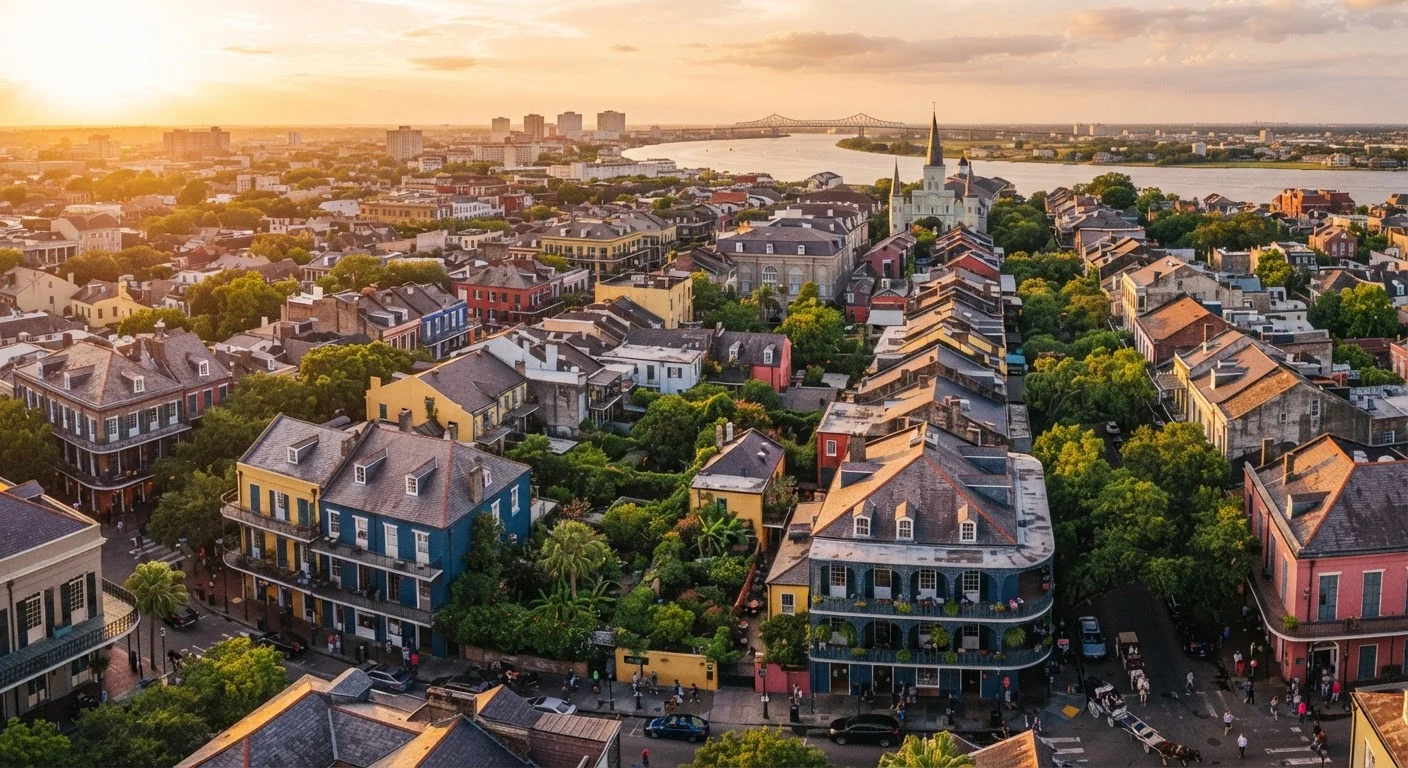
Yes, start here - but go deeper than Bourbon Street. Jackson Square, the St. Louis Cathedral, the French Market, and the side streets of the Quarter are where the real architecture and history live. Mornings are quieter and far more rewarding than evenings on the main strip.
Marigny and Bywater (Days 2-3)
Just downriver from the Quarter, these two neighborhoods are where New Orleans' creative energy lives today. Frenchmen Street is the city's true music hub - you'll find jazz, blues, and brass bands performing in intimate venues most nights. Bywater has galleries, garden-to-table restaurants, and a strong local character.
Garden District and Uptown (Days 4-5)
Take the St. Charles streetcar uptown to discover the city's grand antebellum mansions, leafy boulevards, and Magazine Street's independent shops and cafés. This is a side of New Orleans that surprises most first-timers with its quietude.
Tremé and Mid-City (Days 6-7)
Tremé is widely considered the oldest African American neighborhood in the country and the cradle of New Orleans jazz. Mid-City offers City Park - one of the most beautiful urban green spaces in the South - and Bayou St. John, ideal for a slow afternoon walk.
Check Entry Requirements and Travel Advisories
Before booking any trip, verify current conditions with official government travel resources. New Orleans sits in a hurricane-prone region; the Atlantic hurricane season runs June through November. Always check weather forecasts and have a flexible cancellation plan during that window.
What First-Timers Consistently Miss
Beyond neighborhoods, a handful of experiences separate tourists from travelers in New Orleans.
- The food beyond beignets: Seek out red beans and rice on Mondays (a city tradition), a proper po'boy, and a bowl of gumbo at a neighborhood spot - not a tourist-facing restaurant on Decatur Street.
- Second line parades: These are community street parades with brass bands that happen most Sundays in various neighborhoods. They're free, joyful, and deeply rooted in New Orleans culture.
- Swamp and bayou access: Day tours into the surrounding wetlands offer a completely different perspective on the Louisiana landscape - wildlife, cypress trees, and silence.
- The cemeteries: New Orleans' above-ground burial cities, like St. Louis Cemetery No. 1, are genuine architectural and historical landmarks worth a guided visit.
Frenchmen Street Over Bourbon Street
If you want to experience New Orleans music the way locals do, spend your evenings on Frenchmen Street in the Marigny rather than Bourbon Street. The venues are smaller, the talent is extraordinary, and the atmosphere is far more authentic. Many spots have no cover charge - a hat passed for the band is the tradition.
New Orleans' music scene is world-class, and if you're new to appreciating American cultural traditions, our guide to American sports culture offers useful context on how deeply community and performance are woven into U.S. city identity - a dynamic you'll feel strongly in New Orleans.
Practical Planning Essentials
New Orleans is walkable in the Quarter and Marigny, and the historic St. Charles streetcar line is one of the most enjoyable ways to reach Uptown. Rideshare services cover gaps efficiently. Renting a car is generally unnecessary and can complicate parking.
The most comfortable times to visit are October through April, when humidity and heat ease considerably. Mardi Gras season (typically February or early March) is electric but crowds and accommodation demand surge - book well ahead. Jazz Fest in late April and early May is another major draw worth planning around specifically.
If New Orleans is part of a larger Southern road trip, our road-tripping America guide covers the logistics of building a multi-city route with confidence. For travelers newer to independent U.S. travel who want a broader framework, Trip Planning essentials on our hub is a practical starting point.
Travel conditions, entry requirements, event schedules, and safety advisories can change. Always verify current information with official government sources and service providers before your trip.