

Key Takeaways
Why Currency Mistakes Cost More Than Travelers Expect
Currency exchange sounds straightforward - you hand over dollars, you get back euros or pesos or baht. But the mechanics underneath that exchange are where American travelers routinely lose money, often without realizing it until they're back home reviewing their statements.
The costs aren't usually dramatic in any single transaction. A few percentage points here, a flat fee there. But across a two-week trip with daily spending, those frictions compound quickly. Understanding where the losses happen - and why - is the first step to keeping more of your travel budget where it belongs: on experiences.
For a broader look at the planning layers international travel adds, see our guide to international trip planning.
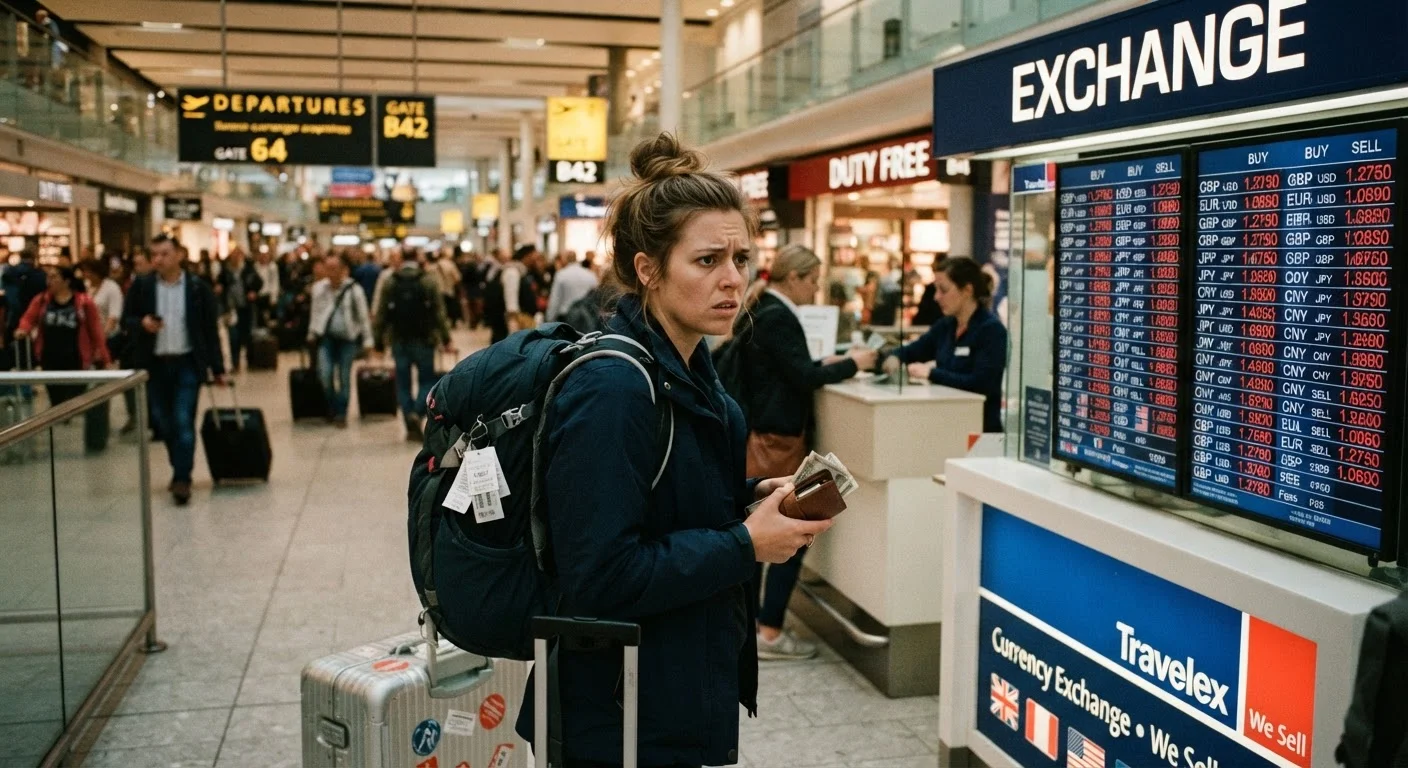
Exchanging large amounts of cash at airport kiosks immediately after landing.
Why it happens: Airport kiosks are the first thing travelers see, and the urgency of needing local currency makes convenience feel more important than cost.
Accepting dynamic currency conversion (DCC) at foreign ATMs or card terminals.
Why it happens: The option is framed as helpful - paying in familiar dollars feels reassuring - and the screens don't always make the cost obvious.
Assuming your regular debit or credit card has no international fees.
Why it happens: Many travelers never read the fine print on their cards and only discover foreign transaction fees - typically 1-3% per purchase - when the statement arrives.
Not notifying your bank before departing internationally.
Why it happens: Fraud detection systems flag unusual overseas charges, and travelers assume their bank will figure it out - until the card is frozen mid-trip.
Relying entirely on cash and carrying large amounts of foreign currency.
Why it happens: Fear of card fraud abroad - which is a real but often overstated risk - leads some travelers to convert most of their travel budget to cash at once, often at poor rates.
How to Handle Currency Exchange More Wisely
The good news is that avoiding these mistakes doesn't require financial expertise - just a bit of preparation before you board the plane.
Dynamic Currency Conversion Is Almost Never in Your Favor
When a foreign merchant or ATM offers to charge you in U.S. dollars instead of local currency, the exchange rate applied is set by the merchant's payment processor - not your bank - and typically includes a markup of 3-7% or more. Always choose to pay in the local currency and let your own card handle the conversion. If you accidentally agree to DCC, you generally cannot reverse it after the fact.
Start by researching your destination's typical payment landscape. Some countries are heavily cash-based; others are almost entirely card-friendly. Knowing which you're walking into shapes how much local currency you actually need. Local ATMs - particularly those affiliated with major banking networks - typically offer rates much closer to the mid-market benchmark than any airport kiosk will.
It's also worth reviewing the entry requirements and currency regulations for your destination before departing. Some countries limit how much foreign currency you can bring in or take out. Always verify current rules with official government sources, as these can change. Our guide to navigating international airports covers other financial and logistical friction points worth knowing.
Finally, remember that currency confusion can intersect with broader misconceptions about traveling abroad. Our piece on travel myths that cost money and cause missed flights addresses several related assumptions worth revisiting before your next international trip.
This article provides general travel information for educational purposes only and does not constitute financial or legal advice. Exchange rates, fees, and card terms vary by institution. Verify all entry requirements, currency regulations, and card policies with official sources and your financial provider before traveling.