

Key Takeaways
Shrinkflation & Skimpflation
Shrinkflation happens when a product's quantity or size decreases while its price stays the same or rises - you pay the same but get less. Skimpflation is a related tactic where the quantity stays constant but the quality quietly drops, often through cheaper ingredients or reduced service. Both are ways companies preserve profit margins without announcing a straightforward price increase.
Economists sometimes group these under the broader term 'greedflation' when they occur during periods of elevated corporate profit-taking, though the causal relationship is debated among researchers.
What's Actually Happening to Your Groceries
If a bag of chips you've bought for years suddenly feels lighter, you're probably not imagining it. Shrinkflation - the practice of reducing a product's size or quantity while holding the price steady - has been documented across packaged foods, household products, and personal care items for decades. It tends to accelerate when companies face rising input costs like raw materials, labor, or transportation.
The math is simple: if a cereal box drops from 18 oz to 15.4 oz but costs the same $4.99, you're effectively paying about 16% more per ounce. The number on the price tag hasn't moved, but your purchasing power has quietly contracted. This is precisely why shrinkflation works - most shoppers track price, not unit weight.
Understanding these tactics is part of a broader challenge consumers face when trying to evaluate real value. For a look at other hidden costs built into everyday purchases, see our guide on hidden costs in everyday purchases.
~3,800
Products tracked for shrinkflation by U.S. consumer groups
Consumer advocacy organizations and academic researchers have catalogued thousands of documented size reductions in packaged goods over recent inflationary periods.
16%+
Effective per-unit price increase from a typical size reduction
A reduction from 18 oz to 15.4 oz at the same price point represents more than a 16% increase in cost per ounce - a level that would be highly visible as a sticker price increase.
~9 in 10
Shoppers who say they notice product changes only after purchase
Consumer surveys have consistently found that the majority of shoppers detect size or quality changes retrospectively, not at the point of purchase decision.
Skimpflation: When Quality Is the Variable
Skimpflation operates differently but achieves the same result: you pay the same and receive less value. Instead of shrinking a package, a manufacturer might substitute a cheaper oil in a food product, reduce the thread count in towels sold at the same price point, or reformulate a cleaning product with lower concentrations of active ingredients.
In service industries, skimpflation is even less visible. Airlines removing checked-bag allowances from base fares, hotels reducing daily housekeeping, and streaming services compressing video quality at lower subscription tiers are all forms of service skimpflation. The price holds or rises while the delivered experience quietly diminishes.
Skimpflation is harder to spot than shrinkflation because there's no weight printed on the label to compare. Ingredient lists can shift without triggering consumer alerts, and quality perception is subjective. Shoppers who notice a product "doesn't taste the same" or "doesn't last as long" may be accurately detecting a real formulation change.
How to Protect Your Purchasing Power
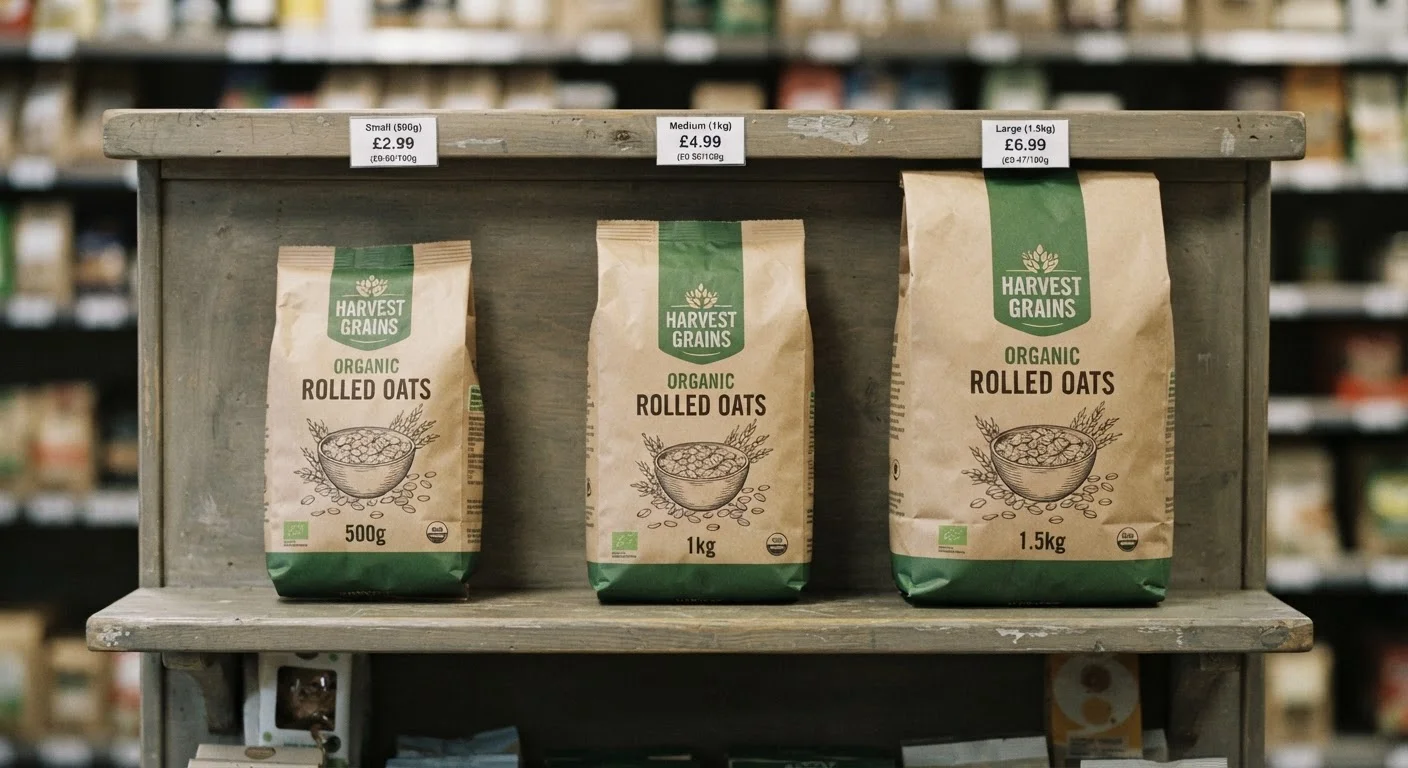
The most effective defense against shrinkflation is the unit price - the cost per ounce, per count, or per fluid ounce displayed on most grocery shelf tags. Comparing unit prices rather than package prices reveals the true cost of what you're buying, regardless of how the packaging is styled or sized.
For skimpflation, a few practical habits help. Check ingredient lists periodically on products you buy regularly - ingredient order indicates proportion, so if a key ingredient moves further down the list, its share of the formula may have dropped. For services, read terms of service updates carefully when providers announce changes.
It also helps to understand the broader pricing environment. Tactics like manufactured urgency or misleading markdown structures can compound the confusion. Our article on sale prices and what they actually mean covers how promotional pricing can obscure real value in similar ways.
Staying informed about consumer shopping trends can also help you anticipate when and where value erosion is most likely occurring across categories.
Use Unit Price Labels, Not Package Price
Most U.S. grocery stores are required to display unit pricing on shelf tags - typically cost per ounce, per count, or per fluid ounce. Make it a habit to compare unit prices rather than the number on the front of the package. This single habit neutralizes most shrinkflation tactics, since a size reduction always shows up in the unit price even when the total price hasn't changed.
Why Companies Use These Tactics - and What It Means for Shoppers
Companies typically cite rising production costs as the driver for shrinkflation and skimpflation. Raw material price spikes, supply chain disruptions, and labor cost increases are real business pressures. Reducing quantity or quality can be a way to avoid raising sticker prices in a competitive retail environment where consumers are highly sensitive to visible price tags.
That framing doesn't make the tactics less consequential for consumers. A household that buys a dozen regularly purchased items, each of which has been quietly reduced, can lose meaningful value over a year without a single price increase appearing on a receipt. Small spending decisions accumulate fast, and so does quiet value erosion.
The practical takeaway: approach familiar products with the same critical eye you'd apply to something new. Packaging continuity doesn't guarantee content continuity. For a broader look at how products change without announcement, see other quiet ways products change. And if you want to evaluate products more critically before spending, the Smart Products hub provides deeper frameworks for doing exactly that.