

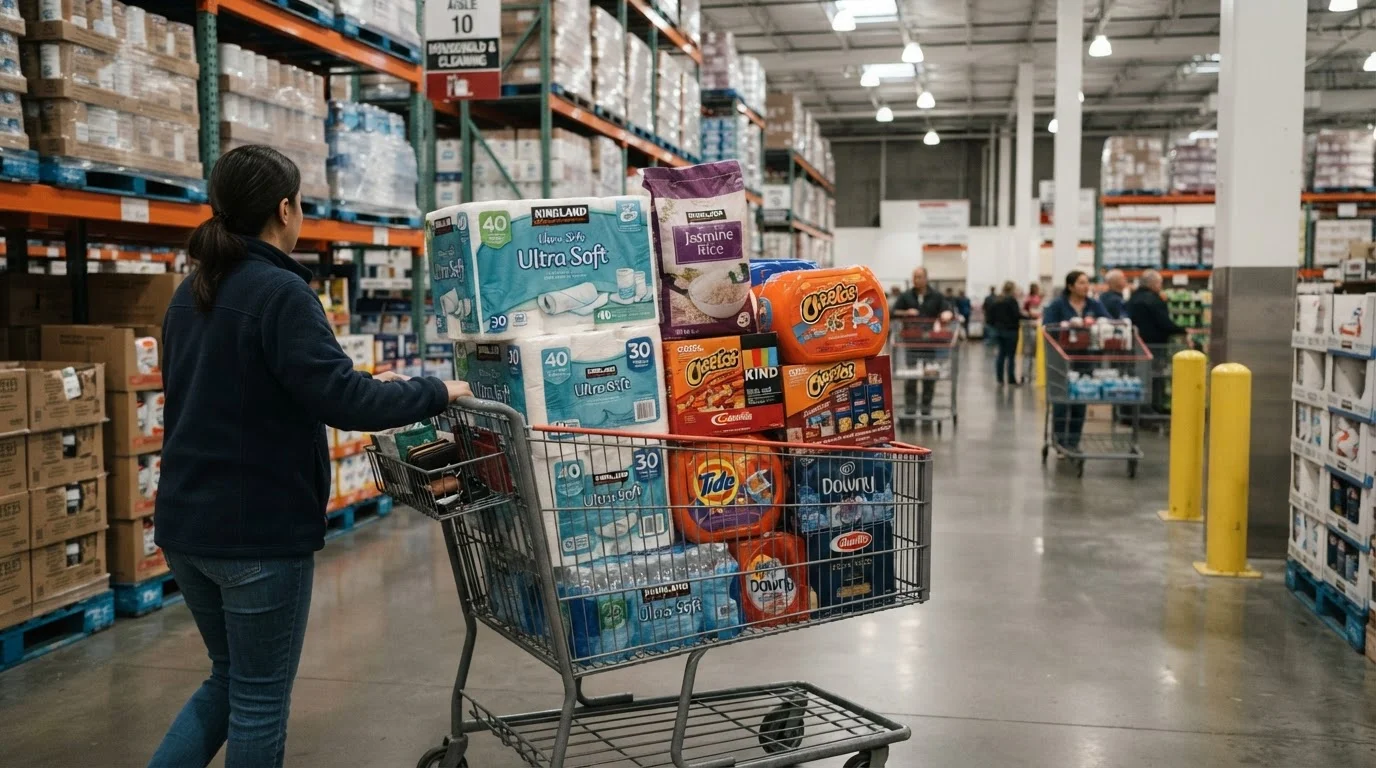
Key Takeaways
The Bulk Buying Promise vs. Reality
The logic of bulk buying is straightforward: pay less per unit by buying more at once. Warehouse clubs and big-box retailers have built entire business models around it, and for certain purchases, it genuinely delivers. But the savings are conditional - and the conditions matter more than the marketing suggests.
The core problem is that bulk pricing creates an illusion of value at the point of purchase. A 48-roll pack of paper towels priced 30% below the grocery store equivalent looks like an obvious win. But that math only holds if you use all 48 rolls, store them without damage, and don't tie up money you needed for something else. When those conditions aren't met, the "deal" evaporates.
Understanding the hidden costs built into everyday purchases - including storage, spoilage, and opportunity cost - is the foundation for evaluating bulk buys honestly.
When Bulk Buying Actually Makes Sense
There's a clear profile for purchases where bulk quantities pay off. Products that meet all three of the following criteria are strong candidates:
- Non-perishable or very long shelf life - items that won't expire, degrade, or go stale before you can use them.
- Consistent, high-frequency use - things you consume regularly and won't stop using because of a preference change or life circumstance shift.
- Verified lower unit price - the per-unit or per-ounce cost is genuinely lower, not just the package size inflated to obscure comparison.
Household staples like dish soap, laundry detergent, canned goods with distant expiration dates, and paper products fit this model well. So do certain health and hygiene products - provided you won't switch formulations mid-supply.
Calculate the unit price before comparing packages of different sizes.
Package prices are designed to look attractive in isolation. Without a per-unit comparison, it's impossible to know whether the bulk option is actually cheaper or just larger. Many retailers are required to display unit pricing on shelf tags, but not all do - and warehouse clubs often don't.
Only buy perishables in bulk quantities you can realistically consume before spoilage.
Food waste is one of the most common ways bulk buying backfires. The per-unit savings on fresh produce or dairy are irrelevant if half the product ends up discarded. Spoilage doesn't just waste the food - it wastes the money spent on it.
Test new products at standard quantities before committing to a bulk supply.
Preference, skin sensitivity, taste, and effectiveness can only be confirmed through use. Buying a large supply of something untested creates the risk of being stuck with a product you don't want to use - which turns a potential savings into a loss.
Factor storage requirements into the total cost of any bulk purchase.
Large quantities require physical space, and that space has value. If bulk buying means dedicating a closet, garage area, or renting additional storage, that overhead reduces or eliminates the per-unit savings. Products stored in suboptimal conditions - heat, humidity, light - can also degrade faster.
Prioritize bulk buying for household staples with long shelf lives and steady consumption.
These items represent the clearest case where bulk economics work as advertised. The risk of spoilage is low, the consumption rate is predictable, and the per-unit savings accumulate over time without lifestyle changes affecting the math.
It's also worth distinguishing bulk buying from bundle pricing, which operates differently. Bundled vs. standalone pricing involves a different set of tradeoffs that don't always favor the buyer.
When Bulk Buying Costs You More
Several categories routinely underperform on bulk value - not because the per-unit price is wrong, but because real-world use patterns undercut the savings.
Perishables and fresh food are the most obvious trap. Buying three pounds of berries because they're cheaper per pound only saves money if you eat three pounds of berries before they spoil. Consumer research consistently shows that fresh food waste is a significant factor in household food budgets - buying more than you need accelerates the problem rather than solving it.
Trend-sensitive or seasonal products carry a different risk: you may stop wanting them. A bulk purchase of a flavored snack, a skincare product, or a cleaning formula you haven't tested creates a stockpile you may lose interest in or discover doesn't work for you.
Items with shorter useful lives than they appear - certain supplements, oils, and even some cleaning products - degrade in quality before the package is finished. A lower per-unit cost doesn't offset using a degraded product for the second half of a supply.
For a sharper look at how discount structures can obscure true cost, see confusing discount strategies that end up costing shoppers more.
The Practical Framework for Every Bulk Decision
Before committing to a bulk quantity, run through a short checklist:
- Calculate the actual unit price. Divide total price by unit count (ounces, sheets, servings) and compare that number directly to smaller-format alternatives at other stores. Warehouse pricing isn't always lower.
- Estimate your realistic consumption rate. How long will this quantity last your household? If it's longer than the product's shelf life or your confidence in continued use, the buy is risky.
- Account for storage. Large quantities require space. If storing a bulk purchase means renting storage, reorganizing in ways that cost time or money, or letting items sit in conditions that accelerate degradation, that's a real cost.
- Consider cash flow. A large upfront payment may free up per-unit spending later, but it also reduces money available for other needs now. For households managing tight budgets, bulk buying can create short-term strain even when the long-term math is favorable.
This framework connects directly to a broader pattern: spending decisions that feel small but add up fast. Bulk buying can be one of them when it's done reflexively rather than deliberately. And just as with sale pricing, the appearance of savings isn't the same as actual savings - a point explored in detail in our look at why sale prices don't always mean you're saving.