

Key Takeaways
The Lymphatic System
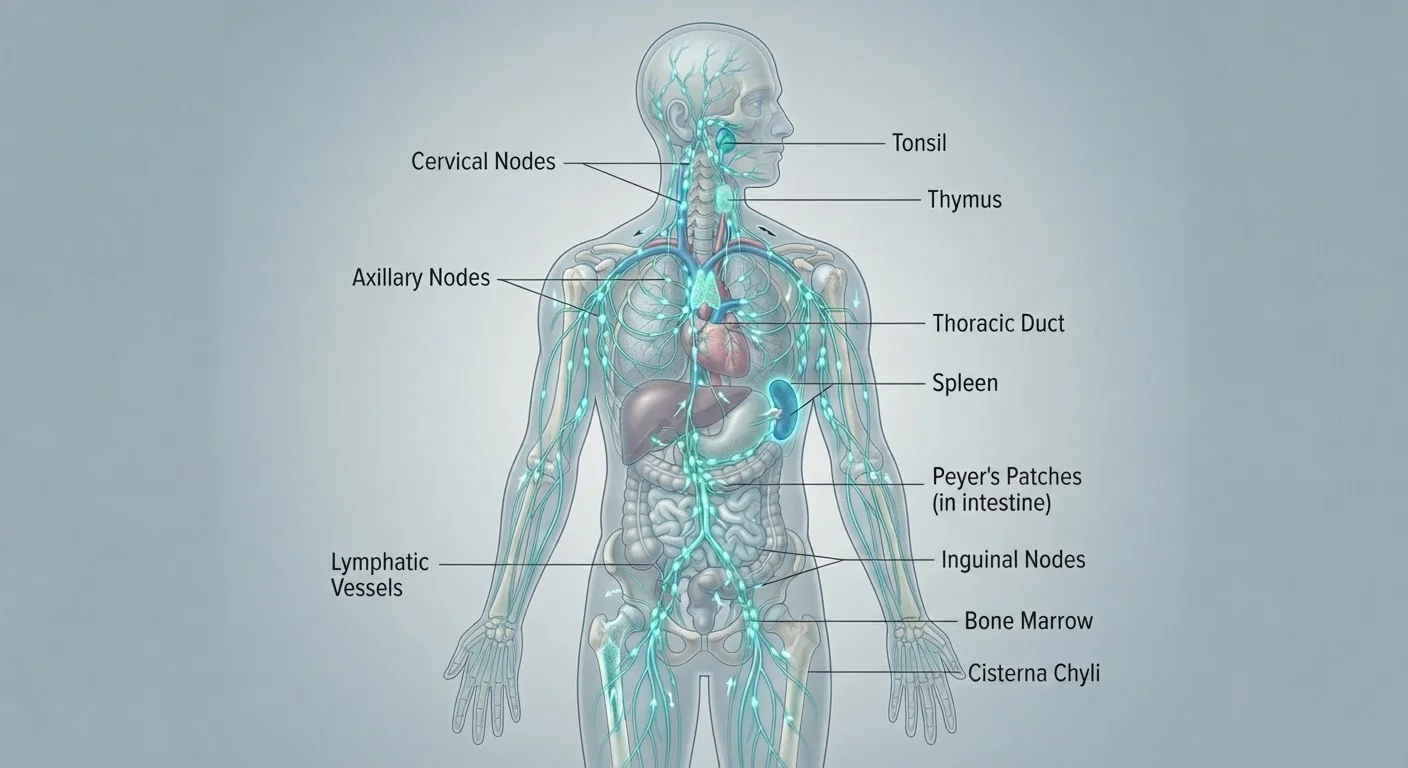
The lymphatic system is a network of vessels, nodes, and organs that runs throughout the body. Its primary jobs are to drain excess fluid from tissues back into the bloodstream, support the immune system by producing and transporting white blood cells, and absorb dietary fats from the digestive tract. Unlike the circulatory system, it has no central pump - lymph fluid moves through the body primarily by muscle contractions and breathing.
Lymph is a clear-to-white fluid derived from interstitial fluid (the fluid surrounding cells); it carries lymphocytes, waste products, and pathogens through a one-way vessel network toward lymph nodes where filtering occurs.
The Body's Forgotten Network
Most people learned about the heart, lungs, and digestive tract in school. Far fewer can describe what the lymphatic system is, let alone what it does. This isn't because it's unimportant - it's because it works quietly, without the drama of a heartbeat or the obvious mechanics of breathing.
The lymphatic system is one of the body's most extensive networks, spanning from head to toe. It runs alongside blood vessels, passes through dozens of lymph nodes, and connects major organs including the spleen, thymus, and tonsils. Understanding how it functions helps explain everything from why your neck gets sore when you're sick to why swelling occurs after surgery.
As the body's interconnected systems show, no single system operates in isolation - and the lymphatic system is a prime example of that principle.
Three Core Functions, Each Essential
The lymphatic system performs three fundamental roles that no other system fully handles on its own.
1. Fluid Balance
Blood plasma constantly leaks out of capillaries into surrounding tissues. If that fluid accumulated unchecked, tissues would swell dangerously. The lymphatic system collects this interstitial fluid and returns it to the bloodstream via the thoracic duct, the system's largest vessel. Roughly two to four liters of fluid are recirculated this way every day.
2. Immune Surveillance
Lymph nodes - there are approximately 600 in the human body - act as filtration stations. As lymph fluid passes through them, specialized white blood cells called lymphocytes scan for bacteria, viruses, and abnormal cells. When a threat is detected, an immune response is triggered. This is why lymph nodes swell during illness: they're actively fighting.
3. Fat Absorption
In the small intestine, specialized lymphatic vessels called lacteals absorb dietary fats and fat-soluble vitamins (A, D, E, and K) that are too large to enter blood capillaries directly. These fats travel through lymph into the bloodstream, making the lymphatic system integral to digestion and nutrition.
~600
Lymph nodes in the human body
Lymph nodes are distributed throughout the body in clusters, with major concentrations in the neck, armpits, and groin.
2-4 L
Fluid recirculated by lymph daily
The lymphatic system returns several liters of interstitial fluid to the bloodstream every day, preventing dangerous tissue swelling.
10M+
Americans affected by lymphedema
According to the Lymphatic Education & Research Network, lymphedema is one of the most underdiagnosed chronic conditions in the U.S.
Key Organs You Didn't Know Were Lymphatic
Several organs most people associate with other body functions are, in fact, primary components of the lymphatic system.
- Spleen: The largest lymphatic organ, the spleen filters blood, removes damaged red blood cells, and stores immune cells ready for rapid deployment during infection.
- Thymus: Located behind the breastbone, the thymus is where T-lymphocytes - a critical type of immune cell - mature. It's most active during childhood and gradually shrinks with age.
- Tonsils and adenoids: These tissue clusters in the throat are lymphoid tissue, positioned to intercept pathogens entering through the mouth and nose.
- Bone marrow: While primarily associated with blood cell production, bone marrow also produces B-lymphocytes, which generate antibodies.
Together, these organs and the vessel network form a system that is simultaneously a circulatory support structure, an immune organ, and a digestive aid - a remarkable biological overlap explored further in the context of how body systems interconnect.
When the System Fails: Lymphedema and Beyond
Lymphatic dysfunction is more common than many realize. Lymphedema - chronic swelling caused by impaired lymph drainage - affects an estimated 10 million Americans, according to the Lymphatic Education & Research Network. It frequently occurs after cancer treatments that remove or damage lymph nodes, though it can also result from infection or be present from birth.
Beyond lymphedema, lymphatic involvement is central to how cancer spreads. Tumor cells often travel through lymph vessels to reach lymph nodes and then distant organs - which is why surgeons examine lymph nodes during cancer staging. The state of nearby lymph nodes can significantly affect a cancer diagnosis and treatment plan.
Emerging research is also examining the brain's own lymphatic-adjacent system, called the glymphatic system, which clears metabolic waste during sleep. Disruptions in this system are being studied in connection with neurodegenerative conditions including Alzheimer's disease, though research remains in early stages.
This article is for general informational and educational purposes only. It does not constitute medical advice. Consult a qualified healthcare provider regarding any personal health concerns or medical decisions.