

Key Takeaways
Deferred Maintenance
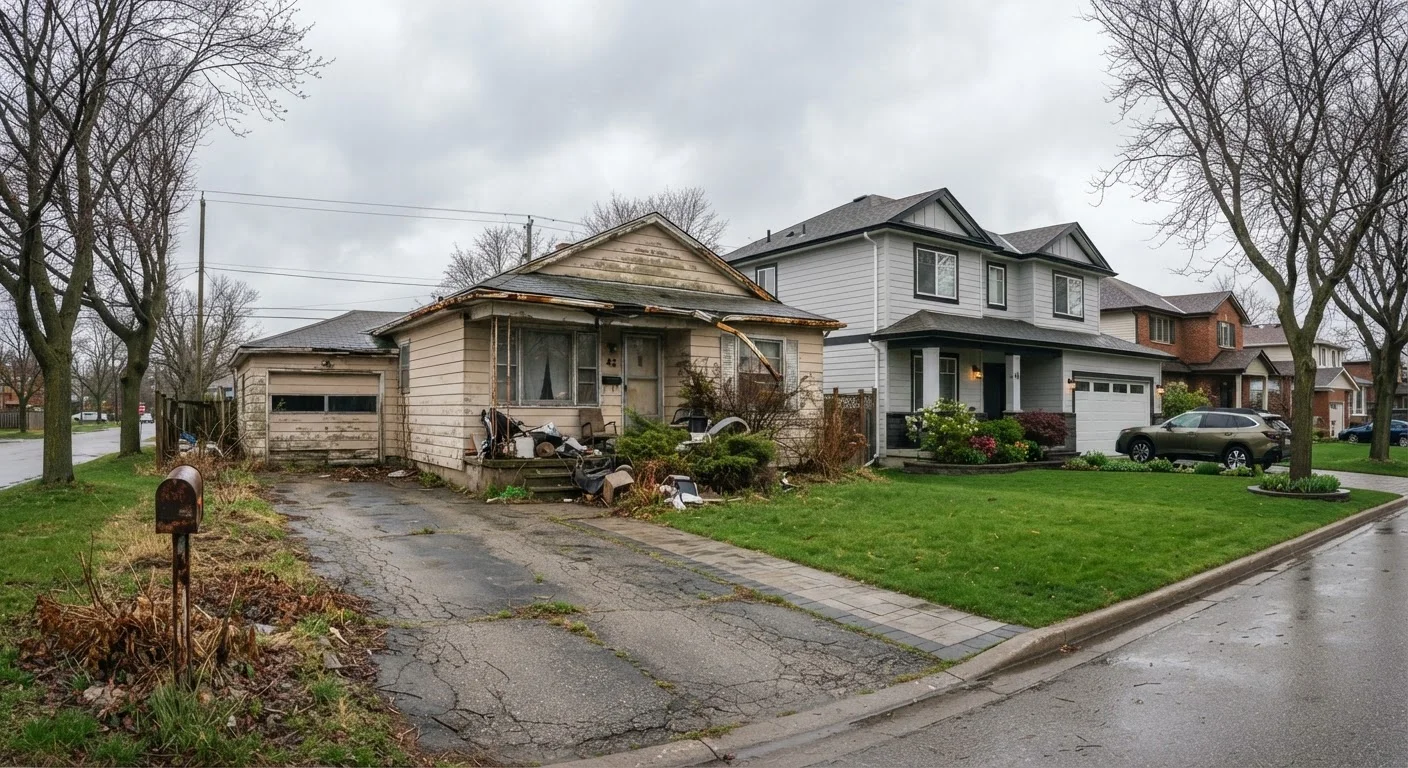
Deferred maintenance refers to repairs and upkeep tasks that a homeowner knowingly postpones, often due to cost, time, or competing priorities. While the decision to delay may feel minor in the moment, the underlying deterioration continues. Over time, these postponed tasks accumulate into a backlog that can significantly reduce a home's market value and complicate future sales.
In appraisal practice, deferred maintenance is treated as a condition adjustment - appraisers estimate the cost to cure each identified deficiency and may apply a deduction beyond that figure if the issues signal systemic neglect.
What Deferred Maintenance Actually Means for Your Home
Every home requires ongoing upkeep - caulking around windows, servicing the furnace, clearing gutters, resealing a driveway. These aren't glamorous tasks, and it's easy to push them off a season, then another. But deferred maintenance isn't a neutral act. The moment a repair is postponed, the underlying problem continues to progress, often accelerating once weather, moisture, or wear compound it further.
Appraisers are trained to identify the gap between a property's current condition and what it should be for its age and type. When that gap is visible - stained ceilings, cracked siding, a roof past its service life - they quantify it as a cost adjustment. In plain terms: what it costs to fix the problem gets subtracted from what the home is worth. And buyers negotiating in good faith will often ask for more than the repair cost, factoring in the disruption of managing work after closing.
This is the compounding nature of neglect that most homeowners don't fully account for when they decide to wait on a repair. For a broader look at how property values evolve across full ownership, see Property Values From Purchase to Payoff.
Which Systems Carry the Most Risk When Neglected
Not all deferred maintenance carries equal consequences. Aesthetic issues - a scuffed floor, dated light fixtures - affect buyer perception but rarely trigger formal appraisal adjustments or lender conditions. Structural and envelope systems are a different story.
1%-3%
Recommended annual maintenance budget as share of home value
A widely cited rule of thumb from housing finance educators suggests homeowners budget between 1% and 3% of their home's value annually for maintenance and repairs.
$10,000+
Typical cost of water damage remediation from neglected systems
Industry estimates from restoration contractors suggest that water intrusion damage - when left unaddressed - routinely reaches five figures by the time it becomes visible to homeowners.
35%
Of home inspection reports cite deferred maintenance as a primary finding
Industry surveys of home inspectors have consistently found deferred maintenance among the most frequently cited issues in pre-purchase inspection reports across property types and age ranges.
- Roofing: A roof at or past its expected lifespan is one of the most common deferred-maintenance flags. Even without active leaking, an aged roof signals imminent cost to buyers and can disqualify a home from certain loan programs.
- Gutters and drainage: Clogged or damaged gutters allow water to penetrate siding, pool against the foundation, and work its way into basements or crawl spaces. The repair cost for the gutter itself is modest; the resulting water damage can be extensive.
- HVAC systems: A heating or cooling system that hasn't been serviced regularly may function today but fail inspection or appraisal review - particularly for government-backed loans that require working mechanical systems.
- Foundation and grading: Improper drainage around the foundation is one of the most consequential maintenance failures. Water intrusion, settling, and cracking can develop gradually and only become apparent - and expensive - after years of neglect.
- Plumbing and water intrusion: Slow leaks under sinks, failing supply lines, or deteriorated caulk around tubs and showers can cause hidden rot and mold that only surfaces during inspection.
Many of these issues are interconnected. A failed gutter leads to foundation saturation, which leads to moisture in the crawl space, which leads to mold remediation costs. The cascade is predictable - and largely preventable with consistent annual upkeep. See annual maintenance tasks that protect long-term value for a practical checklist.
How Buyers and Appraisers Price the Backlog
Buyers touring a home with visible maintenance issues face a calculation: what will it cost to bring this property up to the standard the listing price implies? Even when sellers price below market to account for condition, buyers often perceive greater risk than the numbers suggest - uncertainty about what else might be lurking. That perception drives offers lower still.
Appraisers approach it differently but arrive at a similar outcome. Their job is to estimate market value based on condition, comparable sales, and observable deficiencies. A property with deferred maintenance will be compared to similar homes in better condition, and the appraised value will reflect the difference. If the appraised value comes in below the agreed purchase price, the deal may need to be renegotiated or fall apart entirely.
This dynamic is one reason why common homeowner mistakes that erode value so often center on maintenance gaps rather than dramatic missteps. The damage is gradual, invisible in daily life, and only fully priced at the moment of sale.
Address Issues Before Listing, Not After
Sellers who complete a pre-listing inspection and tackle known maintenance issues tend to negotiate from a stronger position. Buyers who discover deferred maintenance during their own inspection almost always request credits that exceed the actual repair cost, factoring in their own risk and inconvenience. Spending $2,000 before listing can prevent a $5,000 negotiated concession at closing.
Building Equity Through Maintenance, Not Just Market Appreciation
Much of the conversation around home equity focuses on market appreciation - the idea that your home gains value as the broader market rises. But equity is also a function of condition. A home that has been consistently maintained holds its value across market cycles better than one that has accumulated neglect. If the market drops 10%, a well-maintained home is far better positioned than a comparable property carrying a deferred-maintenance backlog.
Homeowners who plan to stay longer than originally anticipated face this dynamic acutely. The longer a property is held, the more routine maintenance cycles accumulate - and the more opportunity there is for deferred items to compound. Owning a home longer than planned introduces a set of financial realities worth understanding early, including the maintenance investment required to protect equity over an extended hold.
Thinking of maintenance as an equity-preservation strategy - rather than a cost - reframes the calculus. A $500 roof repair today prevents a $5,000 insurance claim and a potential $15,000 appraisal adjustment later. That return is difficult to match with any renovation or upgrade. For context on which improvements actually move the needle, see renovations that tend to add value.
This article is for informational purposes only and does not constitute financial, legal, or real estate advice. Consult a licensed real estate professional, appraiser, or financial adviser for guidance specific to your situation.