

Key Takeaways
Dollar-Cost Averaging
Dollar-cost averaging (DCA) is an investment strategy where you invest a fixed dollar amount at regular intervals-weekly, biweekly, or monthly-regardless of whether prices are high or low. Because you're always spending the same amount, you automatically buy more shares when prices are low and fewer shares when prices are high. Over time, this can lower the average cost you pay per share compared to investing one large lump sum at a single moment.
DCA does not guarantee a profit or protect against loss in declining markets; it is a disciplined purchasing method, not a return-enhancement strategy.
How Dollar-Cost Averaging Works in Practice
Imagine you decide to invest $200 every month in a broad market index fund. Some months the fund's share price is $40, so you buy 5 shares. The next month prices dip to $25, so your $200 buys 8 shares. The following month prices rise to $50, so you acquire 4 shares.
After three months you've invested $600 and hold 17 shares. Your average cost per share works out to about $35.29-lower than the highest price you encountered. This is the mechanical advantage of DCA: a fixed contribution naturally allocates more purchasing power during downturns.
The strategy is straightforward to implement. Set a fixed dollar amount, choose a recurring date, and automate the transfer so it happens without you having to decide each time. Automation is important because it removes the temptation to pause contributions when headlines look frightening-which is often exactly the wrong moment to stop.
Automate to Stay Consistent
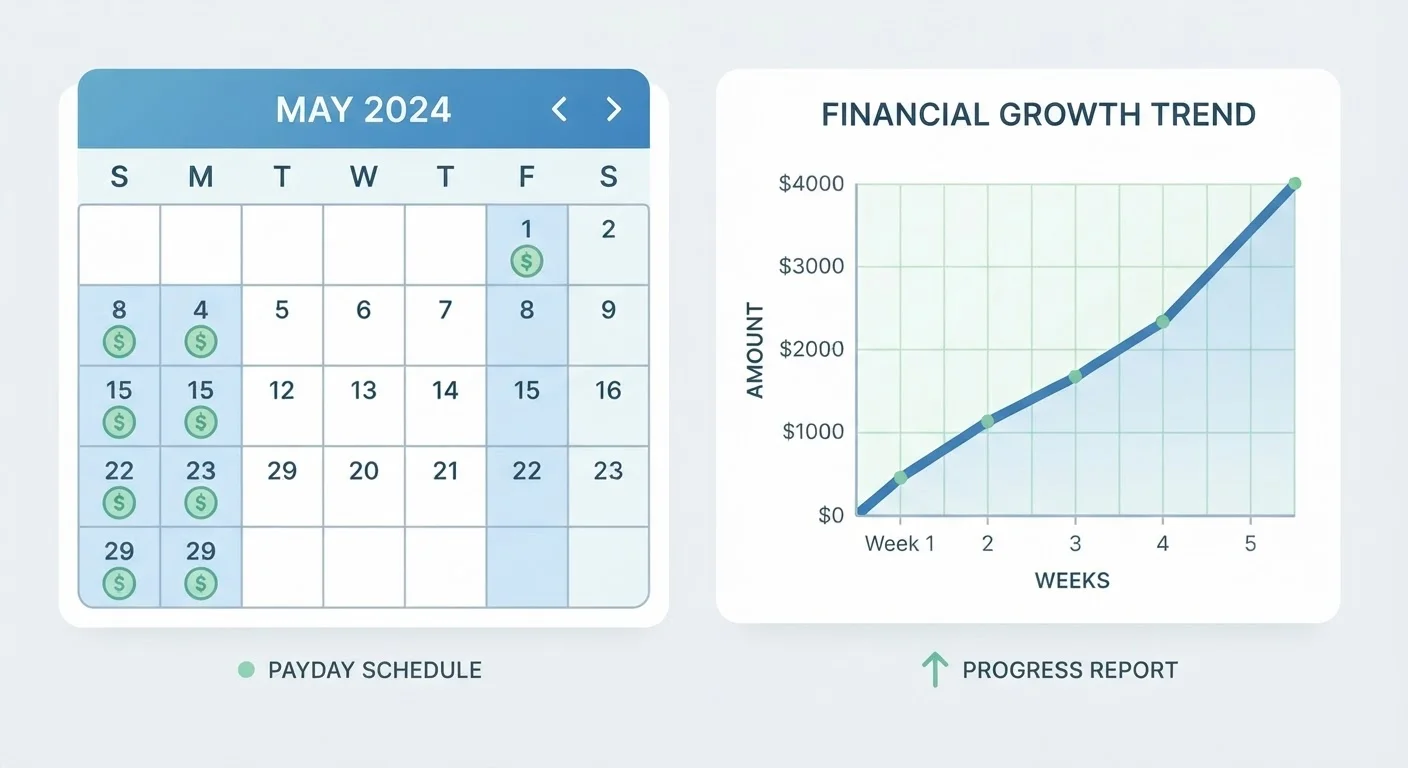
The most reliable way to maintain a DCA strategy is to automate contributions so they happen without active input. Most brokerage and retirement accounts allow you to set a fixed recurring transfer on a specific date. Automating removes emotion from the equation and makes consistency the default rather than the exception.
Why Timing the Market Is Harder Than It Sounds
Market timing-buying before prices rise and selling before they fall-sounds logical but is extraordinarily difficult to execute consistently, even for professional fund managers. Missing just a handful of the market's best trading days in a given decade can significantly reduce long-term returns, and those best days often cluster around periods of peak volatility and negative sentiment.
Dollar-cost averaging sidesteps this problem by removing the decision entirely. You invest on Tuesday the 15th whether the market is up, down, or sideways. This regularity won't capture every low, but it prevents the costly mistake of sitting in cash waiting for a "perfect" entry point that may never arrive.
For more context on beliefs that keep people from investing, see our article on common investing myths that don't hold up to scrutiny.
~$7.4T
Assets in U.S. defined-contribution retirement plans
According to the Investment Company Institute, defined-contribution plans like 401(k)s-which operate on payroll-deduction DCA mechanics-held approximately $7.4 trillion in assets as of recent years, reflecting how widely the strategy is already used.
10 days
Best trading days that matter most per decade
Analyses of long-term market data frequently find that missing a small number of the best-performing trading days in a decade can reduce overall portfolio returns substantially, underscoring the cost of attempting to time the market.
What DCA Does and Doesn't Protect Against
DCA is a disciplined buying method, not a shield against loss. If the asset you're investing in declines significantly and stays down throughout your investment period, you will lose money-the strategy simply means you lose somewhat less than if you had invested everything at the peak.
The strategy also doesn't address what you invest in. A well-timed DCA plan directed at a poorly diversified portfolio still carries concentration risk. Pairing DCA with sound diversification principles gives the approach a stronger foundation.
Similarly, how you allocate across asset classes should reflect your age, goals, and risk tolerance. Our guide on asset allocation across life stages explains how those proportions tend to shift over time.
Building DCA Into Your Budget
For DCA to work, the contribution amount must be sustainable month after month-including months when other expenses compete for attention. Start by reviewing your regular spending. Even redirecting a modest, consistent amount from discretionary categories can fund a regular investment contribution. Our article on small spending decisions that add up illustrates how cumulative costs in everyday categories can free up room in a budget.
Once you've identified a realistic contribution level, automate it through your brokerage or retirement account. Treat it like a recurring bill-non-negotiable and paid first. If your income grows, revisit the amount periodically and increase it incrementally. For foundational budgeting guidance that supports this habit, explore the Budgeting Basics hub.
This article is for general educational purposes only and does not constitute personalized financial, investment, tax, or legal advice. Investment involves risk, including the possible loss of principal. Please consult a qualified financial professional before making decisions based on your individual circumstances.