

Key Takeaways
Why Principles Beat Packing Lists
Most packing advice comes in the form of exhaustive checklists - seventeen items for a beach trip, twenty-three for Europe in fall. The problem is that every checklist assumes conditions you may not actually encounter. Climates vary wildly even within a single trip, weather surprises everyone, and plans shift. What doesn't change is the logic behind smart packing.
When you internalize a handful of durable principles, you can build an appropriate bag for any destination in any season. These aren't rigid rules - they're a framework that adapts with you. Whether you're heading to a humid coastal city, a high-altitude mountain town, or a multi-stop itinerary across two climate zones, the same core thinking applies. See how packing connects to your broader trip prep in our complete trip planning guide.
Core Packing Principles That Hold Up Anywhere
These practices apply whether you're packing a carry-on for a weekend or a checked bag for three weeks abroad. Apply them consistently and you'll spend less time second-guessing your bag.
Build every outfit around a three-layer system: base, mid, and outer.
Layering lets you regulate body temperature precisely by adding or removing pieces as conditions change. It's far more adaptable than packing a single heavy item for the cold or a single light item for the heat. Three thin layers also take up less suitcase space than one thick jacket.
Stick to a palette of two or three neutral base colors with one accent.
When every item coordinates with every other item, you can create far more outfit combinations from far fewer pieces. This is the fastest way to cut weight without sacrificing flexibility. A mismatched wardrobe forces you to pack backup options 'just in case.'
Pack fabric for the climate's humidity, not just its temperature.
A 75°F day feels very different in Phoenix versus New Orleans. Humidity affects how quickly you overheat, how fast fabrics dry, and how comfortable you'll be after a long day of walking. Matching fabric type to moisture level is as important as matching it to temperature.
Leave 20% of your bag's capacity deliberately empty before departure.
That reserved space accommodates souvenirs, items purchased at the destination, or clothing picked up locally when the weather surprises you. Travelers who pack to 100% capacity before leaving often return home with overstuffed bags, shipping fees, or discarded items.
Choose footwear that serves at least two activity types per pair.
Shoes are the heaviest, bulkiest items in any suitcase. Every pair you bring should justify its weight by working across multiple contexts - casual exploration, a nicer dinner, light hiking, or beach access. Single-purpose shoes are luxury weight.
Climate-Specific Adjustments
Once the foundation is in place, a few targeted swaps make your bag truly destination-ready. Hot and humid climates call for moisture-wicking, quick-dry fabrics - cotton feels comfortable initially but stays damp and heavy once you sweat. Arid and desert environments demand sun protection: lightweight long sleeves, a wide-brim hat, and a reliable lip balm matter more than a thick jacket. Cold climates reward investment in one excellent mid-layer (a fleece or down jacket) paired with a windproof outer shell rather than packing multiple bulky sweaters.
Mixed climates - say, a week that starts in coastal California and ends in the Sierra Nevada - are where the layering principle earns its keep most visibly. Plan your base layers to pull double duty across both legs. And if you're traveling internationally, local conditions can differ substantially from what weather apps predict: altitude, monsoon seasons, and coastal microclimates all matter. Always verify current entry and safety conditions through official government sources before you depart. The regional packing guide for American destinations goes deeper on specific conditions across the country.
The Logistics That Make It All Work
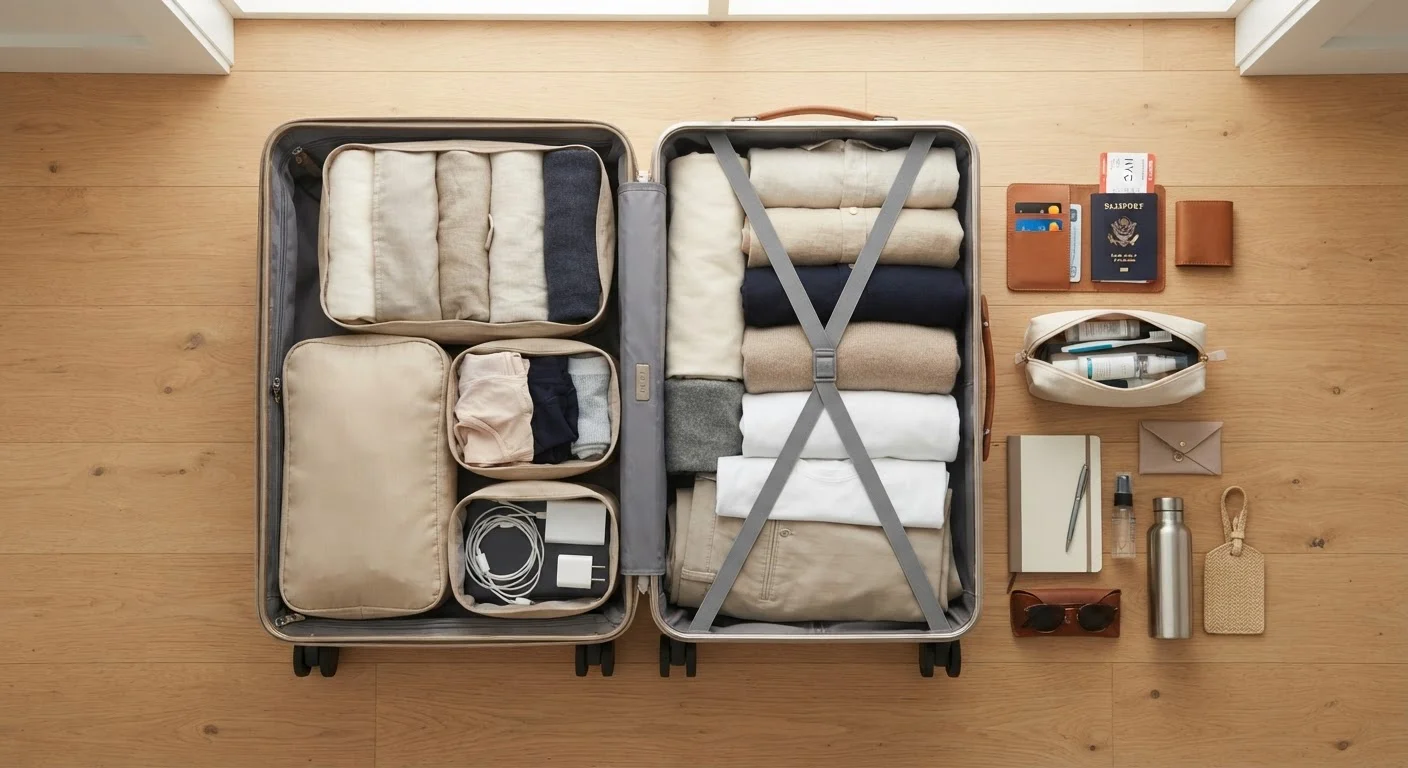
Even perfect clothing choices fall flat if your bag is a chaotic mess. Packing cubes - lightweight fabric organizers that compress and categorize clothing - are among the most practically useful travel tools available. Dedicate one cube to tops, one to bottoms, and a smaller pouch to undergarments. You'll be able to locate items in seconds and repack cleanly in minutes, which matters on multi-stop trips.
Before you decide what goes in the bag, decide on the bag itself. A carry-on-only approach forces discipline and saves time at the airport, but it isn't right for every trip. Our carry-on vs. checked luggage breakdown walks through the real tradeoffs. And once your packing is sorted, make sure you haven't missed anything critical - documents, medications, and travel notifications - with our pre-departure checklist. Family travelers will also want to factor in the extra logistics covered in our guide to packing and planning with kids.