

Key Takeaways
NFL Dominance
The NFL - National Football League - is widely recognized as the most commercially successful and culturally influential professional sports league in the United States. Its dominance refers to its unmatched television ratings, revenue generation, and grip on the American sports calendar. No other domestic league comes close to its reach or fan engagement on a consistent, week-to-week basis.
The NFL generated roughly $18-20 billion in annual revenue in recent years, outpacing the NBA, MLB, and NHL by a significant margin, driven largely by its massive broadcast rights deals.
Television Changed Everything
The NFL's rise to the top of American sports didn't happen by accident - it was engineered, brick by brick, through a brilliant embrace of television. In the early 1960s, Commissioner Pete Rozelle negotiated a landmark deal that allowed the league to sell its broadcast rights collectively, rather than letting each team fend for itself. The result was a steady, enormous stream of shared revenue that no other sport had structured so effectively.
That relationship between the NFL and television has only deepened over the decades. Today, the league holds multi-billion-dollar contracts with CBS, NBC, Fox, ESPN/ABC, and Amazon Prime Video. These deals don't just bring in money - they guarantee the NFL a presence in virtually every American home, every single week of the season. For a comparison of how this stacks up against other leagues, see how America's four major leagues compare.
100M+
Annual Super Bowl viewers
The Super Bowl consistently draws over 100 million U.S. viewers, making it the most-watched annual television event in the country.
$113B
Value of NFL's TV rights deals
The NFL's combined media rights agreements - spanning CBS, NBC, Fox, ESPN/ABC, and Amazon - are worth over $113 billion across their contract terms.
17 games
NFL regular-season length
The NFL's short regular season, expanded from 16 to 17 games in 2021, makes each game significantly higher-stakes than in other major leagues.
32
Franchises sharing national revenue
All 32 NFL teams share equally in national broadcast revenue, a model that underpins the league's competitive and financial stability.
The Perfect Format for Fan Obsession
Football's structure is almost perfectly engineered for modern fandom. With only 17 regular-season games, every single matchup carries enormous weight. Fans don't have the luxury of writing off a loss the way baseball followers might in a 162-game season. That scarcity creates urgency - and urgency creates must-watch television.
The playoff system amplifies this further. Single-elimination rounds mean one bad performance ends a team's season, raising the emotional stakes with every snap. The structure of American professional sports leagues is built to generate drama, but the NFL's format does it more efficiently than any other.
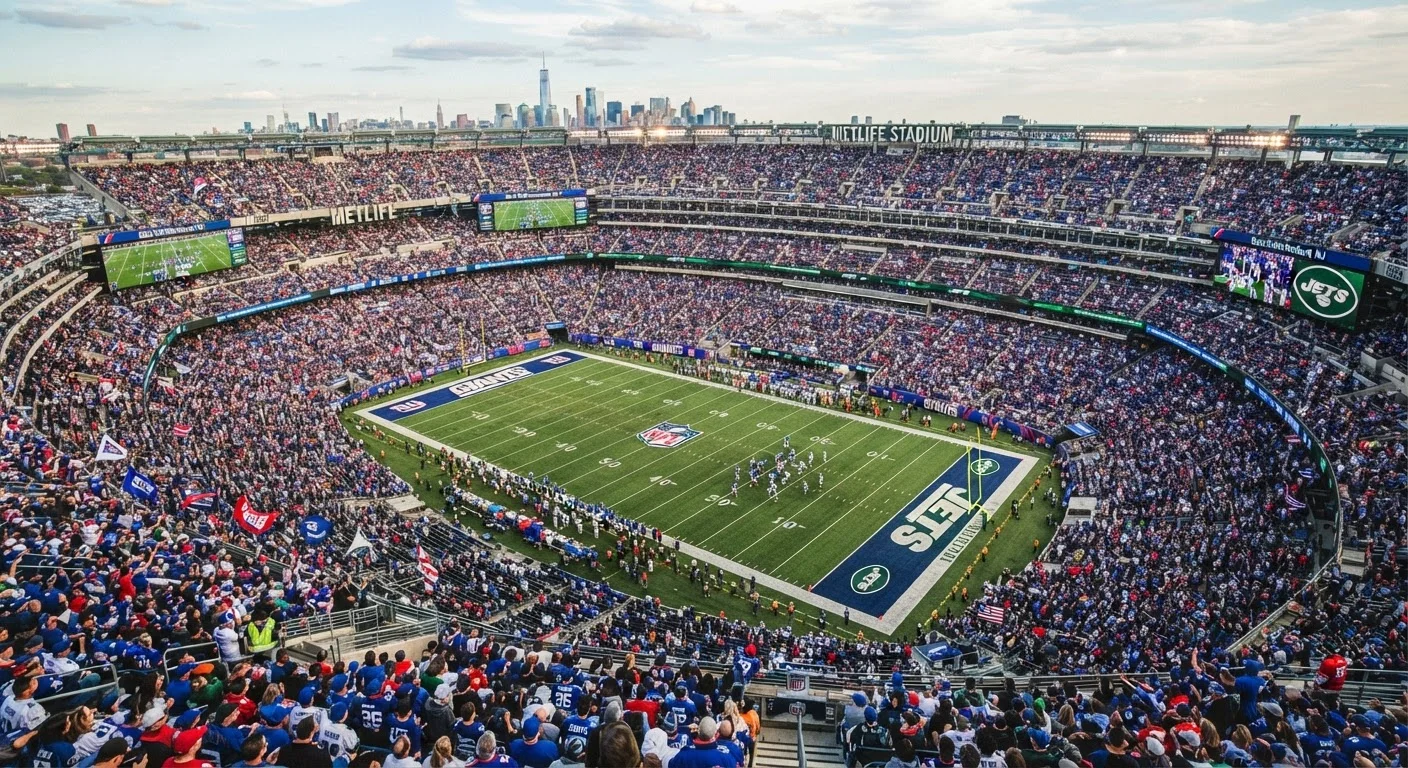
Sunday has become a national ritual. Fantasy football, sports betting, tailgate culture, and the sheer volume of games available each week have turned the NFL into a full-day - sometimes full-weekend - event for millions of Americans.
The Super Bowl: A National Institution
No single event in American sports - or American entertainment - matches the Super Bowl. First played in January 1967, it has grown into the most-watched television broadcast in U.S. history year after year. The game draws over 100 million viewers annually, a figure that dwarfs the NBA Finals, the World Series, and the Stanley Cup Finals combined.
The Super Bowl's cultural gravity extends well beyond football fans. The halftime show attracts viewers who don't watch a single regular-season game. Advertisers pay premium rates for 30-second spots. Parties are held in homes, bars, and offices across the country. It has become, in effect, an unofficial American holiday.
That kind of cultural penetration is something the NFL has cultivated deliberately - and it reinforces the league's dominance in a self-perpetuating cycle. More viewers attract more advertisers; more advertisers fund larger productions; larger productions attract more viewers. To understand how fan identity is woven into this phenomenon, explore how sports fandom shapes local identity in American cities.
Revenue Sharing and Competitive Balance
One structural advantage the NFL holds over other leagues is its revenue-sharing model. The bulk of national television money is split equally among all 32 franchises, meaning the Green Bay Packers - a small-market team in Wisconsin - operate from a similar financial foundation as the Dallas Cowboys. This built-in parity keeps fanbases across the country invested, because their team always has a realistic shot at contention.
This model also insulates teams from local market volatility. Even franchises in smaller cities remain financially viable, which stabilizes the league as a whole. Combined with a salary cap that limits how much any one team can spend on players, the NFL ensures competitive balance is a feature, not a lucky accident.
The result is a league where championships are distributed broadly over time, keeping fan interest alive in cities that haven't won recently - which is most of them. Dynasties that defined their leagues are harder to sustain in the NFL than almost anywhere else, and that unpredictability is a massive part of its appeal.