

| Jackie Robinson breaks MLB color barrier | April 15, 1947 (National Baseball Hall of Fame) |
| Muhammad Ali refuses military induction | April 28, 1967 (U.S. Department of Justice records) |
| Smith & Carlos podium protest | October 16, 1968 - Mexico City Olympics (International Olympic Committee archives) |
| Colin Kaepernick begins kneeling | Preseason, August 2016 (NFL records / press coverage) |
| NBA bubble work stoppage | August 26, 2020 (NBA official communications) |
| WNBA collective advocacy | Ongoing since at least 2016 (WNBA Players Association statements) |
A Tradition Older Than Most Fans Realize
The idea of the athlete-activist feels modern, but American sports figures have been stepping into the public square for well over a century. The tradition stretches back to Jack Johnson, the first Black heavyweight boxing champion, whose very existence in the sport challenged segregation-era norms in the early 1900s. His unapologetic demeanor - refusing to play the roles society assigned to Black athletes - made him a lightning rod long before "platform" was a media concept.
The mid-twentieth century produced the most recognizable milestones. Jackie Robinson broke Major League Baseball's color barrier in 1947, an act of athletic courage that carried enormous political weight. Robinson later became an outspoken voice on civil rights after his playing days ended. Muhammad Ali refused military induction in 1967, citing his religious beliefs and opposition to the Vietnam War - a stance that cost him the prime years of his boxing career but cemented his legacy as one of history's most consequential sports figures.
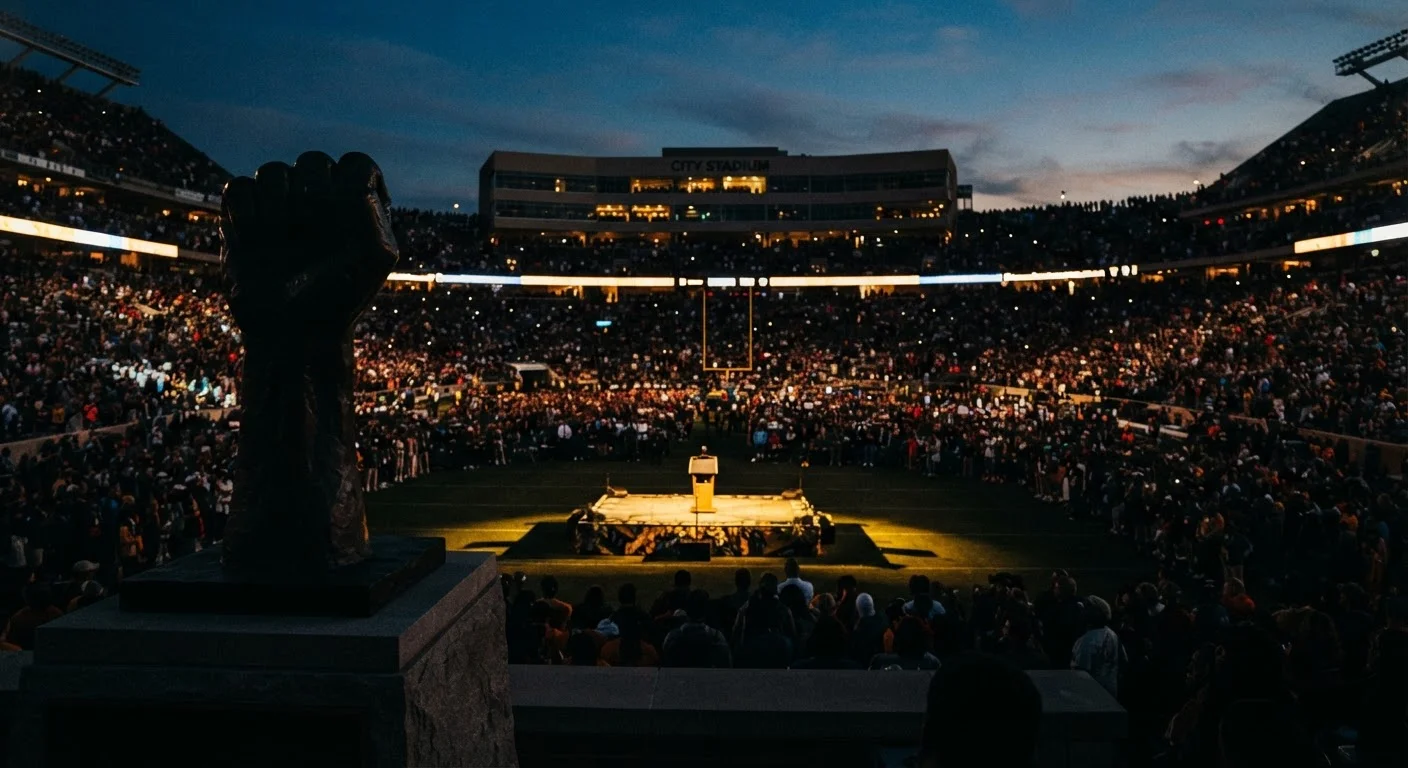
The 1968 Mexico City Olympics delivered perhaps the most photographed moment in athlete activism: Tommie Smith and John Carlos raising gloved fists on the medal podium during the national anthem. That image remains a defining symbol of sport intersecting with civil protest. For readers interested in how such moments reshape identity, see our article on what transforms athletes into cultural icons.
Key Figures, Causes, and Turning Points
| Jackie Robinson breaks MLB color barrier | April 15, 1947 (National Baseball Hall of Fame) |
| Muhammad Ali refuses military induction | April 28, 1967 (U.S. Department of Justice records) |
| Smith & Carlos podium protest | October 16, 1968 - Mexico City Olympics (International Olympic Committee archives) |
| Colin Kaepernick begins kneeling | Preseason, August 2016 (NFL records / press coverage) |
| NBA bubble work stoppage | August 26, 2020 (NBA official communications) |
| WNBA collective advocacy | Ongoing since at least 2016 (WNBA Players Association statements) |
The decades following the civil rights era saw athlete activism ebb and flow with the broader social climate. The 1980s and 1990s were often characterized by commercial caution - the logic that controversy cost endorsements kept many high-profile athletes publicly neutral. This tension between public voice and personal cost is explored in depth in our companion piece on the dual lives of professional athletes.
The 2010s marked a renewed surge. LeBron James and teammates wore "I Can't Breathe" warm-up shirts in 2014 following the death of Eric Garner. In 2016, Colin Kaepernick began kneeling during the national anthem before NFL games to protest police brutality and racial injustice - a gesture that reignited a national debate about the role of athletes in civic life and led to his departure from professional football. The Women's National Basketball Association (WNBA) has been particularly consistent in collective advocacy, with players speaking out on issues from gun violence to voting rights.
The 2020 NBA bubble season became a watershed moment. Following the police shooting of Jacob Blake in Kenosha, Wisconsin, the Milwaukee Bucks refused to take the court for a playoff game, prompting a league-wide work stoppage. The action demonstrated that athlete activism could move institutions - teams, leagues, and sponsors - in real time.
What the History Tells Us
Athlete activism
The use of an athlete's public platform, visibility, or athletic actions to advocate for social, political, or civic causes. It can range from symbolic gestures to organized collective action.
Platform
In this context, the public reach and media attention an athlete commands by virtue of their fame. A larger platform means a wider audience for any statement or action.
Collective action
When a group of athletes - a team, a league, or a players' union - acts together on a social issue rather than one individual speaking alone. Collective action generally carries greater institutional weight.
Work stoppage
A refusal by players to compete in scheduled games, used as a form of protest or labor negotiation. In activist contexts, it signals that players are willing to forgo revenue and visibility to make a point.
Color barrier
The informal but strictly enforced exclusion of Black players from major professional sports leagues in the United States before integration. Breaking the color barrier refers to the first Black athlete to officially compete in a previously all-white league or event.
Looking across more than a century, a few patterns emerge. First, athlete activism tends to intensify during broader social crises - wartime, civil rights upheavals, and flashpoints of racial violence have each generated new waves of public action by sports figures. Second, the personal costs have often been severe: Ali lost his titles, Kaepernick lost his career, and Smith and Carlos faced decades of public criticism before rehabilitation of their reputations. Third, collective action - teams or leagues moving together - tends to produce more durable institutional change than individual gestures alone.
Sports figures occupy a unique cultural position: they are simultaneously public employees of privately owned teams, members of labor unions, community figures, and global brands. That complexity means their political speech carries unusual weight and unusual risk. Understanding how individual athletes fit within team and institutional structures adds important context - see how individual athletes navigate collective success for more.
The history of athlete activism is not a simple arc of progress. It is a recurring negotiation between individual conscience, institutional interest, public opinion, and the enduring belief - held by athletes themselves - that visibility creates responsibility. That negotiation, in all its tension and power, shows no sign of ending.