

Key Takeaways
Our Verdict
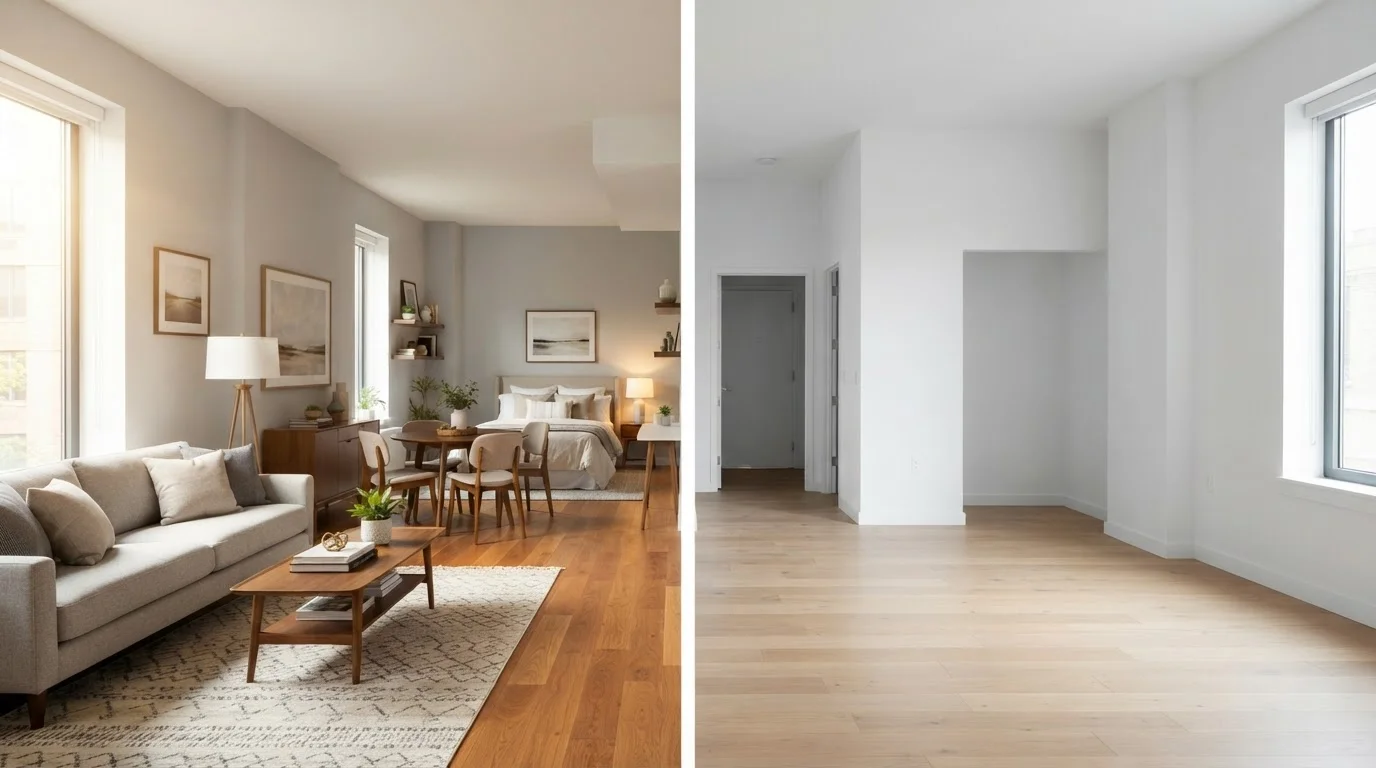
Neither furnished nor unfurnished rentals are universally better - the right choice depends on how long you plan to stay, what you already own, and how much upfront cost you can absorb. Short-term renters and those in transition almost always come out ahead in a furnished unit; long-term renters who plan to stay a year or more typically save more by going unfurnished and investing in their own belongings.
| Best for | Recommended |
|---|---|
| Short stays, relocations, or corporate housing needs | Furnished rental |
| Long-term renters with existing furniture | Unfurnished rental |
| First-time renters starting with nothing | Furnished rental (short term) or unfurnished with a phased furniture budget |
| Renters who want maximum flexibility on lease length | Furnished rental |
The Core Price Difference
The most immediate difference between furnished and unfurnished rentals is the monthly rent itself. Furnished apartments generally carry a premium - commonly estimated at 15-30% above what a comparable unfurnished unit in the same building or neighborhood would cost. On a $1,800 unfurnished apartment, that premium could translate to an extra $270-$540 per month.
That gap exists because landlords have invested capital in furniture, appliances, and often housewares, and they price accordingly to recoup those costs. Furnished units also tend to attract shorter-term tenants, increasing turnover - and landlords price in that risk.
But the monthly figure is only part of the story. To make a fair comparison, you have to factor in what it would actually cost to furnish a bare apartment yourself. A basic setup - bed frame and mattress, sofa, dining table and chairs, dresser, and a few lamps - can easily run $3,000 to $6,000 when purchasing new mid-range pieces. Even buying secondhand, expect to spend $1,000-$2,500 to get a place functional. That upfront expense is real money that furnished renters avoid entirely.
Understanding the full cost of renting - including these one-time setup expenses - is essential before signing any lease.
Breaking Even: When Does Each Option Pay Off?
The break-even calculation is straightforward in concept. Take the premium you'd pay monthly for a furnished unit, then divide the cost of furnishing an apartment yourself by that monthly difference. The result is roughly how many months it takes before the unfurnished option becomes cheaper on a total-cost basis.
Example: If furnishing an apartment costs you $4,000 and the furnished premium is $400/month, you'd break even at 10 months. Stay 12 months? The unfurnished route saves you roughly $800. Stay only 6 months? The furnished unit was the better financial call by $1,600.
| Furnished Rental | Unfurnished Rental | |
|---|---|---|
| Monthly rent | 15-30% higher premium | Lower baseline cost |
| Upfront setup cost | Minimal - furniture included | $1,000-$6,000+ to furnish |
| Best lease length | Short-term (under 10 months) | Long-term (12+ months) |
| Lease flexibility | Often month-to-month available | Typically fixed-term leases |
| Deposit risk | Higher - covers landlord's items | Lower - covers unit condition only |
| Control over space | Limited - landlord's choices | Full - choose your own furnishings |
| Ideal for | Relocations, short stays, new renters | Established renters, long-term plans |
This math shifts considerably depending on the local market, the specific premium charged, and what you can source secondhand. The key insight is that the furnished premium compounds over time - it hurts most on long leases and helps most on short ones.
Practical Considerations Beyond Price
Cost isn't the only factor. Furnished rentals come with built-in convenience that matters in certain life circumstances. Corporate relocations, academic semesters, and temporary job assignments are scenarios where furnished housing makes immediate practical sense - you're not shipping furniture across the country for a 4-month assignment.
On the other hand, living with someone else's furniture has real drawbacks. You're responsible for maintaining items you didn't choose and may not particularly like. Damage to landlord-owned furnishings can result in deductions from your security deposit - which is worth understanding clearly before signing. In furnished rentals, deposits are sometimes higher because the landlord has more property at risk.
Unfurnished units give you control. You choose what you own, you move it when you go, and you're not liable for a landlord's aging sofa or scratched dining table. For renters who already own furniture, an unfurnished unit is simply the more logical choice - you're not paying for something you don't need.
Lease flexibility is also worth noting. Furnished units are more commonly offered on month-to-month or short-term lease structures. If you want that flexibility, understanding lease term trade-offs can help you weigh what that freedom actually costs.
Negotiating the Terms Either Way
Whether a unit is furnished or unfurnished, the listed price is not always the final word. In furnished rentals, it's reasonable to ask whether specific pieces of furniture can be removed - and whether that changes the rent. Some landlords will discount slightly if they don't have to store or maintain items you won't use.
In unfurnished rentals, you may have room to negotiate on other terms that offset your setup costs - a rent-free first month, a reduced security deposit, or a longer lease that locks in a lower rate. Knowing what's negotiable in a rental agreement puts you in a stronger position regardless of which type of unit you're pursuing.
Document everything carefully in furnished rentals. Before moving in, photograph every item of landlord-owned furniture, note any existing damage in writing, and ensure the lease specifies exactly which items are included and their expected condition at move-out. This protects your deposit and avoids disputes later.
This article is for general informational purposes only. Rental costs, market conditions, and lease terms vary significantly by location. Consult a licensed real estate professional or tenant rights organization for guidance specific to your circumstances.