

Key Takeaways
How Property Assessments Work
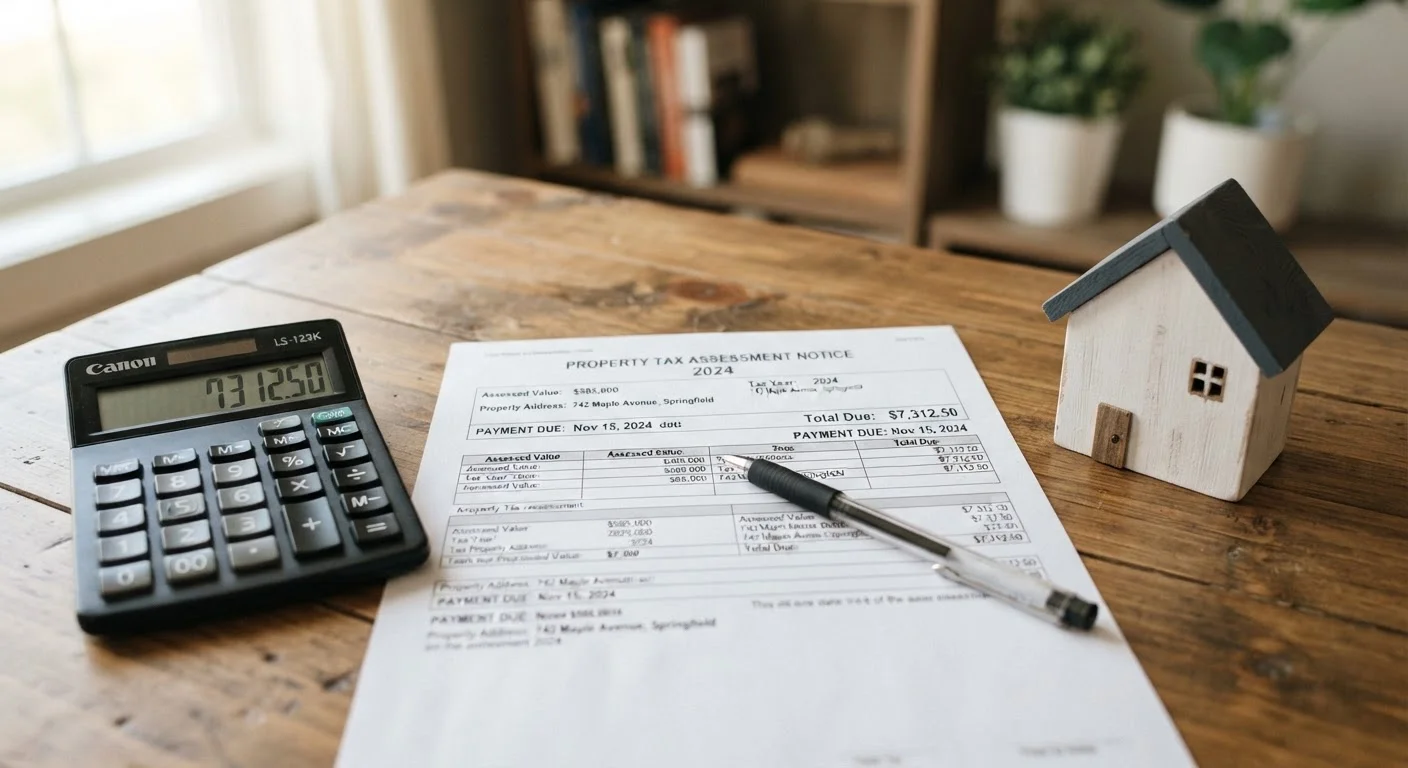
Local governments fund schools, infrastructure, and public services largely through property taxes. The amount each homeowner owes is determined by multiplying the property's assessed value by the local mill rate - the tax rate expressed as dollars per $1,000 of assessed value. The assessed value itself is set by a government assessor, typically on an annual or multi-year cycle, using one or more standard valuation approaches.
Assessors generally rely on three methods. The sales comparison approach benchmarks your property against recent sales of similar homes. The cost approach estimates what it would cost to rebuild the structure, minus depreciation. The income approach is used primarily for rental and investment properties. For most single-family homes, the sales comparison method carries the most weight - which is why recent neighborhood sale prices are so central to any appeal.
Because assessors work at scale across thousands of properties, they use mass appraisal techniques that apply general assumptions rather than inspecting each home individually. This efficiency creates real opportunities for error: your square footage may be wrong, improvements may be credited that don't exist, or your home's individual condition issues may be invisible to the assessor's model. These gaps are exactly what a well-prepared appeal addresses.
For broader context on what forces shape property values - and therefore what assessors are ultimately trying to measure - see our complete owner's overview of property values.
Check for Available Exemptions First
Before pursuing an appeal, verify that all exemptions you qualify for are already applied. Homestead exemptions for primary residences, senior exemptions, and veteran exemptions can significantly reduce your assessed value without any formal dispute process. Contact your local assessor's office to confirm your current exemption status.
When an Appeal Is Worth Pursuing
Not every assessment warrants a challenge. The first question to ask is whether your assessed value, adjusted for your jurisdiction's assessment ratio, implies a market value higher than what your home would realistically sell for today. If comparable homes are selling for less than your implied market value, you likely have a case.
The second question is whether there are factual errors on your property record card. Incorrect square footage, phantom bedrooms, or listed improvements that were never made are straightforward to correct and often result in immediate reductions. Even small errors - a deck that doesn't exist, a half-bath recorded as a full bath - can meaningfully affect the final number.
Be aware that some homeowner habits can quietly influence assessed value in either direction. Common mistakes that hurt property value are worth reviewing to understand how condition and upkeep factor into the assessor's overall picture.
Appeal Deadlines Are Strict and Short
Most jurisdictions give homeowners between 30 and 90 days from the date of the assessment notice to file a formal appeal. Missing this window typically means waiting until the next assessment cycle. Check your notice for the exact deadline and mark it on your calendar immediately upon receipt.
This article provides general educational information about property tax assessments and the appeal process. Tax rules, deadlines, and procedures vary significantly by state and municipality. Consult a licensed tax professional, attorney, or your local assessor's office for guidance specific to your situation.