

Key Takeaways
What the Loan Estimate Is - and Why It Exists
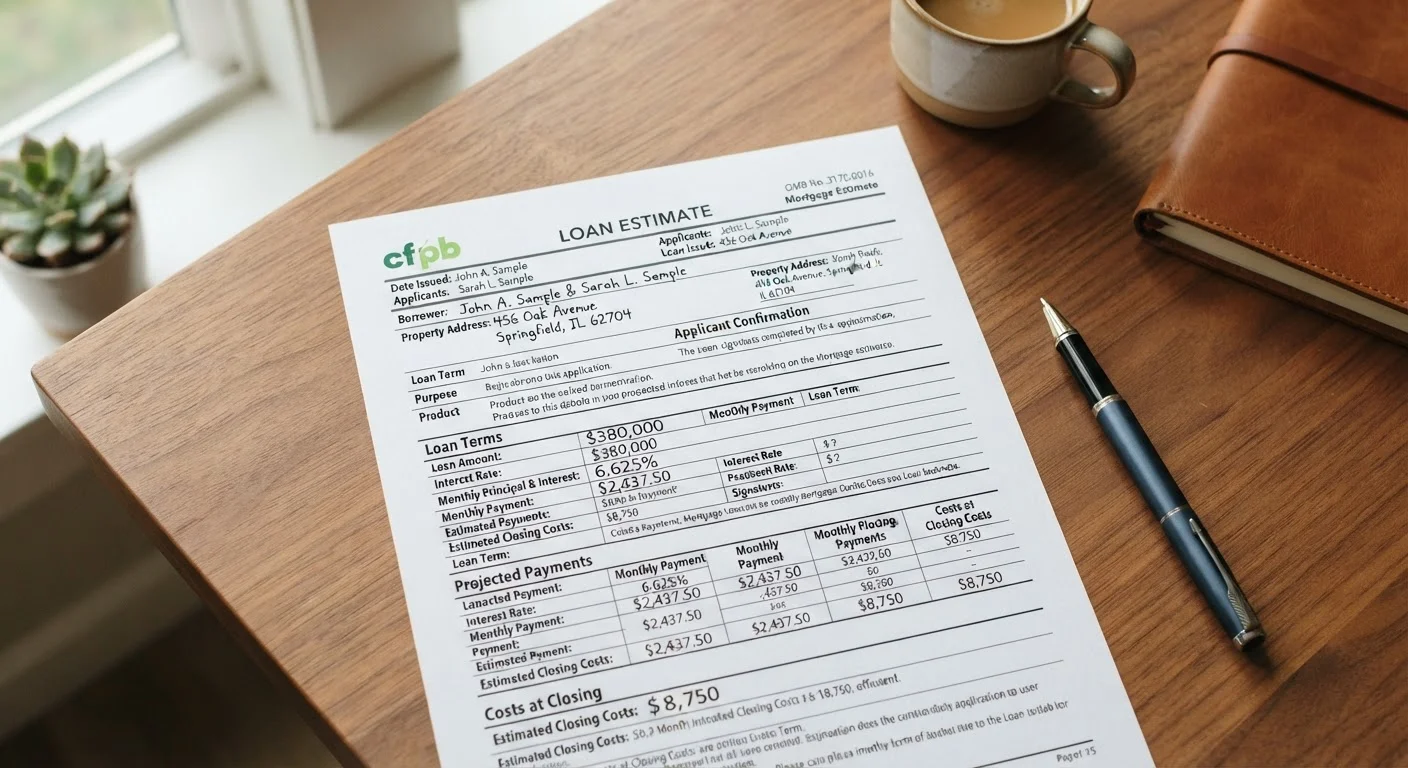
The Loan Estimate (LE) is a standardized three-page form that federal law requires every mortgage lender to deliver within three business days of receiving your application. It was introduced under the TILA-RESPA Integrated Disclosure (TRID) rules, which took effect in 2015, specifically to replace older, inconsistent disclosure forms that made it difficult for borrowers to compare offers.
Because every lender uses the exact same template, you can place two Loan Estimates side by side and compare them line by line. That standardization is the form's most valuable feature - use it. Before diving into the numbers, make sure you have a solid grounding in common mortgage terminology. The Homebuying Glossary covers terms like amortization, escrow, and origination fee that appear throughout the LE. Similarly, our borrower's glossary explains APR and other debt-specific language you'll encounter on the form.
What you will need
How to Read Each Page
The three pages of the Loan Estimate are organized by purpose, and understanding what each one covers prevents confusion before you even look at the numbers.
Page 1 - Your Core Loan Terms
The top of Page 1 identifies the basics: lender name, loan term (e.g., 30-year), loan type (fixed or adjustable), and the property address. Confirm every field matches what you discussed with your loan officer - errors here can indicate a different product than what you requested.
Below that, look for:
- Loan Amount: The amount you're borrowing, not the purchase price.
- Interest Rate: Your note rate - what the lender charges before fees.
- Monthly Principal & Interest: The base payment, excluding taxes and insurance.
- Projected Payments: A breakdown showing how your payment changes over time if you have mortgage insurance or an escrow account.
- Estimated Total Monthly Payment: Includes P&I, estimated property taxes, homeowners insurance, and mortgage insurance if applicable.
- Estimated Cash to Close: The lump sum you'll need to bring to the closing table.
Page 2 - Closing Costs Broken Down
Page 2 is where most of the money decisions live. Closing costs are divided into two main sections: Loan Costs and Other Costs.
Loan Costs are split into three subsections:
- Section A - Origination Charges: Fees the lender charges directly, including origination fees and discount points (prepaid interest that lowers your rate). These are fully negotiable and vary widely between lenders.
- Section B - Services You Cannot Shop For: Third-party services the lender selects, such as the appraisal and credit report fee. You pay these but can't choose the provider.
- Section C - Services You Can Shop For: Title insurance, settlement agent fees, and similar services where you may be able to choose your own provider and potentially find lower prices.
Other Costs include prepaid items (homeowners insurance premium, prepaid interest, initial escrow payments) and any other government recording fees or transfer taxes. These are mostly non-negotiable but vary by location.
Page 3 - Comparisons, Contact Info, and What Can Change
Page 3 contains three critical pieces of information that borrowers often overlook.
Comparisons table: This shows your APR, total interest percentage (TIP - the total interest you'll pay over the full loan term as a percentage of the loan), and the total amount paid over five years. The TIP figure is eye-opening; use it to understand the true long-term cost of the loan.
Other Considerations: This section discloses whether the lender can sell your loan to another servicer, whether you have a prepayment penalty (a fee for paying off the loan early), and whether the loan has a balloon payment (a large lump-sum payment due at the end of the term). These features are significant - read them carefully.
Confirm Receipt box: Your signature here acknowledges receipt of the form, not acceptance of the loan. You are not committed until you formally proceed to underwriting and sign closing documents.
This article is for general informational and educational purposes only. It does not constitute personalized financial, legal, or mortgage advice. Consult a licensed mortgage professional or HUD-approved housing counselor for guidance specific to your situation.
Common Traps and How to Avoid Them
Even a well-read borrower can miss a few high-stakes details on the Loan Estimate. Here are the areas that most often catch first-timers off guard.
Know Which Numbers Are Binding
Not every figure on the Loan Estimate is fixed. Fees in Section A (origination charges) cannot increase at all once you've locked your rate. Fees in Section B cannot increase by more than zero percent. Fees in Section C and "Other Costs" can increase by up to 10 percent in aggregate. Fees outside those categories - such as prepaid interest and homeowner's insurance - can change without limit. If numbers shift significantly between your Loan Estimate and the Closing Disclosure (issued three days before closing), ask your lender to explain every change in writing.
Zero-cost loans aren't free. A lender offering to cover your closing costs typically recovers that money through a higher interest rate - visible on Page 1 as a slightly elevated rate compared to a competing offer where you pay costs upfront. Both structures can make sense depending on how long you plan to stay in the home, but treat them as two different products to compare, not as a bonus.
The APR is not your interest rate. The Annual Percentage Rate (APR) factors in certain fees on top of the note rate, making it a broader cost measure. A loan with a low interest rate but high origination fees can have a higher APR than a loan with a slightly higher rate and minimal fees. Pay attention to both. If you'd like broader context on how your credit profile affects the rate you're offered, review our guide on understanding your credit report.
Shop on the same day. Interest rates shift daily. To make a valid comparison between lenders, request Loan Estimates from all of them on the same day using identical loan parameters - same purchase price, down payment, and loan type.