

Key Takeaways
Credit Score
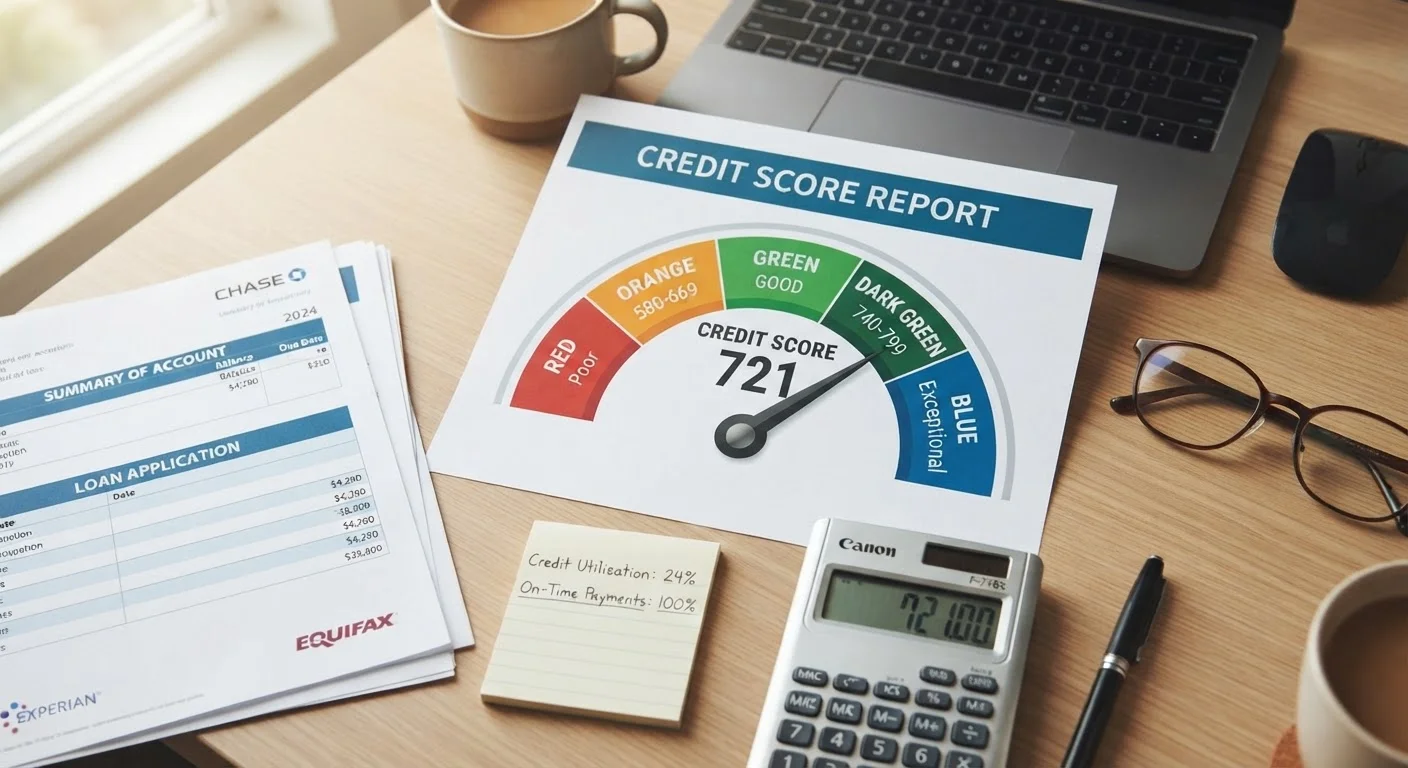
A credit score is a three-digit number - typically ranging from 300 to 850 - that summarizes how reliably you've managed borrowed money. It's calculated from information in your credit report, including how much you owe, whether you pay on time, and how long you've used credit. Lenders use it to quickly assess the risk of lending money to you.
The most widely used scoring model is the FICO Score, developed by Fair Isaac Corporation, though VantageScore is also commonly used by lenders and credit monitoring services. Both models use the same 300-850 range but may weight factors slightly differently.
The Five Factors Behind the Number
Your credit score isn't a mystery - it's a calculated output based on five well-defined categories of credit behavior. Understanding what each one measures helps you see the score as a useful financial tool rather than an arbitrary judgment.
35%
Weight of payment history in a FICO Score
According to FICO, payment history is the single largest factor in the standard FICO Score calculation.
300-850
Standard credit score range
Both the FICO Score and VantageScore use this range, with higher scores indicating lower credit risk.
~200M
Americans with a FICO Score
FICO has reported that approximately 200 million Americans have scoreable credit files with the major credit bureaus.
Payment History (≈35%)
This is the most heavily weighted factor. It tracks whether you've paid your credit accounts on time - credit cards, mortgages, auto loans, student loans, and similar obligations. Even a single missed payment can have a meaningful negative effect, especially if your credit history is otherwise clean.
Amounts Owed / Credit Utilization (≈30%)
This measures how much of your available revolving credit you're currently using. If you have a $10,000 credit limit across your cards and carry a $3,000 balance, your utilization rate is 30%. Most credit experts suggest keeping this ratio below 30%, though lower is generally better. See how credit utilization is calculated and what ranges are considered healthy for a deeper dive.
Length of Credit History (≈15%)
Scoring models consider the age of your oldest account, your newest account, and the average age of all your accounts. A longer history gives lenders more data to evaluate. This is one reason closing old, unused credit cards can sometimes hurt your score.
Credit Mix (≈10%)
Having experience with different types of credit - such as revolving accounts (credit cards) and installment loans (car loans, mortgages) - can positively influence your score. You don't need every type of credit, and you shouldn't take on debt just to diversify. But a healthy mix can be a signal of responsible credit management.
New Credit / Hard Inquiries (≈10%)
When you apply for new credit, the lender typically runs a hard inquiry on your report. Multiple hard inquiries within a short window can signal financial stress to lenders and cause a temporary score dip. Rate shopping for mortgages or auto loans is treated differently - multiple inquiries of the same type within a short period are often bundled into a single inquiry by scoring models.
Why Lenders Use Credit Scores
Lenders make thousands of credit decisions daily. A credit score gives them a standardized, data-backed way to assess risk quickly. The higher your score, the lower the statistical likelihood - based on historical data - that you'll default on a loan.
This directly affects not just whether you're approved for credit, but the terms you're offered. Borrowers with higher scores typically receive lower interest rates, which can translate into significant savings over the life of a loan. On a 30-year mortgage, even a fraction of a percentage point difference in rate can add up to tens of thousands of dollars.
Landlords, insurers, and even some employers may also check credit reports (though not always the score itself) as part of their decision-making process. This is why understanding and maintaining your credit profile matters well beyond loan applications.
For a complete breakdown of what's actually in your credit report - which feeds your score - see this field guide to every section of your credit report.
Common Misconceptions Worth Clearing Up
Credit scores are surrounded by myths that can lead people to make counterproductive decisions. A few of the most persistent ones:
- Carrying a balance helps your score. It doesn't. Paying your statement balance in full each month while keeping utilization low is the better strategy. You don't need to pay interest to build credit.
- Closing a card you don't use will improve your score. It can actually lower it by reducing your total available credit and potentially shortening your average account age.
- There's one universal credit score. In reality, you have multiple scores across different scoring models. The version a mortgage lender pulls may differ from what you see on a credit monitoring app.
Credit score myths that quietly hurt your financial decisions explores these misconceptions in more detail, including how they can quietly derail financial progress.
If you're planning a home purchase, it's also worth reading what first-time buyers often get wrong about credit scores - the stakes around credit are especially high in the homebuying process.
And if you've spotted inaccurate information on your report, disputing a credit report error explains the official channels available to you.
This article is for general informational purposes only and does not constitute personalized financial or credit advice. Consult a qualified financial professional for guidance specific to your situation.