

Key Takeaways
Personal Budget
A personal budget is a written or digital plan that maps out how much money you expect to receive and how you intend to spend or save it over a set period - usually one month. It's essentially a decision made in advance about where your money will go, rather than a record of where it already went. A budget gives you visibility and intentional control over your finances.
In formal personal finance, a budget is sometimes called a "spending plan" or "cash flow plan" to emphasize its forward-looking, proactive nature rather than implying restriction.
What a Budget Actually Is
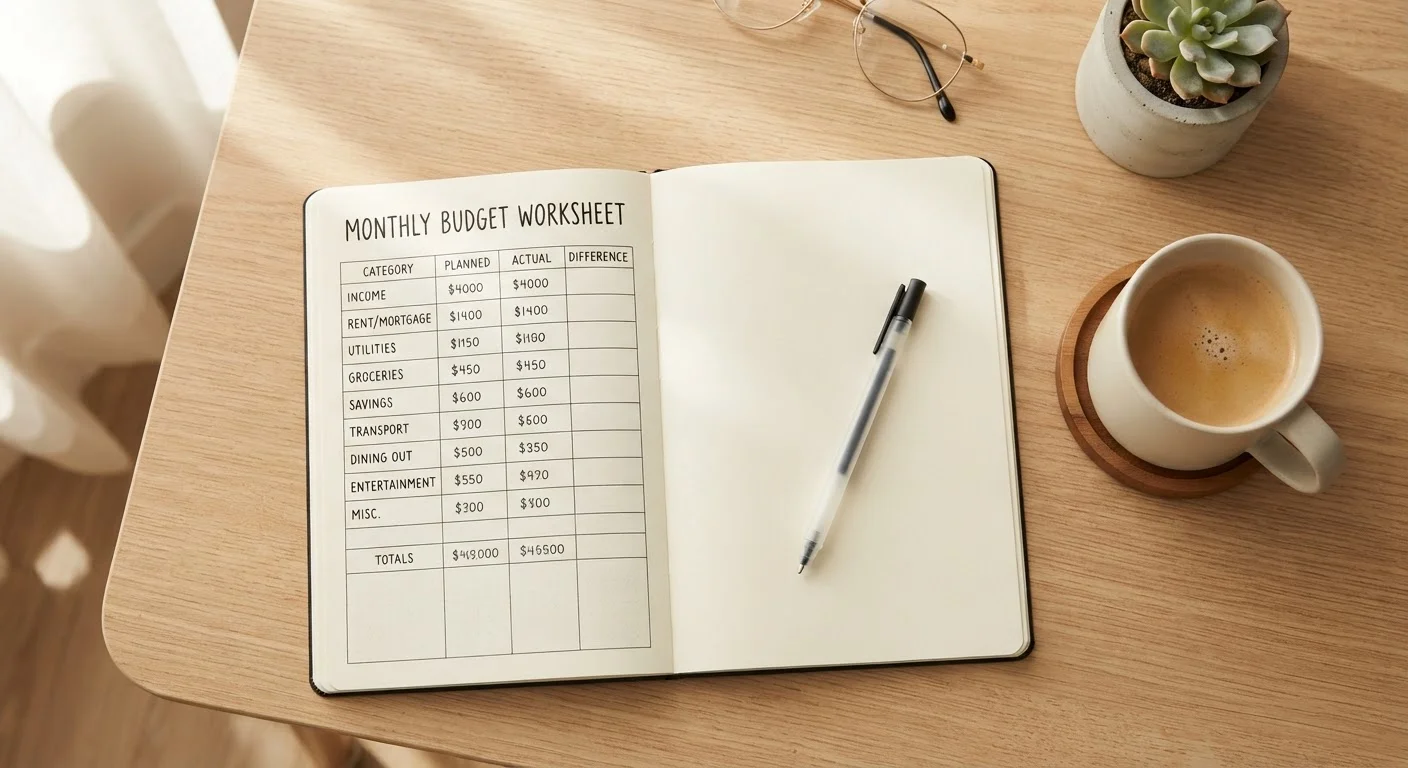
Strip away all the anxiety and guilt that often surrounds the word, and a budget is simply a plan for your money. Specifically, it's a document - written, digital, or even just a thought-out framework - that estimates your income for a given period and assigns a purpose to every dollar before you spend it.
That forward-looking quality is what separates a budget from mere expense tracking. Tracking tells you what happened. A budget tells your money what to do next.
Most personal budgets work on a monthly cycle, matching the rhythm of bills and paychecks that govern most American households. You start by calculating your total expected income - after taxes - and then allocate amounts to categories: housing, food, transportation, savings, and so on. Whatever remains after fixed obligations can be directed toward discretionary spending, savings goals, or debt repayment - deliberately and with intention.
For a fuller look at the vocabulary that underlies budgeting, see our complete personal budgeting reference, which covers core terms from gross income to discretionary spending.
The Biggest Misconceptions About Budgeting
Most people who resist budgeting aren't rejecting the math - they're rejecting a flawed idea of what budgeting means. These misconceptions are widespread, and they prevent millions of Americans from building a tool that would actually help them.
Budgets Reflect Priorities, Not Just Numbers
The categories in your budget reveal what you value - housing security, family experiences, career development, or future financial independence. Two people with the same income can build entirely different budgets based on their individual priorities, and both can be completely valid. A budget is personal by design.
Myth 1: A Budget Means You Can't Spend on Anything Fun
This is the most damaging misconception. A budget doesn't prohibit spending - it plans spending. A well-built budget includes a deliberate allocation for entertainment, dining out, hobbies, or whatever matters to you. The difference is that you've decided in advance how much, rather than discovering it after the fact.
Myth 2: Budgets Are Only for People Who Are Struggling
Budgets are tools for anyone who wants their money to serve their goals - regardless of income. High earners without a budget often have no clearer picture of their finances than someone earning far less. Financial clarity isn't automatic; it's built.
Myth 3: One Budget Works Forever
A budget is a living document. Life changes - income shifts, expenses evolve, priorities move - and your budget should reflect that. Setting one and forgetting it for years undermines its usefulness. Monthly reviews keep it accurate and relevant.
For a deeper look at the myths that stop people from starting, see our article on common budget myths that hold Americans back.
Why a Budget Works - When It's Honest
The effectiveness of a budget is almost entirely determined by how honestly it's built. A budget written to reflect an ideal version of your spending - rather than your actual habits - creates a plan you'll abandon within weeks.
Honest budgeting means accounting for the irregular expenses that don't appear every month: car repairs, medical co-pays, annual subscriptions, holiday gifts. These aren't surprises if you plan for them. Building small reserves for irregular costs inside your budget is what separates a functional plan from a fantasy.
It also means being clear about the difference between what you need to spend and what you choose to spend. That distinction - explored in our article on the real difference between needs, wants, and savings - is one of the most clarifying exercises in personal finance.
~1 in 3
Americans who follow a monthly budget
Multiple surveys, including those conducted by Gallup and the National Foundation for Credit Counseling, have found that fewer than one-third of American adults maintain a detailed household budget.
74%
Adults feeling financial anxiety
A 2023 survey by the American Psychological Association found that roughly three-quarters of U.S. adults reported money as a significant source of stress.
When a budget reflects your real life, it becomes a reliable decision-making framework, not a source of guilt. Done right, it's among the most empowering financial habits you can build.
This article is for general informational and educational purposes only and does not constitute personalized financial, tax, or investment advice. Readers should consult a qualified financial professional for guidance specific to their circumstances.